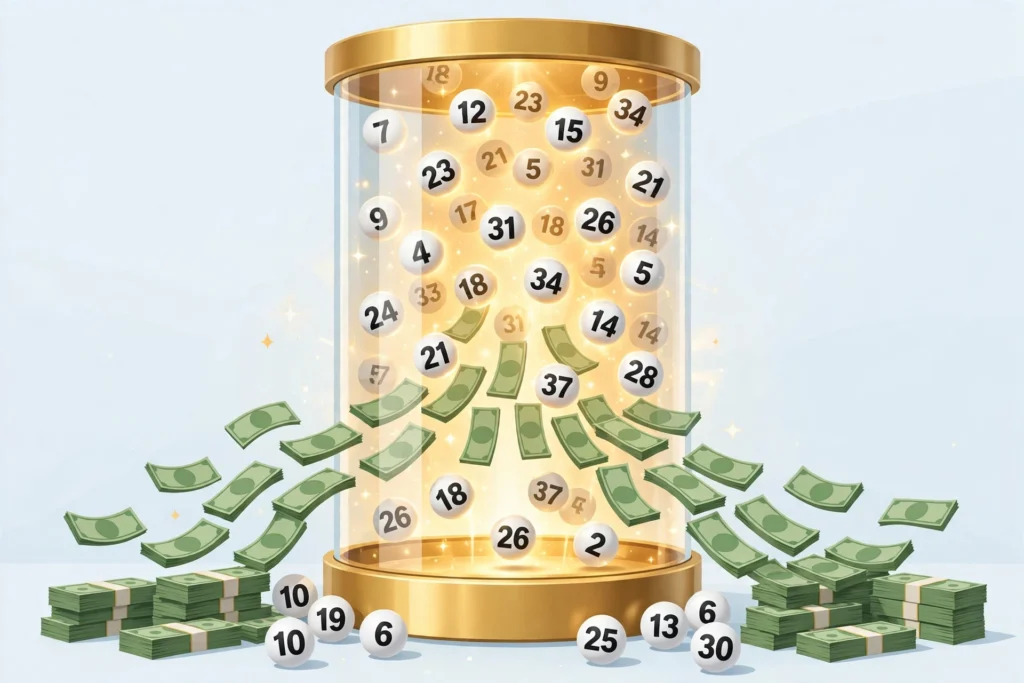
When a Powerball jackpot hits $1 billion, the first question most people ask is not how to win it — it is where on earth that much money comes from. Does the government pay for it? Is there a giant vault somewhere? The short answer to how lottery jackpots are funded is much simpler than the headlines suggest: the players fund it themselves, one ticket at a time.
Every jackpot is built from ticket sales. A fixed share of every dollar spent on tickets goes into the prize pool, and when nobody wins, that pool rolls over and grows. Around that simple core sits a whole system of reserves, unclaimed prizes, interest earnings and careful estimates that lets lotteries advertise a billion-dollar prize with confidence.
Lottery games are for adults only (18+ in most places). Play responsibly, set a budget, and treat a ticket as entertainment — never as an investment or a way to make money.
In this guide, we explain exactly how lottery jackpots are funded, where every ticket dollar goes, why the advertised jackpot is bigger than the cash value, and what happens to the money when nobody claims a prize.
Table of Contents
- The Short Answer: Ticket Sales Pay for Everything
- Where Every Ticket Dollar Goes
- The Prize Pool: The Biggest Slice
- Rollovers: How Jackpots Grow to Billions
- Advertised Jackpot vs Cash Value: The Annuity Explained
- Who Actually Holds the Money?
- What Happens to Unclaimed Prizes?
- How the UK National Lottery Splits Its Money
- Do Governments Fund Lotteries?
- Frequently Asked Questions
- Conclusion
How Lottery Jackpots Are Funded: The Short Answer
A lottery is a self-funding machine. Governments do not pay for jackpots out of tax money. Instead, the money that pays the winner comes from the total cash made from selling lottery tickets to the public. The more tickets players buy, the larger the prize pool grows — and the longer a jackpot goes unclaimed, the bigger it gets.
US state lotteries generated over $113 billion in ticket sales in fiscal year 2024, with about $30.6 billion flowing to public programs like education and veterans’ services, according to figures from the North American Association of State and Provincial Lotteries. The biggest share of that money goes straight back to players as prizes, while retailer commissions and running costs take a smaller cut.
The same principle applies everywhere in the world. Whether it is Powerball in the United States, the National Lottery in the UK, or a state lottery in India, the jackpot is funded by the players. The lottery operator is really a manager: it collects the money, takes its share for running the game and for public causes, and pays the rest back out as prizes.
Where Every Ticket Dollar Goes
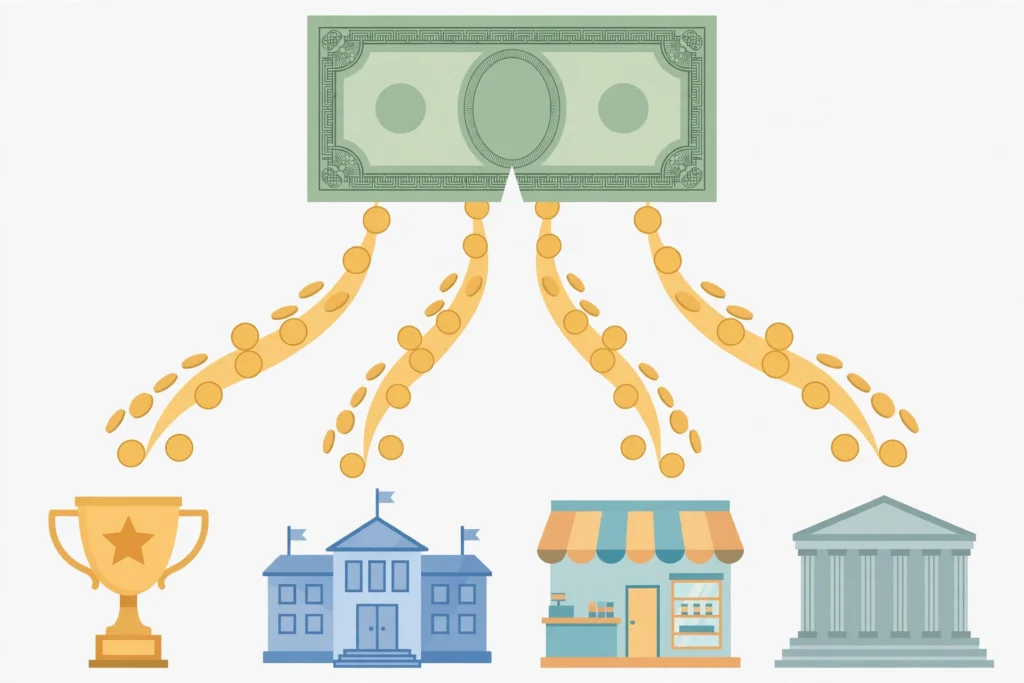
Every dollar spent on a lottery ticket gets divided into four buckets: prizes, operating costs, retailer commissions, and public program funding. The exact percentages shift from state to state, but the national pattern in the United States is remarkably consistent:
- Prizes: roughly 60% to 65% of sales. This is the largest slice by far, and it funds the jackpot, the smaller fixed prizes, and the scratch-off payouts.
- Public programs: roughly 25% to 30% of sales. This is the money that goes to education, veterans’ services, senior programs, environmental projects and other causes chosen by each state’s legislature.
- Retailer commissions: around 6% of sales. The convenience stores and gas stations that sell tickets earn a commission on every ticket, plus bonuses for selling winning tickets. In fiscal year 2024, US retailers earned almost $6.3 billion in commissions and incentives.
- Administration and operating costs: around 4% to 5% of sales. Advertising, technology, security, ticket printing, staff salaries and the logistics of distributing millions of tickets.
Scratch-off games tend to return a higher percentage to players than draw games like Powerball and Mega Millions, because scratch-offs depend on frequent small wins to keep people buying. Draw games return less per ticket on average but offer the headline-grabbing jackpots that drive public interest.
A detailed breakdown of where lottery money actually goes confirms the same four buckets and shows how the split looks in dollar terms for fiscal year 2024. The key point is that the jackpot is never the whole story — it is one part of a much bigger flow of money.
The Prize Pool: The Biggest Slice
The prize pool is the portion of ticket sales set aside to pay winners. For most lotteries it is between 50% and 70% of total sales, and it is divided across several prize tiers. The jackpot is the top tier, paid to the player who matches all the numbers. Below it sit fixed smaller prizes for matching some of the numbers.
For multi-state games the split is fixed by the game’s rules. In Mega Millions, for example, about 50% of ticket revenue goes into the prize pool and the other half is shared among the participating states. Powerball works on a similar model, with each participating state keeping its share of sales and contributing to the shared jackpot pool.
States that participate in multi-state games also pay into the Multi-State Lottery Association, which administers Powerball and other games. Each member lottery’s share of operating costs is proportional to its percentage of total game sales, so bigger states shoulder more of the overhead.
It is also worth knowing that the jackpot is not a fixed pot of money sitting in a vault. It is a slice of sales revenue that grows with every drawing nobody wins, because more sales keep flowing in on top of a pot that is already rolling over. That is why a jackpot can jump by tens of millions of dollars between draws during a big run.
Rollovers: How Jackpots Grow to Billions
A rollover happens when nobody wins the jackpot in a draw. The money earmarked for the jackpot is not paid out — it is added to the funds for the next draw, and the prize grows. This is the mechanism behind every billion-dollar jackpot in history.
Three things make rollovers so powerful:
- Compounding sales. A bigger jackpot attracts more players, and more players mean more ticket sales, which means a bigger prize pool for the next draw. It is a feedback loop.
- Time. The longer a jackpot goes unclaimed, the more draws it survives, and the more sales accumulate behind it.
- Estimates. Lottery operators project future sales based on recent trends, the size of the jackpot, the day of the week, and how similar past runs behaved. They use those projections to advertise the next jackpot figure before the sales are actually in.
That last point matters. The advertised jackpot is an estimate, not a guaranteed amount. As real sales data arrives during the day, the estimate is adjusted, which is why the advertised number can shift slightly before a drawing closes.
Advertised Jackpot vs Cash Value: The Annuity Explained
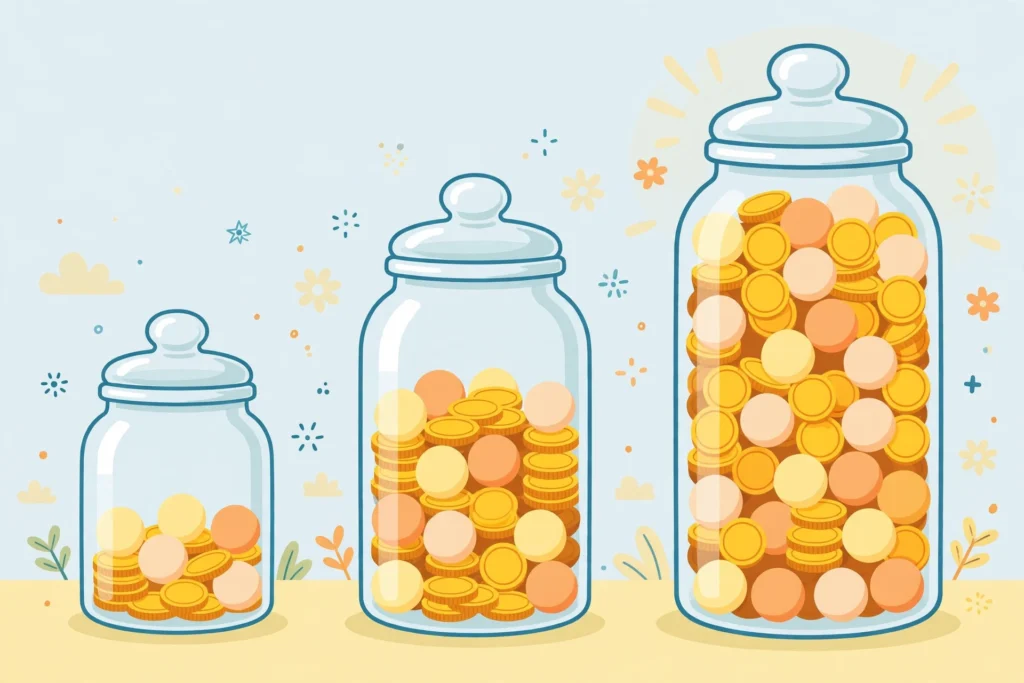
One of the most confusing parts of how lottery jackpots are funded is the gap between the advertised jackpot and the cash value. A $500 million jackpot might yield a cash payout of only around $225 million before taxes. Why?
The advertised jackpot is the annuity value: the total of about 30 annual payments spread over roughly 29 years, with each payment about 5% bigger than the last. The lottery calculates this figure based on what the prize pool could earn if it were invested over three decades in government bonds.
The cash value is the lump sum available right now — the actual cash the lottery has on hand from ticket sales. Because money today is worth more than money tomorrow, the cash value is typically 40% to 50% less than the advertised annuity figure. Most winners take the lump sum despite the steep discount.
The lottery funds the annuity by purchasing government-backed securities that pay out over 30 years. That is why the annuity is guaranteed: the money is invested in safe bonds at the moment of the win, and the payments come from those investments, not from future ticket sales.
If you are weighing the two options, our guide to the biggest lottery jackpots in history shows how the annuity and cash figures compared for the record prizes — and our guide to how lottery winnings are taxed explains why the after-tax gap is even bigger than most people expect.
Who Actually Holds the Money?
Lotteries do not keep the jackpot in a bank account waiting for a winner. The prize pool is managed through a combination of current sales, reserve funds, and investments.
Reserve funds are a key part of the system. Lotteries maintain reserves to make sure they can pay out prizes even if a massive jackpot is won unexpectedly. These reserve funds earn interest, and that interest is added to the prize pool. While it is not the primary source of funding, it plays a real supporting role.
Insurance is used for some games, particularly smaller lotteries and fixed-prize games. If the prize pool is not enough to cover a win, the lottery’s insurance policy covers the gap. Large state lotteries rarely need this because their sales volume is so high.
Regulation keeps the whole system honest. In the United States, state governments regulate their lotteries and set the rules for how revenue is allocated. In the UK, the Gambling Commission regulates the National Lottery. Gaming commissions and government agencies oversee operations, audit the draws, and make sure revenue is allocated appropriately. A clear explanation of where lottery prize money comes from covers the same mechanics: ticket sales, unclaimed prizes, and interest on reserve funds.
What Happens to Unclaimed Prizes?
About $2 billion in lottery prizes go unclaimed in the United States every year. Winning tickets expire — typically within 90 days to one year after the drawing, depending on the state — and the money has to go somewhere.
What happens next varies by jurisdiction. Some states return unclaimed prize money to the same beneficiary fund that receives their regular lottery contributions, giving schools or other designated programs an extra boost. Others cycle unclaimed winnings back into the prize pool to fund bigger payouts on future games. A few split unclaimed prizes between beneficiary programs and enhanced prize offerings.
Major prizes expire too. The $1.13 billion Mega Millions jackpot drawn in March 2024 carried a one-year claim deadline — a life-changing fortune with an expiration date. The practical lesson is simple: check your tickets, sign the back of any big winner, and claim promptly.
How the UK National Lottery Splits Its Money
The UK publishes one of the clearest breakdowns anywhere, and it shows how a different system can work. Of every £1 spent on the National Lottery in 2024–25, about:
- 55p went to prizes
- 23p went to good causes
- 12p went to Lottery Duty (HM Treasury)
- 3p went to retailer commission
- 7p went to the operator’s costs and profit
Total sales were about £7.9 billion. The good-causes money, about £1.8 billion a year, is split by law: 40% to community and charitable projects, and 20% each to arts, sport and heritage. The UK National Lottery is run by a single licensed operator, Allwyn, which took over from Camelot in February 2024, and it is regulated by the Gambling Commission.
One difference from the United States: in the UK and most of Europe, the jackpot is paid as a single lump sum, with no annuity option and no tax on the winnings themselves.
Do Governments Fund Lotteries?
No. Governments do not fund lottery jackpots directly. Even though most major lotteries are state-run or state-regulated and operate under strict legal frameworks, the money from ticket sales is enough to pay the winner and cover the logistics of running the game.
What governments do is regulate the games, set the tax rates on winnings, and decide where the non-prize share of revenue goes. Around half of all US states earmark some or all of their lottery proceeds for education, and the rest goes to general funds, veterans’ programs, senior services, environmental conservation or infrastructure.
There is one honest caveat. Economists have documented a pattern called “supplanting”: when lottery money starts flowing to education, legislators sometimes reduce general tax funding for education by a similar amount, so the net gain for schools can be close to zero. Lottery money does reach public budgets — that part is true — but whether schools end up with more money to spend is a different question.
If you play, the funding model has a practical implication worth remembering: the house always keeps its share, and the odds of winning the jackpot are around 1 in 292 million for Powerball. A ticket is entertainment, not a financial plan. Our guide to lottery budgeting and playing within your means shows how to set a sensible limit.
Watch: How a State Lottery Game Works
Frequently Asked Questions
How are lottery jackpots funded?
Lottery jackpots are funded by ticket sales. A fixed share of every ticket sold goes into the prize pool, and when nobody wins, the jackpot rolls over and grows. Governments do not pay for jackpots out of tax money. Unclaimed prizes and interest on reserve funds add smaller amounts to the pool.
Where does the money from a lottery ticket go?
In the United States, roughly 60% to 65% of ticket sales goes back to players as prizes, about 25% to 30% goes to state public programs, around 6% goes to retailer commissions, and 4% to 5% covers administration and operating costs. The exact split varies by state and by game.
Why is the cash value of a jackpot smaller than the advertised jackpot?
The advertised jackpot is the annuity value — the total of about 30 annual payments over 29 years. The cash value is the lump sum the lottery actually has on hand right now, which is typically 40% to 50% less. The lottery funds the annuity by investing in government bonds that pay out over three decades.
What is a lottery rollover?
A rollover happens when nobody wins the jackpot in a draw. The jackpot money is added to the next draw’s prize pool, so the prize grows. Bigger jackpots attract more players, which means more ticket sales, which makes the next jackpot even bigger — a feedback loop that creates billion-dollar prizes.
What happens to unclaimed lottery prizes?
Winning tickets expire, typically within 90 days to one year. About $2 billion in prizes go unclaimed in the US every year. Depending on the state, the money is returned to the beneficiary fund (such as education), cycled back into the prize pool for future games, or split between the two.
Do lottery operators make a profit?
State lotteries are not run for private profit in the usual sense — the non-prize share goes to public programs chosen by the legislature. Private operators, such as the UK National Lottery’s operator, take a contracted share for costs and profit, which in 2024–25 was about 7p of every £1 spent.
Conclusion
So, how are lottery jackpots funded? By the players, one ticket at a time. A fixed share of every ticket sale goes into the prize pool, rollovers let that pool grow into the hundreds of millions, and reserve funds and unclaimed prizes add a little extra. The advertised jackpot is the annuity value of that pool spread over 30 years, which is why the cash value is always much smaller.
Understanding the funding model takes some of the mystery out of the game. It also makes the odds easier to accept: the system is designed so that the lottery keeps its share, the state keeps its share, and the jackpot is the small slice left for one very lucky ticket. If you play, play for fun, within a budget you can afford, and never expect the jackpot to be your financial plan.
Lottery games are for adults only (18+ in most places). Play responsibly, set limits before you buy a ticket, and never chase losses. If gambling stops being fun, seek help from a local support service or the national helpline in your country.