
The psychology of playing the lottery is one of the most studied puzzles in behavioural economics: millions of people buy tickets every week even though they know the odds of winning a jackpot like Powerball are around 1 in 292 million. They are not confused about the maths. Most players can tell you the odds are terrible — and they play anyway. So what is really going on in the mind of a lottery player? This guide looks at the research behind why we play, the mental shortcuts that keep us coming back, and how to keep the habit healthy. Lottery play is for adults only — you must be 18 or over to play in most places, and always play responsibly, within a budget you can afford to lose.
Table of Contents
- What Is the Psychology of Playing the Lottery?
- The Dream Is the Product: Buying Hope, Not Just a Ticket
- 5 Mental Shortcuts That Keep Players Coming Back
- Why the Odds Don’t Scare People Away
- The Social Side of Playing the Lottery
- When Fun Becomes a Problem
- How to Keep Lottery Play Healthy
- Frequently Asked Questions
- Conclusion
What Is the Psychology of Playing the Lottery?
The psychology of playing the lottery refers to the mental shortcuts, biases, and emotional motivations that shape why people buy tickets even when they know the odds are overwhelmingly against them. Psychologists and behavioural economists have studied this for decades, and their conclusion is consistent: lottery play is rarely a maths mistake. It is an emotional purchase.
Our brains struggle to grasp huge probabilities. When numbers reach into the hundreds of millions, they become abstract and almost impossible to visualise. One statistics professor offered a vivid analogy: imagine a swimming pool filled to the brim with M&Ms, with a single green M&M hidden among them. Finding that one candy is roughly what winning a big jackpot feels like. The brain simply cannot feel the difference between 1 in a million and 1 in 292 million — both just register as “very unlikely, but possible.” And “possible” is doing all the work.

The Dream Is the Product: Buying Hope, Not Just a Ticket
Ask players why they buy a ticket and the most common answer is not “to get rich.” It is hope. In one survey of lottery players, 42% said their main motivation was hope for financial freedom — not yachts and private jets, but paying off a mortgage, funding a child’s education, or simply feeling secure. Another 28% said they played mainly for entertainment and excitement, and 12% said supporting good causes was their main reason.
That changes how we should think about the ticket. What a lottery ticket really sells is a few days of legitimate, socially acceptable daydreaming about a fundamentally different life. Between buying the ticket and the draw, the buyer gets to imagine what they would do with the money: quit the job they hate, help their parents, travel, start a business. The fantasy is the product. The financial return is almost incidental — and for the price of a coffee, most players consider that a fair trade.
This is also why giant jackpots sell so many more tickets than small ones. Research on state lotteries shows that demand responds far more strongly to jackpot size than to changes in smaller prizes. A $1 billion jackpot is not just a bigger prize; it is a bigger dream, and a bigger conversation. When everyone at work is talking about the draw, not playing starts to feel like missing out.
5 Mental Shortcuts That Keep Players Coming Back
Psychologists have identified several well-documented cognitive biases that shape lottery behaviour. None of them requires the player to be uninformed — these are features of normal human decision-making, and they affect everyone.
The Near-Miss Effect
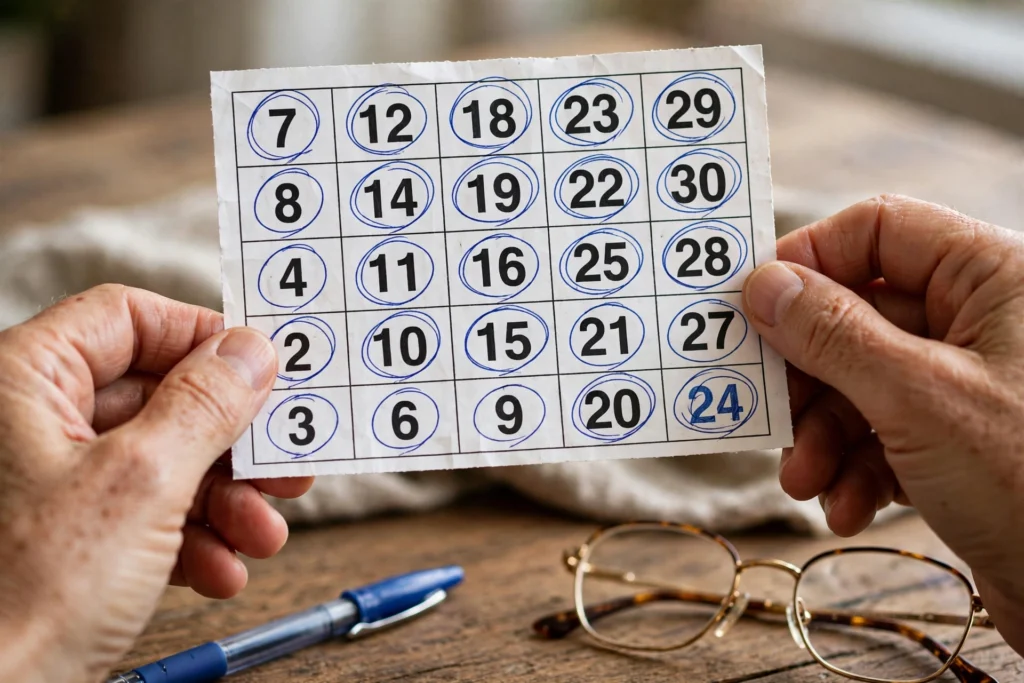
Matching three or four of your six numbers feels like progress. It feels like you were close, and that the next attempt might succeed. Research by Luke Clark and colleagues at Cambridge University, published in the journal Neuron in 2009, showed that near-miss outcomes activate the same reward circuits in the brain as actual wins. Your brain treats “almost won” as a small victory, which makes you want to try again — even though a near miss in a random draw carries no information at all about the next draw. Every draw is independent, and “close” means nothing mathematically.
The Illusion of Control
Choosing your own numbers creates a sense of authorship over the outcome. In a 1994 study published in the British Journal of Psychology, researcher Mark Griffiths found that people who chose their own lottery numbers reported significantly higher confidence in winning than people given random numbers — even though the odds are identical. Birthdays, anniversaries, numbers seen in dreams: these rituals serve no mathematical function, but they make the player feel like a participant rather than a bystander. Quick picks and hand-picked numbers have exactly the same chance of winning.
The Gambler’s Fallacy
The gambler’s fallacy is the mistaken belief that past results influence future outcomes. A player sees that a number has not appeared for weeks and concludes it is “due.” In reality, lottery draws are independent events: a ball that has not appeared for forty draws has exactly the same chance of appearing in the next draw as any other ball. There are no patterns to exploit, and no number is ever “due.” For more on this, see our guide to lottery myths debunked.
Availability Bias
Availability bias is the tendency to judge how likely something is by how easily examples come to mind. Lottery winners are aggressively visible — giant cheques, press conferences, news stories — while the millions of people who lose leave no trace at all. Nobel laureate Daniel Kahneman and Amos Tversky established this heuristic as a core driver of probability misjudgement: because winners are memorable and losers are invisible, the brain quietly overestimates the chance of winning.
Optimism Bias and Sunk Costs
Optimism bias is the quiet belief that “it could be me.” Sunk-cost bias is what keeps long-time players going: after playing the same numbers every week for years, stopping feels like wasting all that investment — and worse, like risking the week your numbers finally come up. Together, these two biases turn a casual habit into a routine that is very hard to break, even when the player knows the odds have not changed.
Why the Odds Don’t Scare People Away
If everyone knows the odds are terrible, why doesn’t that knowledge stop them? Behavioural economists Richard Thaler and Cass Sunstein observed that people systematically overweight small probabilities — not because they don’t understand them, but because the human brain was not designed to process “one in 292 million” as an emotionally meaningful quantity. Zero and “basically zero” feel identical in everyday life. But zero and “technically possible” feel very different. That gap, however statistically trivial, is what the lottery sells.
There is also a cost-benefit calculation that looks irrational from the outside but makes sense from the inside. A ticket costs a few dollars. The downside is small, fixed, and known. The upside, however unlikely, is life-changing. For many players, that asymmetry is the whole point — they are buying a cheap ticket to a fantasy, not making an investment. The problem only begins when the lottery stops being a small entertainment expense and starts being treated as a financial plan. “The lottery is my pension plan” is a genuine failure mode, and it is where a fun habit turns into a harmful one. Our guide to how lottery odds and probability work explains the maths in plain language.
The Social Side of Playing the Lottery
Lottery play is rarely a solo activity. Office syndicates, family pools, and friends who split tickets turn a private gamble into a shared ritual. People discuss numbers at work, celebrate small wins together, and bond over the shared daydream. For many players, the ticket is also a conversation starter and a small weekly ritual — the same numbers, the same shop, the same draw night. That social warmth is a real part of the appeal, and it explains why syndicate play remains so popular even though any prize gets split many ways. The same motivations appear in lottery cultures around the world — see for example why Nigerians keep playing the lottery despite the odds.
When Fun Becomes a Problem
Most people who play the lottery do so casually and within their means. But the same psychological mechanisms that make the game fun can make it hard to stop for some players. Warning signs include spending more than you planned, chasing losses by buying more tickets, hiding spending from family, borrowing money to play, or feeling anxious or irritable when you can’t play. If any of that sounds familiar, it is worth pausing and getting support — most countries have free, confidential gambling helplines, and self-exclusion and spending-limit tools are available through official lottery operators.
How to Keep Lottery Play Healthy
Keeping lottery play fun is mostly about treating it like any other entertainment expense. Set a fixed weekly budget — an amount you would happily spend on a coffee or a streaming subscription — and stick to it. Never borrow money to buy tickets, and never spend money needed for bills, rent, or food. Decide your numbers or your quick pick in advance, and don’t increase your spending when a jackpot grows. Finally, remember what you are actually buying: a few days of daydreaming. If the daydream stops being fun, stop buying the ticket. Our lottery budgeting guide has practical tips for setting a limit that works.
Frequently Asked Questions
Why do people play the lottery if the odds are so bad?
Because the ticket buys more than a chance of winning — it buys hope, entertainment, and a few days of daydreaming about a different life. Research shows most players understand the odds and play for the experience, not because they expect to win.
What is the near-miss effect in lottery play?
The near-miss effect is the brain’s tendency to treat “almost winning” — matching most of your numbers — as a partial success. Brain research shows near misses activate the same reward circuits as wins, which encourages players to try again even though each draw is independent.
Does choosing your own numbers improve your chances?
No. Every combination has exactly the same chance of being drawn. Choosing your own numbers only creates an illusion of control — it feels more meaningful, but the odds are identical to a quick pick.
Is playing the lottery irrational?
Not necessarily. Behavioural economists point out that a small, fixed cost for a chance — however tiny — at a life-changing prize can be a reasonable entertainment purchase. It becomes irrational when it replaces saving, investing, or other financial planning.
Why do big jackpots sell so many more tickets?
Because demand responds to jackpot size more than to anything else. A huge jackpot creates a bigger dream, more media coverage, and more social conversation — and the fear of missing out when everyone else is playing.
How much do Americans spend on lottery tickets each year?
Americans spend roughly $100 billion a year on lottery tickets, according to industry and government sales data — making the lottery the most popular form of paid entertainment in the country.
Conclusion
The psychology of playing the lottery shows that players are not bad at maths — they are human. Hope, near misses, the illusion of control, and the simple pleasure of imagining a different life all combine to make a small weekly purchase feel worthwhile. Understanding these mechanisms does not spoil the fun; it makes you a more clear-eyed player. Enjoy the daydream, keep the spending small and fixed, and remember that the ticket is entertainment, not a plan. Lottery play is for adults only — you must be 18 or over to play, so please play responsibly and never spend more than you can afford to lose.