
Can you play lottery with credit card payments? The short answer is: sometimes, but usually not — and even when it is allowed, it is one of the worst ways to pay for a ticket. Around half of US states with lotteries allow credit card purchases by law, while the other half ban them outright. In the UK, credit cards are banned for all gambling, including lottery tickets. And even where the law allows it, your card issuer will probably treat the purchase as a cash advance, adding fees and high interest from day one. This guide explains the rules state by state, the hidden costs, and the better ways to pay. Lottery play is for adults only — you must be 18 or over to play in most places, and always play responsibly, within a budget you can afford to lose.
Table of Contents
- The Short Answer: Can You Play Lottery With Credit Card?
- Which US States Allow Credit Card Lottery Purchases?
- Which States Ban Credit Card Lottery Purchases?
- The Cash Advance Trap: The Hidden Cost
- Why Retailers Often Refuse Credit Cards Anyway
- UK and International Rules
- Can You Play Lottery With Credit Card Online?
- Better Ways to Pay for Lottery Tickets
- Frequently Asked Questions
- Conclusion
The Short Answer: Can You Play Lottery With Credit Card?
In the United States, whether you can play lottery with credit card payments depends entirely on where you live. As of late 2025, about 23 of the 45 states (plus Washington, D.C.) that operate lotteries permit credit card purchases, while 22 states and Washington, D.C. prohibit them. Five states — Alabama, Alaska, Hawaii, Nevada, and Utah — do not operate a government lottery at all, so the question does not apply there.
But legality is only half the story. Even in states where it is legal, individual retailers can refuse credit cards for lottery sales, and most card issuers classify the transaction as a cash advance rather than an ordinary purchase. That means extra fees and immediate high interest — turning a $2 ticket into a surprisingly expensive purchase. The practical result is that cash and debit cards remain the only reliable ways to buy lottery tickets in almost every state.
Which US States Allow Credit Card Lottery Purchases?
According to research published in late 2025, the 23 states that permit buying lottery tickets with a credit card are: Arizona, California, Idaho, Illinois, Indiana, Kansas, Kentucky, Louisiana, Maine, Michigan, Mississippi, Missouri, Nebraska, New Hampshire, New Jersey, New York, Ohio, Oregon, Pennsylvania, Rhode Island, South Dakota, Vermont, and West Virginia.
Rules vary even within these states. Some allow credit cards only at retail counters, others only online, and some leave the final decision to individual retailers. Illinois, for example, lets players fund their official state lottery account online with a credit or debit card. Ohio allows credit cards at self-service ticket machines, with a daily limit per card. Because rules change, always check your state lottery’s official website before assuming your card will work — it takes thirty seconds and saves an awkward moment at the counter.
Which States Ban Credit Card Lottery Purchases?
Twenty-two states and Washington, D.C. prohibit using credit cards for lottery ticket purchases: Arkansas, Colorado, Connecticut, Delaware, Florida, Georgia, Iowa, Maryland, Massachusetts, Minnesota, Montana, New Mexico, North Carolina, North Dakota, Oklahoma, South Carolina, Tennessee, Texas, Virginia, Washington, Wisconsin, and Wyoming.
The reasoning is straightforward and widely shared: lottery tickets are a form of gambling, and letting people gamble on borrowed money creates obvious problems. Regulators worry that credit makes it too easy to spend money you do not have, and to chase losses with debt. That is why so many states require lottery sales to be completed with cash or direct-debit methods only. Note that rules do change — Colorado’s lottery commission approved a rule in late 2025 that would have allowed credit card purchases by 2027, but state lawmakers moved to block it, so the outcome there is still uncertain.
The Cash Advance Trap: The Hidden Cost
Here is the part most players never expect. Even where you can legally play lottery with credit card payments, your card issuer will likely classify the transaction as a cash advance rather than a regular purchase.
Card networks assign every merchant a category code. Lottery transactions typically fall under merchant category code 7995, which covers betting, lottery tickets, and casino chips. Most card issuers treat that code the same way they treat pulling cash from an ATM. According to the Consumer Financial Protection Bureau, most major issuers charge a cash advance fee of the greater of $10 or 5% of the transaction amount, with a typical cash advance APR of around 30%.
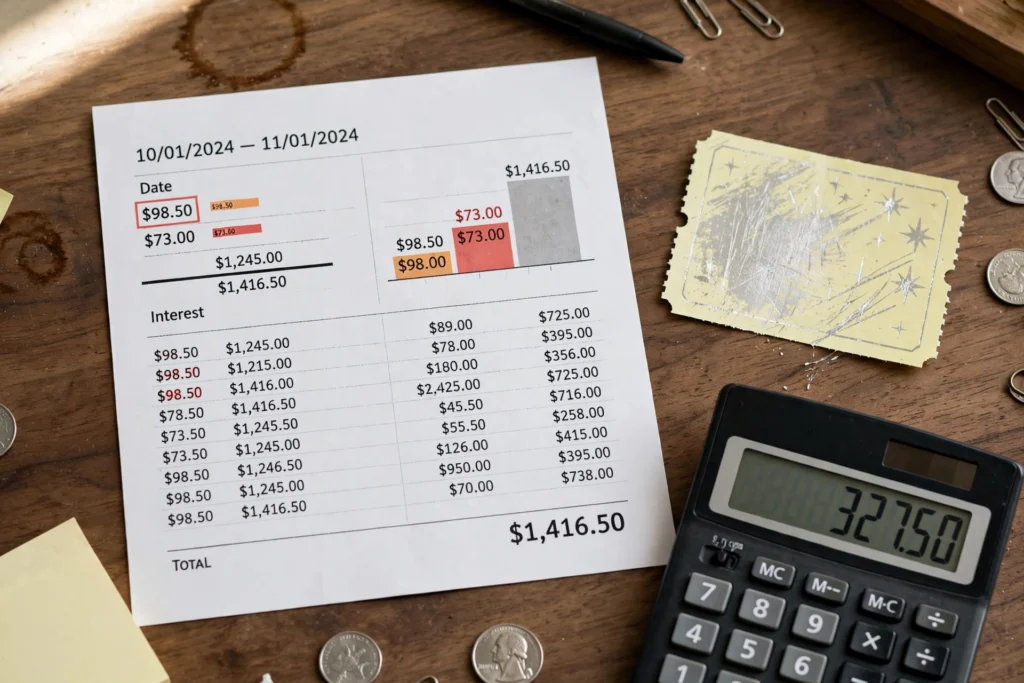
Do the maths on a small purchase and the problem becomes obvious. Buy a $2 lottery ticket and your issuer may still charge a $10 cash advance fee — making your ticket effectively cost $12 before interest. Buy $20 of tickets and the fee is still $10, plus interest at around 30% starting immediately, with no grace period. And because the transaction is coded as a cash advance rather than a purchase, you earn no credit card rewards on it: no cash back, no points, no miles. As one personal finance guide puts it plainly, buying lottery tickets with a credit card is one purchase you should never make with a credit card.
Why Retailers Often Refuse Credit Cards Anyway
Even in states where credit card lottery purchases are legal, the shop at the counter may still say no. Retailers have their own reasons: card processing fees eat into their thin margins on lottery sales, their lottery terminal may not support card payments, or their point-of-sale system may be configured to reject credit cards when the gambling merchant code triggers. Some gas stations and convenience stores simply set their own cash-only policies for tickets.
Lottery commissions can also suspend or revoke a retailer’s licence for accepting unauthorised payment methods, so many shop owners err on the side of caution. The result is a patchwork: a purchase that is legal in your state may still be refused at the shop you happen to walk into. Cash, by contrast, is accepted everywhere that sells lottery tickets, in every state, with zero fees.
UK and International Rules
In the United Kingdom, the answer is simple: no. Under Gambling Commission rules, licensed lottery operators do not accept credit cards for online or telephone payments. Charity lotteries and society lotteries state this explicitly in their terms — payment must be made by direct debit or debit card. The ban reflects the same concern as the US state bans: gambling on borrowed money is a recognised risk factor for problem gambling.
Rules elsewhere vary widely by country and operator, and they change often. In India, state-run lotteries generally accept cash and debit payments at retail counters, and payment rules differ from state to state — always check your own state lottery’s published payment terms. Wherever you play, the safest assumption is that credit cards are restricted or banned, and that cash or debit is the expected way to pay.
Can You Play Lottery With Credit Card Online?
Online lottery platforms add another layer of rules. About a dozen US states operate official online lottery platforms where you can buy draw-game entries from your phone or computer. Most of these platforms accept debit cards and bank transfers (ACH). Some also allow credit cards in states where the law does not prohibit them. Third-party courier services, where they operate, typically accept debit cards, credit cards in eligible states, PayPal, Venmo, Apple Pay, and direct bank transfers — but the same cash-advance problem applies to any credit card payment, and availability depends on your state.
Be careful here: only ever buy through an official state lottery platform or a licensed, regulated service. Unofficial websites offering lottery tickets online are a common source of scams. Our guide to how to play the lottery online safely explains how to check whether a service is legitimate before you pay anything. A current state-by-state guide to debit and credit card rules for lottery tickets is a useful check before you pay online.
Better Ways to Pay for Lottery Tickets
If credit cards are a bad idea, what should you use instead? Cash is the simplest option: accepted everywhere, zero fees, and — usefully — it makes your spending visible. When the cash in your lottery envelope is gone, you stop. That physical limit is one of the best budgeting tools there is.
Debit cards are the next best option. They are widely accepted at most retailers and on most official online platforms, the money comes straight out of your checking account, and there is no cash advance fee and no interest. Some retailers run debit as a PIN transaction, which keeps it simple. Prepaid cards and vouchers are another option where accepted, since they let you load a fixed amount and cannot be overspent.
Whatever method you choose, the golden rule is the same: set a fixed weekly lottery budget and treat it like any other entertainment expense. Our lottery budgeting guide shows how to set a limit you can stick to. If you are new to playing, our first-time player’s guide covers the basics.
Frequently Asked Questions
Can you play lottery with credit card in the US?
In about half of US states, yes — 23 states allow it by law. But 22 states and Washington, D.C. ban it, retailers can refuse even where it is legal, and card issuers usually treat the purchase as a cash advance with extra fees.
Why do card issuers treat lottery purchases as cash advances?
Lottery transactions carry merchant category code 7995, which covers betting and lottery tickets. Most issuers treat that code like an ATM withdrawal: a fee of the greater of $10 or 5%, interest of around 30% from day one, and no rewards earned.
Can you buy lottery tickets with a credit card in the UK?
No. Under Gambling Commission rules, UK lottery operators do not accept credit cards for online or telephone payments. Debit cards and direct debit are the accepted methods.
Can you buy scratch-offs with a credit card?
The same rules apply as for draw-game tickets: roughly half of US states ban it by law, and even where it is legal, retailers usually refuse and card issuers treat it as a cash advance. Cash and debit are the reliable options.
Can you use a credit card at a lottery vending machine?
Usually not. Most lottery machines accept cash only. A few states, such as Ohio, allow credit cards at self-service ticket machines, with daily limits — but this is the exception, not the rule.
Is it a good idea to buy lottery tickets on credit?
No. Gambling on borrowed money is one of the clearest warning signs of problem gambling, and the cash-advance fees make it one of the most expensive ways to buy a ticket. Pay with cash or debit, within a fixed budget, and never borrow to play.
Conclusion
Can you play lottery with credit card payments? Sometimes — but “sometimes allowed” is a long way from “a good idea.” Between state bans, retailer refusals, and cash-advance fees that can turn a $2 ticket into a $12 purchase, credit cards are the worst way to pay for lottery tickets. Cash and debit are cheaper, simpler, and accepted everywhere, and a cash budget makes it far easier to keep your spending under control. Whatever you play, keep it small, keep it fun, and keep it within money you can afford to lose. Lottery play is for adults only — you must be 18 or over to play, so please play responsibly and never gamble on borrowed money.