Bitcoin, Ethereum and stablecoins are now accepted for everything from coffee to cars, so it is natural to ask whether you can buy lottery tickets with crypto too. The short answer is yes — but probably not the way you imagine. You cannot walk into a store and pay for a Powerball ticket with Bitcoin, and official state lotteries do not accept cryptocurrency. What you can do is buy lottery tickets with crypto on specialised crypto lottery platforms and betting sites, where your coins fund entries into draws that mirror the big official lotteries or run entirely on the blockchain.
This is a fast-moving, lightly regulated corner of the lottery world, so the details matter. Some platforms are licensed and legitimate. Others are unlicensed, anonymous, and impossible to get your money back from if something goes wrong. This guide explains how it all works, what is legal, what the risks are, and how to tell a real platform from a scam.
Lottery games are for adults only (18+ in most places). Play responsibly, set a budget, and never spend money you cannot afford to lose. Cryptocurrency prices are volatile, and gambling with crypto carries all the risks of gambling plus the risks of crypto.
Table of Contents
- The Short Answer
- Can You Buy Official Lottery Tickets With Crypto?
- What Is a Crypto Lottery?
- How Crypto Lotteries Work
- Step by Step: How to Buy Lottery Tickets With Crypto
- Which Cryptocurrencies Are Accepted?
- Crypto Lotteries vs Traditional Lotteries
- The Risks You Need to Know
- Is It Legal to Buy Lottery Tickets With Crypto?
- How to Spot a Safe Crypto Lottery Platform
- Frequently Asked Questions
- Conclusion
The Short Answer
Yes, you can buy lottery tickets with crypto — on crypto lottery platforms, not from official state lotteries. These platforms let you deposit Bitcoin, Ethereum, USDT or other coins, pick your numbers, and enter draws. Some run their own blockchain-based draws, while others let you bet on the results of official lotteries such as Powerball or EuroMillions.
What you cannot do is pay for an official Powerball, Mega Millions or National Lottery ticket directly with cryptocurrency. Those lotteries take cash, debit cards or bank payments through their own official channels, and that has not changed. If a site claims to sell you an official ticket for Bitcoin, check it very carefully — it is almost certainly a betting site, not an official ticket seller.
Can You Buy Official Lottery Tickets With Crypto?
No — not directly. The big official lotteries are run by state governments or licensed national operators, and their payment systems are built around fiat currency: cash at a retailer, or a debit card or bank transfer online. None of the major official lotteries currently accepts Bitcoin or any other cryptocurrency as payment for a ticket.
There are three reasons for this. First, regulators require strict identity checks and anti-money-laundering controls, which are harder to run on anonymous crypto payments. Second, crypto prices move fast, so a ticket priced at $2 in Bitcoin would change value every few minutes. Third, lottery laws in most countries were written for cash and card payments, and changing them is slow.
What has grown up instead is a parallel market. Crypto lottery sites accept your coins and give you a lottery entry in return. Some of these are betting sites: you are not buying an official ticket, you are placing a bet on the outcome of an official draw, and the site pays you if your numbers come up. Others are true blockchain lotteries, where the draw itself runs on a smart contract and the prize pool is held in crypto. A guide to how Bitcoin lotteries work explains the difference clearly: a Bitcoin lottery works like Powerball or Mega Millions, except you pay in Bitcoin and you can choose to have your jackpot paid out in Bitcoin instead of cash.
What Is a Crypto Lottery?
A crypto lottery is a lottery where tickets are bought with cryptocurrency and prizes are paid out in cryptocurrency. There are two main types, and the difference matters a lot:
Blockchain lotteries. These run entirely on a blockchain. You buy a digital ticket with crypto, the draw is run by a smart contract or a verifiable random number generator, and the prize is paid automatically to the winning wallet. Because every transaction and draw is recorded on a public ledger, the process is transparent — anyone can check that the draw was fair. Some use “provably fair” algorithms, which let players verify the draw outcome with cryptographic techniques.
Crypto betting sites. These are the more common type. You deposit crypto, and the site lets you bet on the results of official lotteries such as Powerball, Mega Millions or EuroMillions. You are not buying an official ticket — you are betting that your numbers will match the official draw. If they do, the site pays you from its own funds, which are usually backed by an insurance policy. One of the best-known examples is the Bitcoin Lotto, launched in 2017, which uses the numbers drawn in Spain’s Bonolotto draw to decide winners and offers a top prize of 1,000 Bitcoin.
There is also a third, newer idea: “no-loss” lotteries, where players put crypto into a pool that earns interest, and the interest is raffled off as the prize while players keep their original deposit. These are niche and experimental, and they are not the same as a traditional lottery.
How Crypto Lotteries Work

The mechanics are simple once you strip away the jargon:
- You fund an account with crypto. You send Bitcoin, Ethereum, USDT or another supported coin from your own wallet to the platform’s wallet address. Deposits usually appear within minutes.
- You buy a ticket or place a bet. You pick your numbers or use a Quick Pick, and the ticket price is deducted from your crypto balance.
- The draw happens. For blockchain lotteries, a smart contract runs the draw. For betting sites, the platform waits for the official lottery draw and uses those numbers.
- Winnings are paid in crypto. If you win, the prize is added to your on-site balance, and you withdraw it to your own wallet. Payouts are usually fast — minutes to hours — compared with days or weeks for traditional lottery claims.
The odds work the same way as traditional lotteries. A six-number draw from 49 numbers has odds of about 1 in 13,983,816 — far better than Powerball’s 1 in 292,201,338, but still extremely long. And on crypto betting sites, the prize is often capped or insured, so a huge win may be paid out over time rather than in one lump sum.
Crypto lotteries usually take a smaller cut than traditional lotteries — many keep 30% to 50% for the operator, compared with the roughly 35% to 50% that traditional lotteries keep — which means a higher percentage of the prize pool can go back to players. But that also means less money goes to public causes, and there is no government standing behind the prize.
Step by Step: How to Buy Lottery Tickets With Crypto
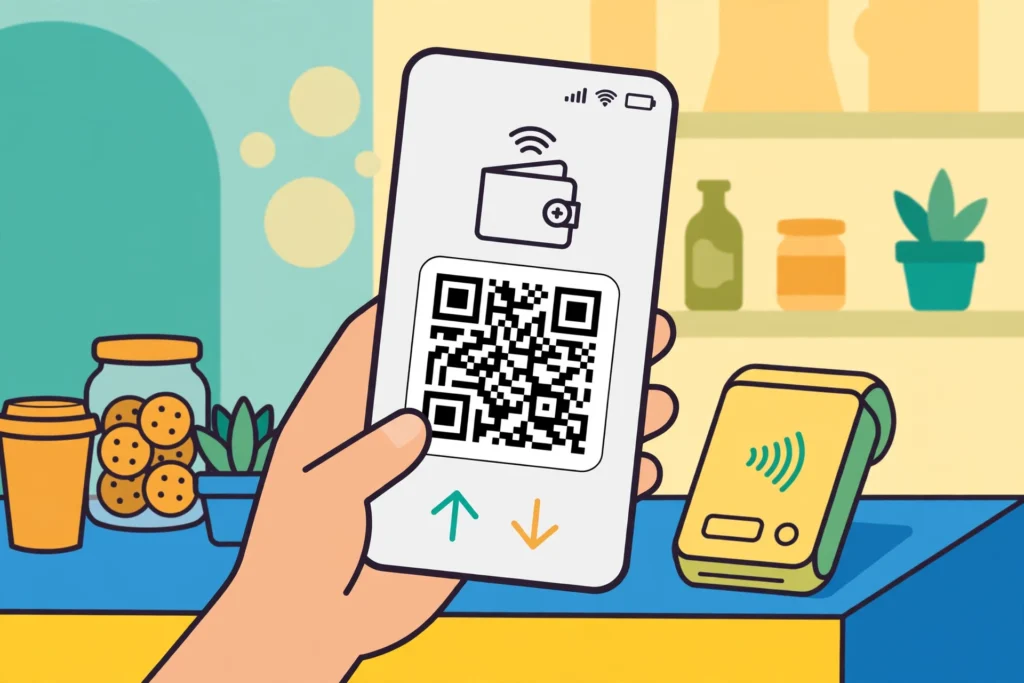
If you decide to try it, here is how the process normally works. This is general information, not a recommendation — and you should check the law where you live first.
Step 1: Get a crypto wallet. You need a digital wallet that can hold Bitcoin or another cryptocurrency. This is the link between your money and the lottery site. Set up two-factor authentication and keep your recovery phrase somewhere safe and offline.
Step 2: Buy cryptocurrency. Buy Bitcoin or another coin from a reputable exchange, then move it to your own wallet. Do not play directly from an exchange account — winnings are returned to the address you paid from, and exchanges can freeze or complicate that.
Step 3: Choose a licensed platform. This is the most important step. Look for a platform with a real gambling licence, published terms, and a track record. A round-up of crypto and Bitcoin lottery sites lists the better-known operators, their licences and the coins they accept — but always verify a licence yourself with the regulator that issued it.
Step 4: Deposit and buy your ticket. Send crypto to the platform, pick your numbers, and confirm the entry. The blockchain records the transaction, and the ticket is confirmed instantly.
Step 5: Check the draw and withdraw. If you win, the prize goes to your on-site balance. Withdraw it to your own wallet promptly rather than leaving a large balance on the platform.
One warning: crypto transactions are irreversible. If you send coins to the wrong address, or to a platform that turns out to be a scam, there is no chargeback and no bank to call. Double-check every address before you send.
Which Cryptocurrencies Are Accepted?
Bitcoin (BTC) is the most widely accepted coin for lottery play, and it is the best choice for high-value prizes because almost every platform supports it. But many platforms now accept a much wider range:
| Cryptocurrency | Speed | Fees | Best for |
|---|---|---|---|
| Bitcoin (BTC) | Medium | Medium | Most widely accepted; high-value prizes |
| Ethereum (ETH) | Fast | Medium–High | Smart-contract lotteries |
| USDT (Tether) | Fast | Very low | Stable value; predictable deposits |
| Litecoin (LTC) | Fast | Low | Good balance of speed and low fees |
| Dogecoin (DOGE) | Fast | Very low | Cheap transactions |
| Tron (TRX) | Very fast | Very low | Frequent, fast play |
Stablecoins such as USDT are worth considering if you want to avoid volatility. If you buy a ticket with Bitcoin and the price of Bitcoin falls 20% before the draw, your prize is worth 20% less in real money even if you win. A stablecoin holds its value against the dollar, so the prize you see is the prize you get.
Crypto Lotteries vs Traditional Lotteries
| Aspect | Crypto lotteries | Traditional lotteries |
|---|---|---|
| Currency | Cryptocurrency (BTC, ETH, USDT, etc.) | Fiat currency (USD, EUR, GBP) |
| Ticket purchase | Online only, paid via crypto wallet | In-store or online, varies by country |
| Transparency | High — blockchain transactions and draw logic visible | Limited — closed internal systems |
| Draw mechanics | Smart contracts or verifiable randomness | Controlled by a central authority |
| Payout speed | Instant or within minutes | Days or weeks |
| Prize stability | Can fluctuate with crypto prices | Fixed-value, stable fiat prizes |
| Regulation | Often lightly regulated or offshore | Heavily regulated by governments |
| Public funding | Little or none | Funds schools and public programs |
The biggest trade-off is trust. A traditional lottery is backed by a government and audited by regulators. A crypto lottery is backed by code and by the reputation of its operator. Blockchain transparency helps, but it does not replace regulation — and if an unlicensed operator disappears with your deposit, there is usually nobody to complain to.
The Risks You Need to Know
Buying lottery tickets with crypto adds a second layer of risk on top of ordinary gambling. Be honest with yourself about all of them:
Volatility. Crypto prices can swing 10% or more in a single day. A prize worth $10,000 today could be worth $7,000 by the time you withdraw it — or $13,000. You are gambling twice: once on the draw, and once on the price.
Unlicensed operators. Many crypto lottery sites are licensed in Curaçao or Costa Rica, where oversight is light, and some have no licence at all. A licence from a weak regulator is better than none, but it is not the same protection as a UK Gambling Commission or US state licence.
No chargebacks. Crypto payments cannot be reversed. If a site refuses to pay, freezes your account, or simply vanishes, your money is gone.
Scams and fake draws. The crypto space attracts scammers. Fake lottery sites, fake “guaranteed win” schemes, and phishing pages that mimic real platforms are common. Never pay an upfront fee to “release” a prize — that is always a scam. Our guide to lottery scams and fake win notifications covers the red flags in detail.
Taxes still apply. Winning in crypto does not make the winnings tax-free. In the United States, lottery winnings are taxable income whether they are paid in dollars or Bitcoin, and the IRS expects you to report them. Crypto-to-crypto conversions can also trigger tax events. Keep records of every deposit and withdrawal, and talk to a tax adviser. Our guide to lottery winnings tax explains the basics.
Addiction and anonymity. Crypto lotteries are fast, private and available 24/7, which makes it easier to lose track of spending. Most crypto sites do not offer the same deposit limits and self-exclusion tools as regulated lotteries. If you need help, see our guide to responsible lottery play tools and self-limits.
Is It Legal to Buy Lottery Tickets With Crypto?
It depends entirely on where you live, and the answer is not settled in most countries. In general:
- In the United States, federal law does not ban buying lottery entries with crypto, but state lotteries do not accept it, and many states restrict online lottery play altogether. Using an offshore crypto lottery site from the US sits in a legal grey area.
- In the UK, crypto lottery betting sites must hold a UK Gambling Commission licence to serve UK players legally. Unlicensed sites are illegal for UK players.
- In the EU, rules vary by country. Some countries allow crypto gambling, others ban it, and a few have no specific rules at all.
- In India, online lotteries are regulated state by state, and cryptocurrency itself sits in a grey area — it is not banned, but it is not legal tender either.
The safest approach is to check the gambling law and the crypto rules in your own country or state before you play, and to use only platforms that are licensed to serve players where you live. If a site accepts players from everywhere with no questions asked, that is a warning sign, not a feature.
How to Spot a Safe Crypto Lottery Platform
Before you deposit a single coin, run through this checklist:
- A real licence from a recognised regulator, verifiable on the regulator’s own website.
- Published terms and payout rules, including prize caps and withdrawal limits.
- Provably fair draws or a clear explanation of how winners are chosen.
- Two-factor authentication and SSL encryption on the site.
- A track record — years of operation, real user reviews, and prompt payouts.
- Responsive support that answers questions before you deposit.
- No pressure tactics — no “act now” bonuses, no requests for upfront fees, no guaranteed wins.
If a platform fails any of these checks, walk away. There are legitimate operators in this space, but they are outnumbered by sites that are not worth your money.
Frequently Asked Questions
Can you buy lottery tickets with crypto?
Yes, you can buy lottery tickets with crypto on crypto lottery platforms and betting sites that accept Bitcoin, Ethereum, USDT and other coins. However, official state lotteries such as Powerball and Mega Millions do not accept cryptocurrency directly — you cannot pay for an official ticket with Bitcoin.
Which crypto lottery sites accept Bitcoin?
Several established platforms accept Bitcoin, including betting sites that let you wager on official lottery results and blockchain lotteries that run their own draws. Always check that a platform holds a real gambling licence and has a track record of paying winners before depositing.
Are crypto lotteries legal?
It depends on where you live. Crypto lotteries are legal in some countries, restricted in others, and unregulated in many. In the US and UK, the platform must be licensed to serve players in your jurisdiction. Check your local gambling and crypto laws before playing.
Are crypto lotteries safe?
They can be, on licensed platforms with provably fair draws and a track record of paying out. But many crypto lottery sites are unlicensed, crypto payments are irreversible, and there is no chargeback if a site refuses to pay. Only use platforms you have verified, and never deposit more than you can afford to lose.
Do you pay tax on crypto lottery winnings?
In most countries, yes. In the United States, lottery winnings are taxable income whether paid in dollars or cryptocurrency, and you must report them. Crypto-to-crypto conversions can also trigger tax events. Keep records and talk to a tax adviser.
Can you stay anonymous when you buy lottery tickets with crypto?
Crypto payments are pseudonymous, not anonymous — transactions are recorded on a public blockchain. Most legitimate platforms also require identity verification (KYC) before large withdrawals. True anonymity is rare, and platforms that promise it are often unlicensed.
Conclusion
So, can you buy lottery tickets with crypto? Yes — through crypto lottery platforms and betting sites, using Bitcoin, Ethereum or stablecoins. You cannot buy an official Powerball or Mega Millions ticket with crypto, and that distinction matters. On a crypto platform you are either betting on an official draw or playing a blockchain lottery, and the protections you get are very different from those of a government-run game.
If you decide to try it, treat it as entertainment, not an investment. Use a licensed platform, pay with a stablecoin if you want to avoid price swings, keep records for tax, and never deposit money you cannot afford to lose. The blockchain makes lottery draws more transparent than ever — but transparency is not the same as safety, and the oldest lottery advice still applies: check the operator, read the terms, and know when to stop.
Lottery games are for adults only (18+ in most places). Play responsibly, set limits, and never chase losses. If gambling stops being fun, seek help from a local support service or the national helpline in your country.