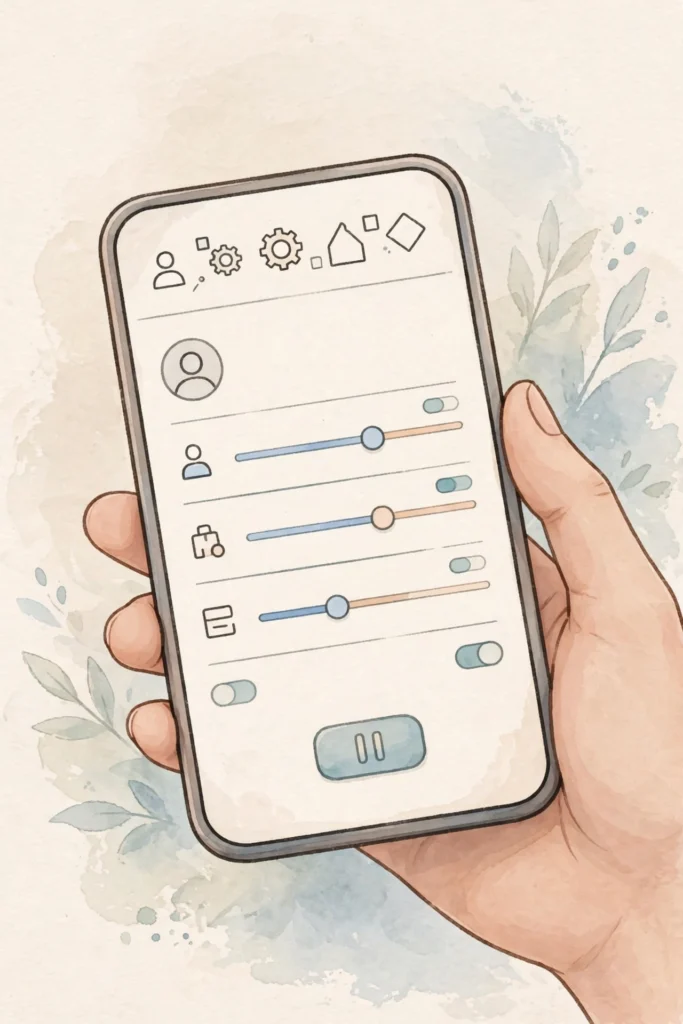
Responsible lottery play tools are the controls that let you decide, while you are calm and clear-headed, how much time and money you will spend on lottery play — and then make that decision stick when temptation says otherwise. They include deposit limits, loss limits, session timers, reality checks, short time-outs and full self-exclusion, and they are offered by licensed lottery operators and gambling platforms in many countries. Used well, they turn “I should stop” from a vague intention into an automatic barrier. This guide explains each tool, how to set it, and when to reach for a stronger one. Lottery play is for adults aged 18 and over only — please play responsibly and only with money you can afford to lose — and if gambling ever stops being fun, these tools — and the free support services linked below — are there to help you stop.

Table of Contents
- Why Self-Limits Work Better Than Willpower
- Deposit Limits: Cap the Money Going In
- Loss Limits and Spend Limits
- Session Timers and Reality Checks
- Time-Outs and Cooling-Off Periods
- Self-Exclusion: The Strongest Tool
- GamStop and National Schemes
- Blocking Software and Bank Blocks
- What About Paper Tickets and Shops?
- Getting Help Beyond the Tools
- Frequently Asked Questions
Why Self-Limits Work Better Than Willpower
Willpower is weakest exactly when you need it most: after a loss, when you are chasing a win, or late at night when a draw is approaching. Responsible play tools work because they are set in advance. A deposit limit decided on a calm Sunday morning still applies on a frustrating Friday evening, when you might otherwise deposit more than you planned. Research on deposit-limit design supports this: a study by the Behavioural Insights Team, commissioned by GambleAware, found that how limits are presented changes the limits people choose, with simpler, lower-anchored options leading to materially lower limits. See GambleAware — Safer gambling tools: behavioural insights, part 1.
The second reason tools work is friction. Raising a limit usually requires a waiting period — often 24 hours or more — while lowering a limit takes effect immediately. That asymmetry is deliberate: it protects the decision your calmer self made from being overturned in a heated moment. If you set only one tool, make it a deposit limit. If you set two, add a session timer. If you are already worried about your play, skip straight to a time-out or self-exclusion — those tools exist for exactly that moment, and using them is a sign of good judgement, not failure.
Deposit Limits: Cap the Money Going In
A deposit limit caps how much money you can add to an online lottery or gambling account within a chosen period — daily, weekly or monthly. Once the limit is reached, you cannot top up again until the period resets, no matter how much money is in your bank account. This is the single most effective tool for most players, because it acts before money is spent rather than after. Set the limit from your entertainment budget, not from what you hope to win: if you can comfortably afford a small weekly amount for entertainment, set the limit below that figure so lottery play never crowds out essentials.
When you set a deposit limit, choose the shortest period that fits your habits. A daily limit suits someone who plays in short bursts; a weekly limit suits payday patterns; a monthly limit suits someone who budgets by the month. Most operators let you set all three at once, and the strictest one applies. Remember the cooling-off rule: if you later want to raise the limit, expect a delay of 24 hours or more before the increase takes effect, while a decrease is usually instant. That delay is your friend — do not try to work around it by opening another account, which may also breach the operator’s rules. Our guide to lottery budgeting: play within your means shows how to pick a sensible figure in the first place.
Loss Limits and Spend Limits
A loss limit caps your net losses within a period, rather than your deposits. The difference matters: if you deposit, win something back, and keep playing, a deposit limit alone may still let you cycle a large amount through the account, while a loss limit stops you once your net loss reaches the cap. Some operators also offer spend or wagering limits, which cap the total amount staked regardless of wins. Used together, a deposit limit and a loss limit give tighter control than either alone.
Set a loss limit lower than your deposit limit if the operator allows both, and review both monthly. A limit that felt comfortable three months ago may be too high after a pay cut, a new bill, or a change in household circumstances. Limits are not a one-time setting; they are a habit, like checking your bank balance. If you find yourself repeatedly hitting your limit and feeling frustrated rather than protected, that frustration is useful information — it may be time for a time-out rather than a higher limit.
Session Timers and Reality Checks
Session timers and reality checks deal with time rather than money. A session timer logs you out automatically after a set period — say 30 or 60 minutes — forcing a break before you can log back in. A reality check pops up at intervals during play, showing how long you have been playing and how much you have spent or won in that session, and asking whether you want to continue. Licensed operators in Great Britain are required to offer these tools, and similar requirements exist in several other regulated markets.
These tools look minor, but they break the trance that long sessions create. Lottery play itself is usually quick — a ticket purchase takes seconds — but the surrounding activity, checking results, browsing games, and buying for the next draw, can stretch into a long session, especially online. A reality check that shows your session total in plain numbers is often the moment a player realises the evening has cost more than intended. Set the shortest timer you will tolerate, and treat every reality check as a genuine decision point, not a box to dismiss.
Time-Outs and Cooling-Off Periods
A time-out, also called a cooling-off period, temporarily suspends your account for a short fixed period — commonly 24 hours, a week, or a month. During a time-out you cannot log in, deposit or play, and you will not receive marketing messages. Unlike self-exclusion, a time-out ends automatically when the period expires, and you do not need to contact anyone to resume. It is the right tool when you notice warning signs — playing more than planned, feeling irritated after losses, or thinking about lottery play more than usual — but you are not ready to commit to a long exclusion.
Use time-outs early and often. A 24-hour pause after a frustrating loss costs nothing and breaks the impulse to chase it immediately. A week’s pause after a big win can be just as valuable, because wins can trigger a burst of extra play that quietly gives the money back. If you take repeated time-outs and still feel out of control, that pattern is telling you to consider self-exclusion instead.
Self-Exclusion: The Strongest Tool
Self-exclusion is a formal agreement in which you ask an operator to refuse you service for a fixed period, usually a minimum of six months and up to five years. Once it is in place, the operator must close your account, return any balance, and remove you from marketing lists. It cannot be cancelled early — that irreversibility is the point, because it protects you from a moment of weakness undoing a serious decision. When the period ends, exclusion does not always lift automatically; you may need to request removal and complete a cooling-off period first.

Self-exclusion from one operator covers only that operator, so if you play on several sites, you need to self-exclude from each one — or use a national scheme where one exists. Choose self-exclusion when play is harming your finances, relationships, work or health; when you have borrowed money to play; when you hide your play from family; or when limits and time-outs have not worked. None of those situations is a moral failing, and every one of them is a legitimate reason to use the strongest tool available. GamCare’s guide to self-exclusion explains the process and the schemes available in Great Britain: GamCare — Self-exclusion.
GamStop and National Schemes
In Great Britain, GamStop is the free national online self-exclusion scheme. One registration blocks you from every online operator licensed by the UK Gambling Commission, for six months, one year or five years, and participation has been a licence condition for operators since March 2020. You can register at GamStop registration. GamStop covers online gambling only: it does not block betting shops, casinos or land-based venues, which run their own multi-operator schemes, and it does not cover offshore sites outside UK licensing — which is why pairing it with blocking software is often recommended.
Other countries have their own versions. Australia’s BetStop is a national online wagering self-exclusion register, several US states run voluntary self-exclusion lists for casinos and online gambling, and many European regulators require operators to offer self-exclusion with minimum periods set by law. If you live outside Great Britain, search for your regulator’s self-exclusion register rather than assuming GamStop covers you — it does not. Wherever you are, the principle is identical: one decision, made once, that blocks access across many operators at once.
Blocking Software and Bank Blocks
Blocking software works at the device level rather than the account level: it prevents your phone or computer from opening gambling sites and apps, including sites that no self-exclusion scheme covers. Gamban is the best-known example, and it is available free to many UK residents through the TalkBanStop partnership. Bank gambling blocks work at the payment level: several banks now let you switch off gambling transactions on your card or account, so deposits are declined before they leave your bank. Used together, a national exclusion scheme, blocking software and a bank block create three independent barriers, so a single moment of weakness has to defeat all three — which is much harder than defeating one.
These tools are worth setting up even if you do not feel you have a problem. A bank block costs nothing, takes a minute to enable in most banking apps, and quietly prevents impulse deposits. Think of it like a seatbelt: you do not wait for a crash to start wearing one.
What About Paper Tickets and Shops?
Online tools do not help with paper tickets bought in a shop, and this is a genuine gap. There is no deposit limit on a shop counter. The tools that work for paper play are personal and practical: decide your weekly ticket budget in advance and carry only that amount, or buy a fixed number of tickets per draw and no more; avoid buying tickets when upset, tired or after drinking; keep a simple spending diary so the monthly total is visible rather than guessed; and never borrow money to buy a ticket. If shop-bought tickets are the problem, self-exclusion schemes for land-based venues and a bank block on cash withdrawals can still help, as can asking a trusted person to hold you accountable.
Age checks are part of the same picture: retailers are expected to ask for ID when a buyer looks underage, and lottery play is restricted to adults. Our guide to lottery age limits around the world explains how those limits vary, and our lottery scams guide covers the fake-win messages that often target players who have just bought tickets.
Getting Help Beyond the Tools
Tools control access, but they do not by themselves address why play became a problem, and that is where free confidential support comes in. In Great Britain, the National Gambling Helpline on 0808 8020 133, run by GamCare, is free and open 24 hours a day, with live chat options as well. GambleAware funds treatment and prevention services and publishes research and self-help resources. In the United States, the National Problem Gambling Helpline is 1-800-GAMBLER. In India, where gambling support services are less centralised, players can approach general mental-health helplines and counselling services, and family doctors can refer to appropriate support.

Calling a helpline is not a last resort and it is not an admission of failure. Most callers are people who noticed a problem early and want a plan, not people in crisis. Support is confidential, it is free in the services named here, and it can help with the practical side too — budgeting, talking to family, and dealing with debt — not just with stopping play. If someone else’s play worries you, these services also support family and friends, and you do not need the player’s permission to ask for advice yourself.
Watch: Responsible Lottery Play Tools
No verified topical YouTube video was found for this subject, so no video is embedded here.
Frequently Asked Questions
What are responsible lottery play tools?
Tools that help you control lottery play: deposit limits, loss limits, session timers, reality checks, time-outs, self-exclusion, blocking software and bank gambling blocks. They are set in advance so they still apply when willpower is weak.
What is the difference between a deposit limit and a loss limit?
A deposit limit caps money added to your account in a period; a loss limit caps your net losses in a period. Used together they give tighter control than either alone.
How quickly can I raise or lower a limit?
Lowering a limit usually takes effect immediately, while raising one typically requires a cooling-off period of 24 hours or more. That delay is deliberate protection against impulsive changes.
What is a time-out?
A short temporary account suspension — commonly 24 hours, a week or a month — that ends automatically. It is useful when you notice warning signs but are not ready for full self-exclusion.
What is self-exclusion?
A formal agreement asking an operator to refuse you service for a fixed period, usually six months to five years. It cannot be cancelled early, and the operator must close your account and stop marketing to you.
Does GamStop cover all gambling?
No. GamStop covers online operators licensed in Great Britain only. It does not cover betting shops, casinos, land-based venues or offshore sites, which need their own schemes or blocking tools.
Do these tools work for paper lottery tickets?
Online account tools do not apply to shop-bought tickets. For paper play, use a fixed cash budget, a spending diary, and bank or venue-level blocks, and avoid buying when upset or after drinking.
Where can I get free help for gambling problems?
In Great Britain, the National Gambling Helpline on 0808 8020 133 (GamCare) is free and open 24 hours a day. In the US, call 1-800-GAMBLER. Support is confidential and available to family and friends as well as players.
Conclusion
Responsible lottery play tools work because they are decided in advance: a deposit limit set on a calm day still holds on a bad evening, a session timer breaks a long session, a time-out stops a chase before it starts, and self-exclusion puts a firm barrier in place when lighter tools are not enough. Set at least a deposit limit before your next play, review it monthly, and do not hesitate to use a stronger tool the moment you feel play slipping out of control. Lottery play is for adults aged 18 and over only: play responsibly, keep tickets as entertainment within a budget you can afford, and if gambling ever stops being fun, use these tools and reach out for free, confidential help — asking for help is a strong decision, not a weak one.