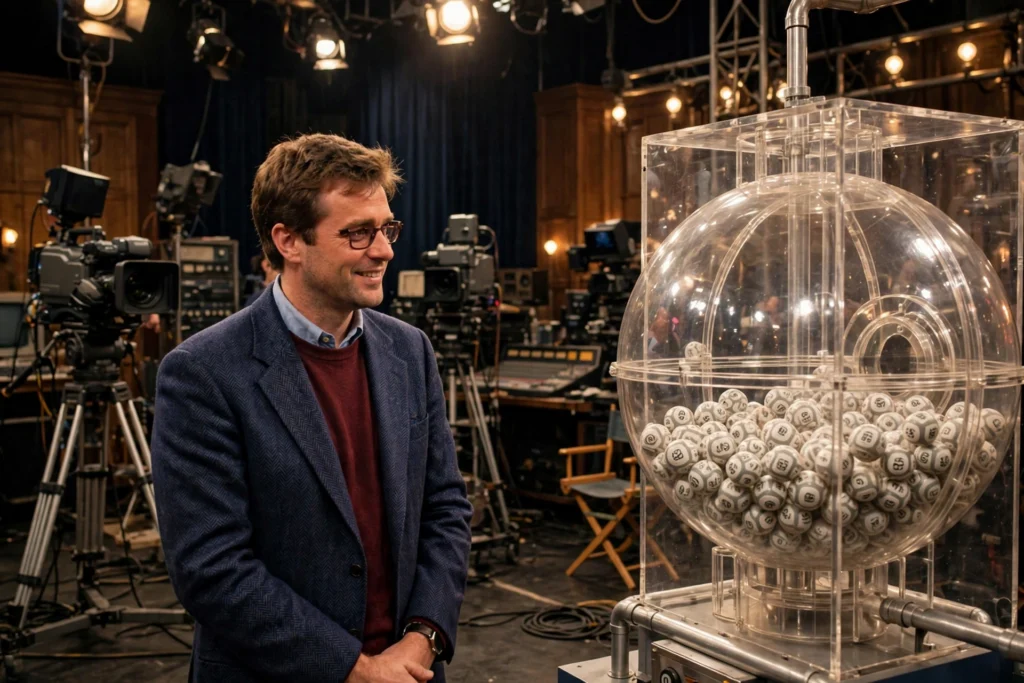
The history of UK National Lottery begins on a Saturday night in November 1994, when around 22 million people tuned in to BBC One to watch the first draw of Britain’s first national lottery in nearly 170 years. What started as a single weekly game with a £1 ticket has grown into a national institution: over £53 billion raised for Good Causes, over 680,000 projects funded, and more than 8,000 new millionaires created. This guide traces the history of UK National Lottery from the Act of Parliament that created it, through Camelot’s thirty-year run as operator, to the Allwyn takeover in February 2024 — and explains how the games themselves changed along the way. You must be 18 or over to play the lottery in the UK — please play responsibly.
Table of Contents
- Before 1994: Britain’s Lottery Gap
- The First Draw: 19 November 1994
- History of UK National Lottery: The Camelot Years, 1994–2024
- How the Games Changed
- Good Causes: Where the Money Goes
- The Allwyn Takeover: February 2024
- Watch: The First National Lottery Draw
- Frequently Asked Questions
- Conclusion
Before 1994: Britain’s Lottery Gap
Britain actually has one of the oldest lottery traditions in the world. Queen Elizabeth I authorised the first English lottery in 1567, and state lotteries ran on and off for centuries afterwards. But the last national lottery had ended in 1826, and for the next 168 years Britain had none — even as lotteries flourished in the United States and across Europe. By the early 1990s, the government of Prime Minister John Major decided to bring one back, with a specific purpose: to raise money for good causes — arts, sport, heritage and community projects — without raising taxes.
Parliament passed the National Lottery etc. Act in 1993, creating a state-franchised lottery: the government would own the lottery and regulate it, while a private company would operate it under licence. Several consortia bid for the franchise, and on 25 May 1994 the Camelot Group — a consortium formed specifically for the bid — was awarded the first licence. Ticket sales began on 14 November 1994, and within twelve hours around seven million tickets had been sold. For the wider story of lotteries before the modern era, see our guide to the history of lotteries from ancient China to modern draws.
The First Draw: 19 November 1994
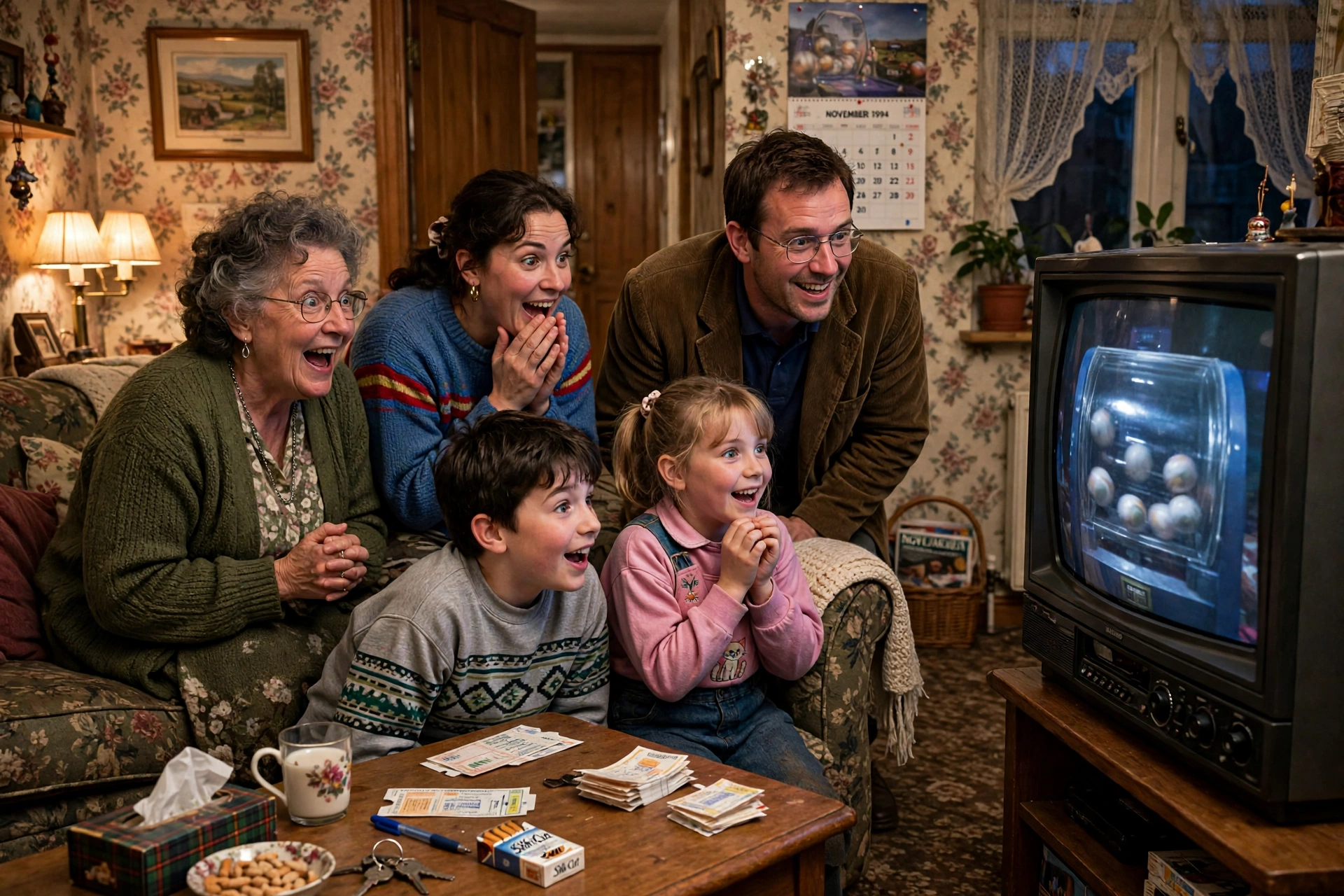
The first draw took place on Saturday 19 November 1994, broadcast live on BBC One in an hour-long show presented by Noel Edmonds, with Anthea Turner and Gordon Kennedy. An 18-year-old celebrating her birthday pressed the button that started the draw machine, and 49 contestants — one for each number — had been chosen from thousands of applicants to take part. The first numbers drawn were 30, 3, 5, 44, 14 and 22, with bonus ball 10, and seven jackpot winners shared a prize of £5,874,778 — about £839,254 each.
The show was a sensation and a slight anti-climax at the same time. Around 22 to 25 million people watched, but because the jackpot was shared seven ways, the first draw produced no millionaire — a disappointment after weeks of hype promising that somebody’s life would change overnight. It did not matter for long. Within weeks the National Lottery was a weekly ritual in millions of homes, and the Saturday night draw show ran on the BBC for more than two decades.
History of UK National Lottery: The Camelot Years, 1994–2024
Camelot ran the National Lottery for just under thirty years, across three licences: the first from 1994 to 2002, the second from 2002 to 2009, and the third from 2009 to 31 January 2024. The company won each licence competition it entered, and for most of that time “Camelot” and “the National Lottery” were effectively the same thing in the public mind. Under Camelot the lottery grew from a single game into a family of games — Lotto, Thunderball, EuroMillions, scratchcards and more — and the weekly draw moved from a Saturday-only event to draws on Wednesdays, Fridays and Saturdays.
The era also had its controversies and milestones. The previous record jackpot was £42 million, shared between three ticket holders in January 1996 — a record that stood for twenty years until the £66 million jackpot of 9 January 2016, shared by two ticket holders. Draws moved off television entirely in January 2017, becoming online-only events streamed on the National Lottery website and YouTube. And in March 2022, the Gambling Commission announced that Camelot’s licence would not be renewed: the Fourth Licence had been awarded to Allwyn Entertainment, a multinational lottery operator owned by Czech billionaire Karel Komárek. Camelot challenged the decision in court, then dropped its legal proceedings in September 2022; in February 2023 Allwyn completed its purchase of Camelot UK Lotteries itself, smoothing the handover.
How the Games Changed
The games changed constantly across three decades. The original game — six numbers from 49, £1 a ticket — gained a Wednesday draw in February 1997 and was renamed Lotto in May 2002. Thunderball launched in 1999, and the UK joined EuroMillions in February 2004, bringing jackpots of tens of millions of euros into British living rooms. Instant-win scratchcards, which have their own long history traced in our guide to the history of scratch cards, became a major part of the range.
Some changes were controversial. In October 2013 Camelot launched a “New Dawn for Lotto”, changing the format to 6 from 59 and raising the ticket price, aiming to create bigger jackpots and more millionaires. In October 2015 the price rose to £2 a line. Set For Life arrived in 2019, offering a top prize paid monthly over thirty years rather than as a lump sum. And in 2026 Allwyn introduced a UK version of Powerball — the American game — under an agreement with the Multi-State Lottery Association, alongside the biggest overhaul of the Lotto game since 1994. The through-line of every change was the same: bigger jackpots, more winners, and more money for Good Causes.
Good Causes: Where the Money Goes

Good Causes funding is the reason the National Lottery exists, and it is the part of its history that reaches furthest. By the time of the Allwyn handover in early 2024, the lottery had raised around £48 billion for Good Causes and funded more than 685,000 community, sport, arts and heritage projects across the UK — at a rate of over £4 million a day. By 2026 the total raised had passed £53 billion, funding over 680,000 projects. More than £103 billion has been paid out in prizes to players, and some £20.9 billion has been returned to the Treasury as Lottery Duty.
The money is visible everywhere: village halls, sports centres, museums, theatres, parks and Olympic training facilities. The 2012 London Olympics were part-funded by lottery money, and hundreds of smaller projects — from a new roof on a community centre to equipment for a youth football team — carry the National Lottery’s crossed-fingers logo. Allwyn has pledged to double the amount generated for Good Causes each week to £60 million under the Fourth Licence.
The Allwyn Takeover: February 2024
On 1 February 2024, Allwyn Entertainment Ltd took over all operations of The National Lottery, ending Camelot’s run since the 1994 launch — the first change of operator in the lottery’s history. The Fourth National Lottery Licence runs for ten years, until 31 January 2034, and is regulated by the Gambling Commission under the National Lottery etc. Act 1993. Allwyn, part of the multinational Allwyn Group, already operated lotteries in Austria, the Czech Republic, Greece, Cyprus, Italy and the US state of Illinois.
The handover itself was deliberately low-key: the National Lottery website and app went offline from 11 p.m. on 31 January and returned on the morning of 1 February under the new operator. In its first full calendar year as operator, 2025, Allwyn reported National Lottery sales of more than £8 billion. The change of operator did not change the fundamentals — the same games, the same draws, the same Good Causes mission — but it marked the end of an era: for the first time since 1994, the National Lottery is run by a company other than Camelot.
Watch: The First National Lottery Draw
Watch the moment it all began — the first National Lottery draw as shown live on BBC One on 19 November 1994, with the draw itself and the very first set of winning balls:
Frequently Asked Questions
When did the UK National Lottery start?
The UK National Lottery launched in 1994. Ticket sales began on 14 November 1994 and the first draw took place on Saturday 19 November 1994, broadcast live on BBC One and presented by Noel Edmonds.
What were the first National Lottery numbers?
The first numbers drawn were 30, 3, 5, 44, 14 and 22, with bonus ball 10. Seven jackpot winners shared a prize of £5,874,778, receiving about £839,254 each.
Who ran the National Lottery before Allwyn?
Camelot Group ran the National Lottery from its launch in 1994 until 31 January 2024, across three licences. Allwyn Entertainment took over on 1 February 2024 under the Fourth Licence, which runs until 31 January 2034.
How much has the National Lottery raised for Good Causes?
More than £53 billion has been raised since 1994, funding over 680,000 Good Causes projects across the UK — community, sport, arts and heritage projects — at a rate of millions of pounds a day.
When did the National Lottery leave television?
The live draws stopped being broadcast on television in January 2017. Since then, draws have been streamed live online on the National Lottery website and YouTube, with short results programmes on ITV.
Can I watch the first National Lottery draw today?
Yes — footage of the first draw, as broadcast live on BBC One on 19 November 1994, is available on YouTube. See the video in the Watch section above.
Conclusion
The history of UK National Lottery is the story of a gamble that paid off for the country as much as for its winners. From the 1993 Act and Camelot’s franchise win in May 1994, through the famous first draw on 19 November 1994, three decades of new games and record jackpots, and finally the first-ever change of operator when Allwyn took over on 1 February 2024, the lottery has gone from a Saturday-night television event to an online institution. Along the way it has paid out more than £103 billion in prizes, created more than 8,000 millionaires and raised over £53 billion for Good Causes — village halls and Olympic stadiums alike. That is the real legacy of the National Lottery: not the jackpot, but everything the ticket money built. The lottery is entertainment for adults: you must be 18 or over to play, so please play responsibly and only spend what you can afford to lose.
Related guides: History of Lotteries: Ancient China to Modern Draws · History of Scratch Cards · Biggest Lottery Jackpots in History
Sources: National Lottery (United Kingdom) — Wikipedia · UK Gambling Commission · The National Lottery (official)