
Table of Contents
- What Are the Mega Millions Odds?
- How the Game Works in 2026
- The Nine Prize Tiers and Their Odds
- How the Multiplier Works
- How the Jackpot Odds Are Calculated
- Mega Millions Odds vs Other Lotteries
- What the Odds Actually Mean for You
- Watch: A Mathematician Breaks Down Lottery Odds
- Frequently Asked Questions
- Conclusion
What Are the Mega Millions Odds?
Mega Millions odds are the numbers every player should understand before buying a ticket, because they explain exactly what a $5 play does and does not buy. The headline figure is stark: the odds of winning the Mega Millions jackpot with a single play are 1 in 290,472,336. The odds of winning any prize at all are far kinder, at about 1 in 23. Between those two numbers sits the whole story of the game — nine prize tiers, a built-in multiplier, and a jackpot that starts at $50 million and rolls over until someone wins it.
This guide explains every tier, shows how the odds are worked out, and puts the numbers in plain language. There is no strategy in here that claims to beat the game, because none exists: every combination has exactly the same chance on every draw. What you can do is understand the odds, choose your games with your eyes open, and set a budget that treats the lottery as entertainment. You must be 18 or older to play Mega Millions in most states, and the game should always stay a small, affordable bit of fun.
How the Game Works in 2026
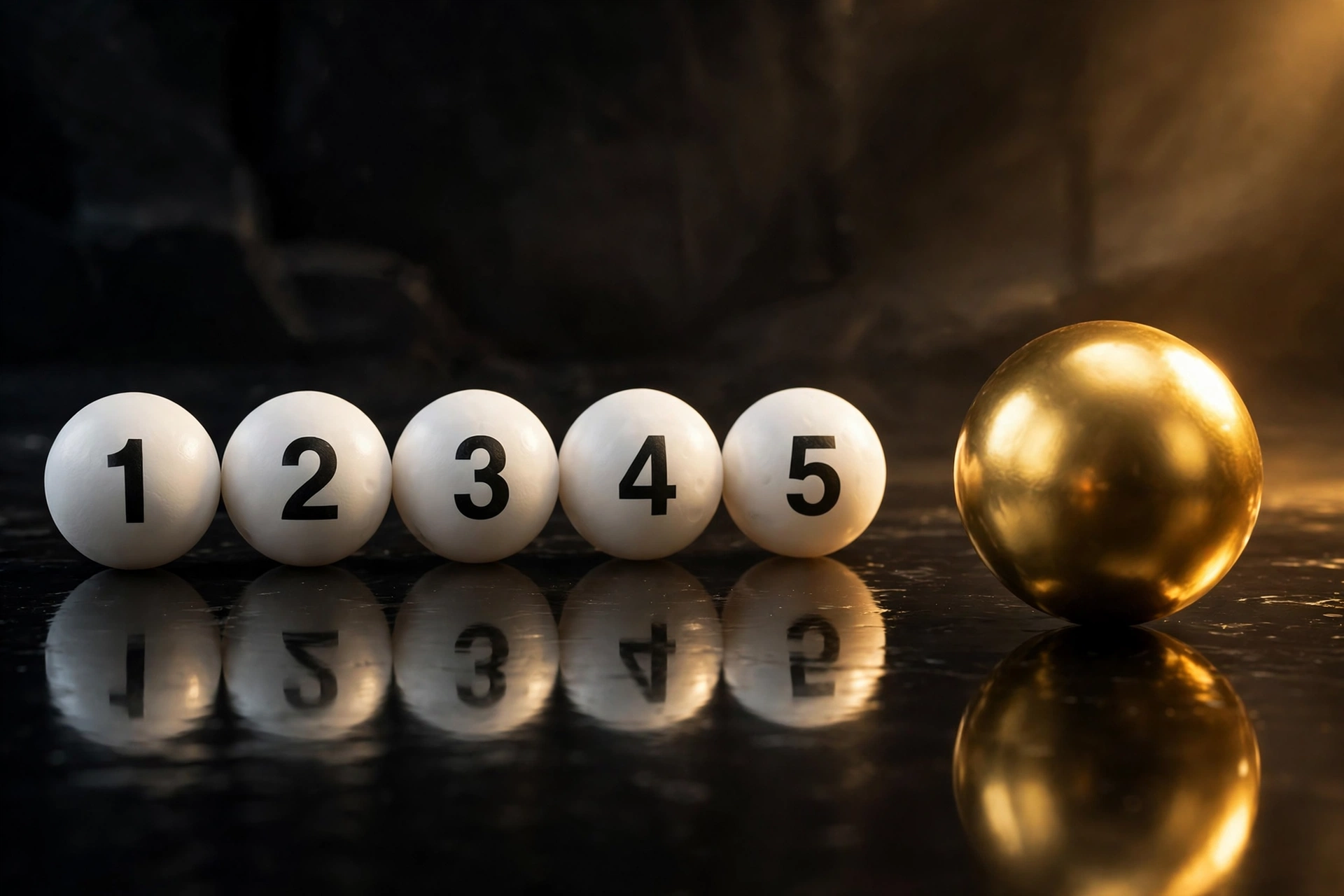
Mega Millions changed in April 2025, so if you last played before then, the game you remember is out of date. A play now costs $5, up from $2, and the format is five white balls drawn from 1 to 70 plus one gold Mega Ball drawn from 1 to 24. Drawings are held twice a week, on Tuesday and Friday nights at 11:00 p.m. Eastern time.
The other big change is the multiplier. Every $5 play now includes a random multiplier of 2x, 3x, 4x, 5x or 10x, printed on the ticket at the time of purchase. It applies to every prize except the jackpot, so the smallest prize is now at least $10 — double the price of the ticket — and matching all five white balls without the Mega Ball pays between $2 million and $10 million depending on the multiplier drawn. There is no separate add-on to buy and no extra decision to make: the multiplier is part of every ticket.
The jackpot starts at $50 million and grows with every rollover, with no cap. If nobody wins, it keeps climbing until someone matches all five white balls plus the Mega Ball. For the step-by-step rules of buying a ticket, see our Mega Millions guide, and for the general principles behind lottery probability, see our beginner’s guide to lottery odds.
The Nine Prize Tiers and Their Odds
Mega Millions has nine ways to win. Here is the full prize table for a $5 play, with the prize range created by the multiplier:
- Match 5 + Mega Ball — the jackpot. Odds: 1 in 290,472,336. The jackpot starts at $50 million and rolls over.
- Match 5 (no Mega Ball) — $2,000,000 to $10,000,000. Odds: 1 in 12,629,232.
- Match 4 + Mega Ball — $20,000 to $100,000. Odds: 1 in 893,761.
- Match 4 — $1,000 to $5,000. Odds: 1 in 38,859.
- Match 3 + Mega Ball — $400 to $2,000. Odds: 1 in 13,965.
- Match 3 — $20 to $100. Odds: 1 in 607.
- Match 2 + Mega Ball — $20 to $100. Odds: 1 in 665.
- Match 1 + Mega Ball — $14 to $70. Odds: 1 in 86.
- Mega Ball only — $10 to $50. Odds: 1 in 35.
Add up all nine tiers and the overall chance of winning something on a single play is about 1 in 23, or roughly 4.3%. That means about 95.7% of plays win nothing at all. And most of the winning plays are the smallest kind: about two-thirds of all winning tickets win only the lowest prize, matching just the Mega Ball for $10 to $50. The odds above are the official published figures, and they are the same in every state — except California, where non-jackpot prizes are paid on a pari-mutuel basis, so the amounts there can differ.
How the Multiplier Works
The multiplier is the part of the modern game most players misunderstand, so it is worth a clear explanation. When you buy a ticket, the terminal randomly assigns it a multiplier of 2x, 3x, 4x, 5x or 10x, and that number is printed on the ticket. It is drawn before the numbers are drawn, and you cannot choose it or pay extra for a better one.
The chances of each multiplier are not equal. A 2x multiplier comes up about 1 time in 2.13, making it the most common by far. A 3x comes up about 1 in 3.2, a 4x about 1 in 8, a 5x about 1 in 16, and the 10x about 1 in 32. So roughly half of all tickets carry a 2x, and only about one ticket in 32 carries the 10x that turns a Match 5 win into $10 million.
The multiplier multiplies every non-jackpot prize. Match 4 with a 2x pays $1,000; the same match with a 10x pays $5,000. Matching just the Mega Ball pays $10 with a 2x and $50 with a 10x. The jackpot is never multiplied — it is the jackpot, whatever the multiplier on your ticket says. Because the multiplier is included in the $5 price, there is no decision to make at the counter, but knowing the odds of each multiplier stops you from assuming a 10x is just around the corner.
How the Jackpot Odds Are Calculated
The jackpot figure of 1 in 290,472,336 is not a guess or an estimate — it is exact combinatorics, and it is worth seeing once so the number feels real rather than abstract. There are 12,103,014 ways to choose 5 white balls from a field of 70. Each of those combinations can be paired with any of the 24 possible Mega Balls, which gives 12,103,014 × 24 = 290,472,336 possible plays in total. Exactly one of them wins the jackpot.
Every other tier is counted the same way. Take Match 5 without the Mega Ball: your five white balls must be exactly the five drawn, and the Mega Ball must be one of the 23 that were not drawn, so there are 23 winning plays — odds of 1 in 12,629,232. At the other end, matching only the Mega Ball has 8,259,888 winning plays, which is why its odds are a comparatively friendly 1 in 35.
What this means in practice is that buying more tickets does improve your chances, but only in exact proportion to the number of tickets. Two tickets give you 2 chances in 290,472,336, which is still about 1 in 145 million. Ten tickets give you 10 chances in 290,472,336. There is no number of tickets a normal person can buy that makes the jackpot likely — you would need to buy more than 145 million tickets just to reach a 50-50 chance, which would cost more than $725 million. Past draws change nothing either: every combination has the same probability on every drawing, whatever was drawn last week.
Mega Millions Odds vs Other Lotteries
The Mega Millions jackpot is one of the hardest prizes in the lottery world to win, and the comparison with other games shows why. Powerball’s jackpot odds are 1 in 292,201,338, almost identical. EuroMillions’ jackpot odds are about 1 in 139 million, and the UK Lotto’s are about 1 in 45 million — both far easier than Mega Millions, but with far smaller jackpots. Smaller state games are easier still: Arizona’s Fantasy 5 jackpot odds are about 1 in 749,348, and a typical Pick 3 straight play is 1 in 1,000.
The pattern is consistent: the bigger the jackpot, the longer the odds. Mega Millions and Powerball pay the biggest jackpots on earth precisely because almost nobody wins them, so they roll over for weeks and the prize pool grows into the hundreds of millions. If your goal is to win something — anything — a smaller game with a $1 ticket and odds of 1 in 10 is a far better bet than a $5 ticket with odds of 1 in 290 million. If your goal is the dream of a nine-figure jackpot, Mega Millions is the game, but the honest price of that dream is knowing how unlikely it is. Our full comparison of Powerball, Mega Millions, EuroMillions and UK Lotto odds lays out every game side by side.

What the Odds Actually Mean for You
Numbers like 1 in 290 million are hard to picture, so here are three honest ways to think about them. First, the smallest prize is the realistic outcome: if you win anything at all, it will most likely be $10 to $50 for matching just the Mega Ball, and even that happens only about once in 35 plays. Second, the expected return on a $5 ticket is well under $5 — the lottery is designed so that, on average, players get back less than they spend, with the difference funding state programs and prizes. Third, no system helps: Quick Pick and hand-picked numbers have identical odds, birthdays and anniversaries have identical odds, and hot and cold numbers have identical odds, because each draw is an independent random event.
That does not mean you should not play. It means you should play with the right expectations: a $5 ticket buys a few days of daydreaming and a 1-in-23 shot at winning something small. Set a budget, stick to it, and never spend money you need for anything else. The moment the lottery stops being fun, or the moment you feel you need to win, is the moment to stop.
Watch: A Mathematician Breaks Down Lottery Odds
WIRED’s mathematician explains why the odds are what they are, why picking unpopular numbers can matter if you do win, and why buying every combination is not a realistic plan:
Frequently Asked Questions
What are the odds of winning the Mega Millions jackpot?
The odds of winning the Mega Millions jackpot with one $5 play are 1 in 290,472,336. You must match all five white balls (drawn from 1 to 70) plus the Mega Ball (drawn from 1 to 24).
What are the overall odds of winning any Mega Millions prize?
About 1 in 23. Roughly 4.3% of plays win something, and about two-thirds of winning plays win only the smallest prize — matching just the Mega Ball, worth $10 to $50.
How much does a Mega Millions ticket cost?
A Mega Millions play costs $5. The price changed in April 2025, when the game was redesigned: the ticket went from $2 to $5, the Mega Ball field changed to 1 to 24, and a random 2x–10x multiplier became part of every play.
How does the Mega Millions multiplier work?
Every ticket is randomly assigned a multiplier of 2x, 3x, 4x, 5x or 10x at the time of purchase. It multiplies every prize except the jackpot. A 2x is the most common (about 1 in 2.13 tickets) and a 10x the rarest (about 1 in 32).
What is the biggest Mega Millions prize below the jackpot?
Matching all five white balls without the Mega Ball pays $2 million with a 2x multiplier and up to $10 million with a 10x multiplier. The odds of matching five white balls are 1 in 12,629,232.
Do Quick Pick numbers have the same odds as numbers I choose myself?
Yes. Every combination has exactly the same probability on every draw, whether the terminal picks it or you do. Choosing unpopular numbers does not improve your odds, but it can reduce the chance of sharing a jackpot if you win.
Conclusion
Mega Millions odds tell a simple story: a 1-in-290,472,336 shot at a life-changing jackpot, a 1-in-23 shot at winning something, and a most-likely prize of $10 to $50. The $5 ticket and the built-in multiplier make the game more generous at the lower tiers than it used to be, but nothing changes the fundamental math — the lottery is entertainment with a very small chance of a very large prize. Play for the fun of it, set a budget you can afford, and never chase a loss. If playing stops feeling fun, step away and seek help. Play responsibly, 18+ only.