Introduction
Every lottery ticket buys two things: a chance at the jackpot, and a contribution to something bigger. Around the world, state and national lotteries are designed so that a share of every ticket sold goes to good causes — community projects, the arts, sport, heritage, health and education. In the UK alone, National Lottery players have raised more than £53 billion for good causes since 1994, funding over 650,000 projects in every postcode area of the country.
So how do lotteries fund good causes, exactly? How much of your ticket money actually reaches a charity or a sports club, who decides which projects get funded, and what happens to prizes nobody claims? This guide explains the whole system — the money split, the grant bodies, the famous projects, and how lotteries in different countries do it differently.
Lotteries are for adults only. You must be 18 or older to play, and it is important to play responsibly and only spend what you can afford to lose.
Table of Contents
- The Basic Idea: A Share of Every Ticket
- Where the Money Goes: The Ticket Split
- The UK: The World’s Biggest Good Causes Machine
- Who Decides: The 12 Distributing Bodies
- Famous Projects Funded by Lottery Money
- Ireland, South Africa and the Rest of the World
- US State Lotteries: Education First
- What Happens to Unclaimed Prizes
- Can You Apply for Lottery Funding?
- Watch: Because of You — The National Lottery
- Frequently Asked Questions
- Conclusion
The Basic Idea: A Share of Every Ticket
Most national and state lotteries are not run for private profit. They are set up by governments with a specific purpose: to raise money for public benefit while giving players a chance to win. The model is sometimes described as “a player’s loss is society’s gain” — if you do not win the prize, part of your ticket still funds a youth club, a museum, a sports team or a hospital ward.
The mechanism is simple. Every time a ticket is sold, the revenue is divided several ways: prizes for players, the retailer’s commission, the operator’s costs, government duty or tax, and a fixed share for good causes. That share is set in law or in the operator’s licence, so it cannot be quietly reduced. In the UK, roughly a quarter of every pound spent on a lottery ticket goes to good causes. In Ireland, it is almost 30 cents in every euro. In South Africa, it is around 27% of ticket revenue.
This is what separates a state lottery from a private gambling company. The good-causes share is not a marketing slogan — it is the reason the lottery exists.
For the full breakdown of where lottery money goes in general, see our guide to where lottery money goes.
Where the Money Goes: The Ticket Split
When you buy a £2 Lotto ticket in the UK, here is roughly where the money goes: about 53% is paid back to players as prizes, around 25% goes to the Good Causes fund, about 12% goes to the UK government as Lottery Duty, and the remaining roughly 10% covers the operator’s costs and retailer commission. The exact split varies slightly between games — scratchcards, for example, pay out a higher share in prizes — but the good-causes share is always close to a quarter.
That quarter adds up fast. In 2025, the National Lottery generated over £8 billion in total revenue from ticket sales, of which good-cause funding was at least £1.7 billion — roughly 23p in every pound. Every week, on average, players raise more than £30 million for good causes. Over the life of the game, that has meant more than £53 billion since the first draw in 1994.
The same pattern holds elsewhere. In Ireland, just under a third of the money spent on tickets goes to the Exchequer for distribution to good causes, with the rest divided between prizes, retailer commission and operating costs. In South Africa, the National Lottery gives around 27% of ticket revenue to good causes through the National Lottery Distribution Trust Fund.
The UK: The World’s Biggest Good Causes Machine
The UK National Lottery, launched in 1994, is the most successful good-causes lottery in the world. More than 650,000 individual projects have received funding, from Olympic training programmes to tiny village halls. The money is divided by law into four broad areas:
- Community (including health, education, environment and charitable causes) — 40%
- Arts — 20%
- Heritage — 20%
- Sport — 20%
The community share is the largest because it covers the widest range of projects, from youth clubs and food banks to mental-health services and neighbourhood parks. The arts share funds theatres, film, music and museums. The heritage share restores historic buildings and landscapes. The sport share funds everything from grassroots clubs to elite athletes.
The current operator, Allwyn, has committed to an ambition to double good-cause funding to £60 million a week by the end of its licence in 2034. In 2025 the UK government also launched a public consultation on the future of good-cause funding — the first major review of how the money is allocated in more than 20 years — asking the public where the money should go and how it should be spent.
Our guide to the history of the UK National Lottery covers how the game began and how the good-causes system was built.
Who Decides: The 12 Distributing Bodies
One of the most important features of the UK system is that the lottery operator does not decide who gets the money. The Good Causes fund is held in the National Lottery Distribution Fund, managed by the government’s Department for Culture, Media and Sport, and it is handed out by 12 independent distributing bodies chosen by Parliament for their expertise in each field:
- Community: The National Lottery Community Fund
- Arts: Arts Council England, Arts Council of Northern Ireland, Arts Council of Wales, British Film Institute, Creative Scotland
- Heritage: The National Lottery Heritage Fund
- Sport: Sport England, Sport Northern Ireland, sportscotland, Sport Wales, UK Sport
Anyone can apply for a grant, but applicants must show how people in a particular area would benefit, explain what their organisation does, and state how much money they need. Grants range from as little as £100 to more than £100,000, and some major projects have received millions. The distributing bodies assess applications independently, which is designed to keep the funding free from political interference.

Famous Projects Funded by Lottery Money
The list of things lottery money has paid for in the UK reads like a tour of modern Britain. Lottery funding has powered Team GB and ParalympicsGB to hundreds of Olympic and Paralympic medals, saved national treasures like the Flying Scotsman steam locomotive, funded films including Billy Elliot, helped create institutions like The Lowry in Salford, and restored heritage sites like Beamish Museum.
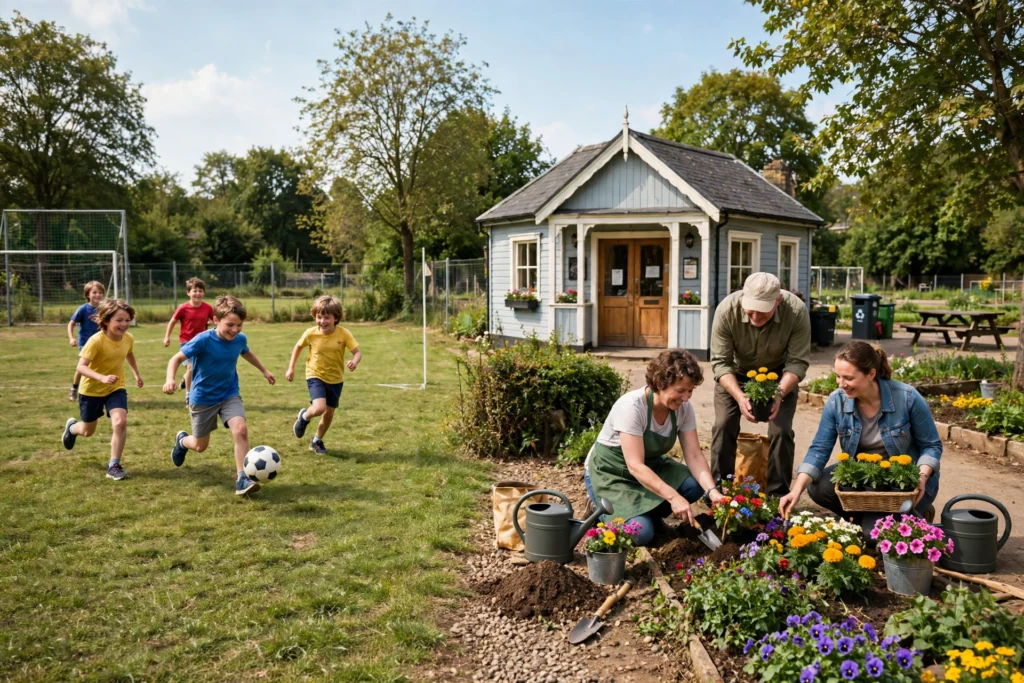
At the local level, the impact is even more visible: youth clubs, community halls, local choirs, grassroots sports teams, parks and green spaces, and the small voluntary organisations that give friendship and purpose to people who might otherwise have none. The National Lottery’s own figures show that funding has reached every postcode area in the UK.
The National Lottery’s “Because of You” campaign, fronted by presenter Claudia Winkleman, tells the story through short films visiting funded projects — from a community flower garden in Sheffield to a wheelchair rugby club in Wales and a farm supporting disabled people in Northern Ireland. Each film shows the same thing: ordinary people whose lives are better because someone bought a ticket.
Ireland, South Africa and the Rest of the World
The UK is not alone. Ireland’s National Lottery has raised more than €6.5 billion for good causes since it was established in 1987, donating almost 30 cents from every euro spent on tickets. Around 4,000 organisations and groups receive funding each year, from small community projects to elite athletes preparing for the Olympics. In 2024 alone, Irish lottery players raised €239.3 million for good causes, spread across sport, youth, health, welfare, education, arts, heritage and the Irish language.
In South Africa, the National Lottery gives around 27% of ticket revenue to good causes, allocated by the National Lotteries Commission through the National Lottery Distribution Trust Fund. Charities receive the largest share at 47% of the fund, followed by sport and recreation at 28%, and arts, culture and heritage at 23%. By law, at least half of the money must benefit home-based care for the ill, elderly or vulnerable, early childhood education, adult literacy, or facilities for disabled people. During the Covid-19 pandemic, the Commission set up a R150 million relief fund for charitable groups.
Other countries follow the same principle with local variations. Many European national lotteries fund sport, culture and social welfare. In Australia, state lotteries fund hospitals, community groups and the arts. The details differ, but the idea is universal: a lottery is a way for a whole population to fund the things it values, a ticket at a time.
For more on lotteries that exist specifically to support charities, see our guide to charity lotteries.
US State Lotteries: Education First
In the United States, lotteries are run by individual states, and most of them are required by law to direct their profits to a specific public purpose — most commonly education. The exact rules vary from state to state, but the pattern is familiar: a share of every ticket funds prizes, a share covers administration, and the rest goes to the designated cause.
Unclaimed prizes in the US usually go to the same public purpose. When a $138 million Powerball jackpot went unclaimed in Ohio in 2024, the money went to the state’s fund for education initiatives. In other states, unclaimed prizes are returned to the prize pool to fund future games and promotions. Either way, the money stays in the public system rather than going to the operator.
Our guide to how lottery revenue funds public programs explains the US state model in more detail.
What Happens to Unclaimed Prizes
Unclaimed prizes are a surprisingly large source of good-causes funding. In the UK, prizes that remain unclaimed 180 days after the winning draw are transferred to the Good Causes Fund in their entirety, along with the interest earned on them while they were held in trust. Millions of pounds worth of unclaimed National Lottery prizes build up every year, and every penny of it eventually reaches a good cause.
The same principle applies in many other countries, though the destination varies. In some US states, unclaimed prizes fund education. In others, they are recycled into future prize pools. The lesson for players is the same everywhere: check your tickets, because an unclaimed prize is a donation you never meant to make. Our guide to what happens to unclaimed lottery prizes explains the deadlines and the destinations country by country.

Can You Apply for Lottery Funding?
Yes — and that is the point of the whole system. In the UK, any community group, charity, sports club, arts organisation or heritage project can apply to the relevant distributing body. Applications are assessed on the benefit they would bring to people in a particular area, and grants start from as little as £100. The National Lottery Community Fund is usually the first stop for small local projects, while the Heritage Fund, the Arts Councils and the sports bodies handle larger and more specialised applications.
Similar schemes exist in Ireland, South Africa, Australia and elsewhere, each with its own application process. The common thread is that the money is there to be claimed by the communities that the players live in — which is why lottery operators publish searchable maps of funded projects, so players can see what their tickets have paid for near them.
Watch: Because of You — The National Lottery
For a short, uplifting look at the difference lottery funding makes to real communities, watch the trailer for The National Lottery’s “Because of You” series, in which Claudia Winkleman visits funded projects across the UK:
Frequently Asked Questions
How do lotteries fund good causes?
Lotteries fund good causes by setting aside a fixed share of every ticket sold — usually around a quarter — into a good-causes fund, separate from prizes, operating costs and government duty. Independent bodies then distribute that money as grants to community projects, arts, sport, heritage, health and education. In the UK, players have raised more than £53 billion for good causes since 1994.
How much of a lottery ticket goes to good causes?
It depends on the country. In the UK, roughly 23–25p in every pound goes to good causes. In Ireland, it is almost 30 cents in every euro. In South Africa, it is around 27% of ticket revenue. The rest goes to prizes (usually around half), retailer commission, operating costs and government duty.
Who decides which projects get lottery funding?
In the UK, 12 independent distributing bodies decide, chosen by Parliament for their expertise — including the National Lottery Community Fund, the National Lottery Heritage Fund, the Arts Councils, the British Film Institute and the sports councils. The lottery operator itself does not choose the recipients.
What happens to unclaimed lottery prizes?
In the UK, prizes unclaimed after 180 days are transferred in full to the Good Causes Fund. In the US, unclaimed prizes usually go to the state’s designated cause — often education — or back into the prize pool for future games. Either way, the money stays in the public system.
Can anyone apply for lottery funding?
Yes. In the UK, any community group, charity, sports club, arts organisation or heritage project can apply to the relevant distributing body, with grants ranging from £100 to millions of pounds. Applicants must show how people in their area would benefit.
Do US lotteries fund good causes too?
Yes, in their own way. Most US state lotteries are required by law to direct their profits to a specific public purpose, most commonly education. The share varies by state, and unclaimed prizes usually go to the same purpose.
What is the biggest lottery-funded project?
There is no single biggest project, but the most famous include the funding behind Team GB and ParalympicsGB’s Olympic success, the restoration of the Flying Scotsman locomotive, the film Billy Elliot, The Lowry arts centre in Salford, and the Beamish Museum — all supported by UK National Lottery good-causes money.
Conclusion
How lotteries fund good causes is one of the least understood parts of the lottery — and one of the most important. Behind every jackpot headline is a quieter story: a quarter of every ticket funding a youth club, a theatre, a sports pitch or a restored historic building. In the UK alone, that has meant more than £53 billion and 650,000 projects since 1994, and similar systems in Ireland, South Africa, Australia and the US have raised billions more.
The system works because the rules are written into law: a fixed share of every ticket, independent bodies deciding who gets it, and unclaimed prizes flowing to the same fund. Players may never win the jackpot, but their tickets still build something. And for the communities that receive the grants, the lottery is not a game of chance at all — it is a reliable source of funding for the things that make a neighbourhood worth living in.
Remember to play responsibly: lotteries are for adults aged 18 and over, the odds of winning a jackpot are extremely long, and you should never spend more than you can afford to lose. If playing stops being fun, help is available from responsible gambling organisations in your area.
Further reading: