- Your Losing Ticket Is Not Worthless Yet
- How Second-Chance Drawings Actually Work
- The Three Main Formats
- How to Enter, Step by Step
- What Kind of Prizes Are on Offer?
- A Real Second-Chance Win
- Why So Few People Enter (and Why That Helps You)
- Second-Chance Scams: The Fake Version
- Common Mistakes That Void an Entry
- Frequently Asked Questions
Your Losing Ticket Is Not Worthless Yet
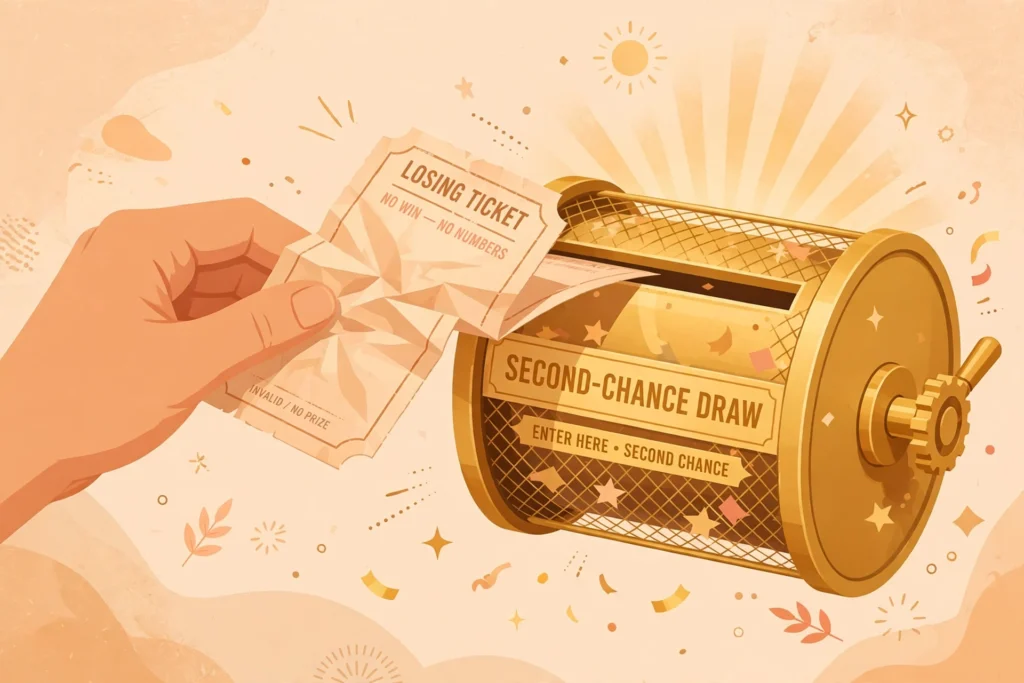
Most losing lottery tickets go straight into the bin. That is a habit worth breaking, because in many US states a losing ticket still has value: it can be entered into second-chance lottery drawings, separate promotions that give non-winning tickets another shot at real prizes.
Second-chance drawings are one of the least-used features in state lottery programs, and one of the easiest ways to get extra value out of tickets you have already paid for. Entering is usually free, it takes under a minute, and the prize pool is real money and real prizes. The catch — if you can call it one — is that you have to do it yourself. Nobody enters your tickets for you, and if you throw the ticket away, the second chance goes with it.
This guide explains how second-chance lottery drawings work, the different formats states use, how to enter without messing it up, and how to tell the real programs from the scams that imitate them. It contains no winning numbers, no results, and no ticket-purchase links. Play only if you are of legal age where you live. 18+ only — play responsibly.
How Second-Chance Drawings Actually Work
The basic idea is simple. A state lottery runs a promotion alongside one of its games — usually a scratch-off game, sometimes a draw game — and invites players to submit their non-winning tickets for entry into an additional drawing. The ticket that lost the first time gets a second life in a separate prize pool.
Why would a lottery do this? Partly to keep players engaged with a game, and partly for a practical legal reason: in some states, a lottery cannot keep selling tickets for a game once all its top prizes have been claimed. Reserving one top prize for a final second-chance drawing lets sales continue until the entry deadline closes. Whatever the reason, the effect for players is the same — a free extra draw on tickets that would otherwise be rubbish.
The important thing to understand is that second-chance drawings are run by individual state lotteries, not by the national game organisations. Powerball and Mega Millions themselves do not run second-chance draws. Some state lotteries run second-chance promotions for Powerball tickets, but the program, the rules, and the prizes are the state’s, not the game’s. That is why the details vary so much from place to place, and why you always need to check your own state’s lottery site rather than assuming the rules you read about somewhere else apply to you.
A clear general explainer on how these drawings work across states is here: https://scratchcheck.com/blog/what-is-a-second-chance-lottery-drawing
The Three Main Formats
Not all second-chance programs work the same way, and knowing which format your state uses changes how you should think about entering.
The first format is the reserved top prize drawing. The lottery holds back one top prize from a scratch-off game’s prize pool and awards it through a final second-chance drawing when the game closes. Oregon runs this model: when a Scratch-it game ends, one winner is drawn from all submitted non-winning entries and receives the game’s full top prize. There is one prize and one winner per game, and the entire pool of entries competes for it.
The second format is the weekly or rolling prize pool. California runs the best-known version. Players submit codes from eligible tickets into weekly drawings with multiple prizes — cash amounts that vary by game, with separate pools for draw games and scratchers. Because there are many prizes and new drawings every week, your odds of winning something are better than in a single-prize format, even though the individual prizes are smaller.
The third format is the promotional or event drawing. These are limited-time events tied to a holiday, a new game launch, or a jackpot milestone, with prizes that might include trips, cars, event tickets, or entry into a televised event. They come and go, which means you need to watch your state lottery’s promotions page or you will miss them entirely.
Some states run more than one format at once. The practical takeaway: do not assume. Look up your state’s second-chance page and read the rules for the specific game on your ticket.
How to Enter, Step by Step
The process varies by state, but it almost always follows the same shape:
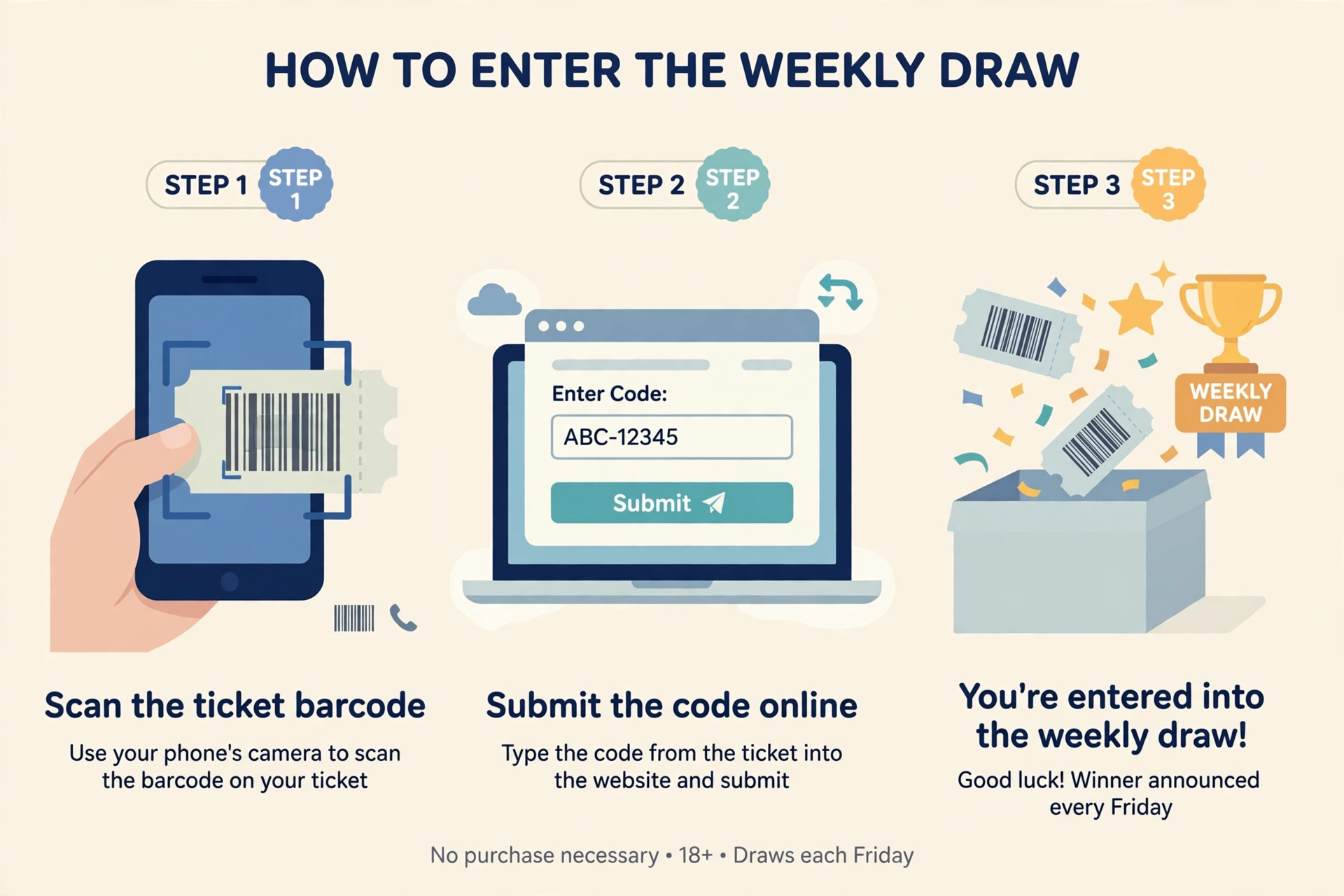
First, keep the ticket. This sounds trivial and it is the step most people fail. A second-chance entry needs the ticket itself — usually the barcode or a printed entry code — so a ticket in the bin is an entry lost. Get into the habit of checking for a second-chance code before you throw anything away.
Second, create an account on your state lottery’s official website or app, if you do not already have one. Most second-chance programs require an account, partly to verify that you are a resident of the state and of legal age, and partly so the lottery can contact you if you win. Use the official site only — never a third-party site that offers to enter tickets on your behalf.
Third, find the second-chance section and enter the ticket. Usually you either scan the ticket’s barcode with the lottery app, or type in the entry code printed on the ticket. Some programs ask you to confirm the game and the purchase details. Double-check the code before you submit; a mistyped code is a wasted entry.
Fourth, watch the deadlines. Every second-chance drawing has an entry deadline, and some programs cap how many entries you can submit per week or per month. California, for example, has run weekly drawings with a Saturday night entry deadline and a monthly submission limit. Put a reminder on your phone if you enter regularly, because a ticket submitted a day late counts for nothing.
Fifth, check back. Winners are usually notified by email or through their lottery account, and some programs require you to claim within a set window. If you entered, check your account after the draw — do not assume that no news means no win, especially if the notification email landed in a spam folder.
California’s official 2nd Chance page lays out its version of this process, including the weekly deadlines and entry limits: https://www.ca.gov/departments/155/services/1274/
What Kind of Prizes Are on Offer?
It depends on the format, and the range is wider than most people expect.
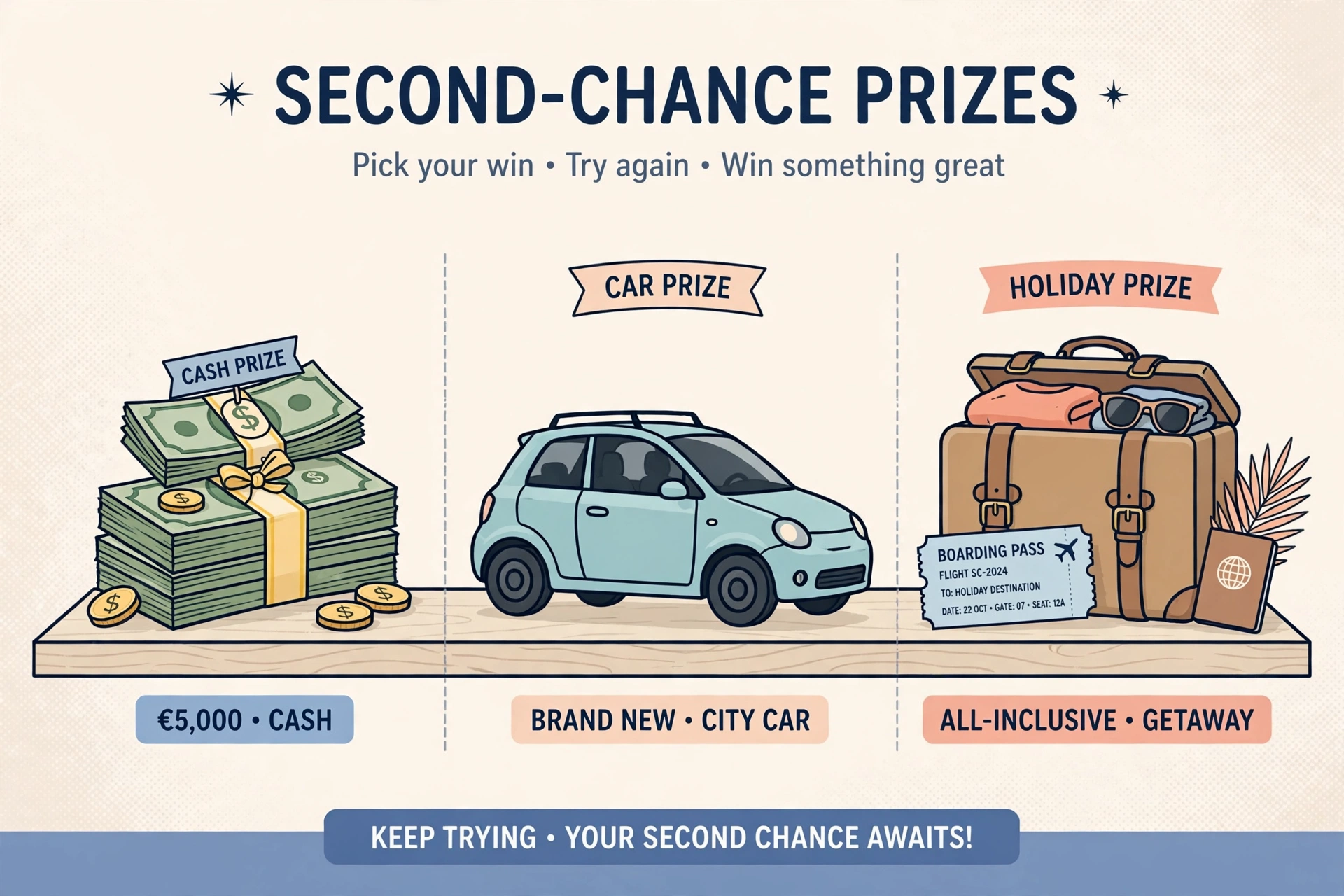
Cash is the most common prize, from small weekly amounts up to full top prizes in the reserved-prize format. Weekly pools typically pay out thousands of dollars across multiple winners rather than one huge prize. Promotional drawings can go further: cars, holidays, VIP event access, and in a few famous cases, multi-million-dollar prizes from a single losing ticket.
That last category deserves a reality check. The giant second-chance wins you read about are real, but they are rare, and they usually come from the reserved-prize format where one winner takes the game’s top prize. The everyday reality of second-chance draws is smaller, more frequent prizes — a few hundred or a few thousand dollars — which is still a good return on a ticket that was otherwise worth nothing.
One more thing: second-chance prizes are still lottery prizes for tax purposes. In the US, they count as gambling income just like a regular win. If you win a second-chance prize, the same tax rules apply, and our guide to lottery winnings tax covers what that means in practice.
A Real Second-Chance Win
The story people cite most often comes from California. In 2015, a retiree from Inglewood turned a non-winning $5 scratch ticket into a prize of more than $3 million through the California Lottery’s Scratchers 2nd Chance game. The ticket had lost its instant prize. Entered into the second-chance pool, it won the top prize instead.
Stories like that are worth telling carefully. They prove the programs are real and that the prizes get paid. They do not prove that entering is a good investment strategy — it is not, because the ticket already cost you money and the odds are still long. What they prove is narrower and more useful: a losing ticket you were about to throw away genuinely had a chance, and someone who bothered to enter it collected millions.
The lesson is not “buy more tickets.” The lesson is “do not throw away the ones you already bought until you have checked whether they qualify for a second chance.”
Why So Few People Enter (and Why That Helps You)
Here is the quiet advantage of second-chance drawings: most players never enter. Surveys and lottery reports consistently suggest that only a small fraction of eligible tickets get submitted. People throw tickets away, forget about the program, or assume it is not worth the effort.
Fewer entries means better odds for the people who do enter. A second-chance drawing with a few hundred thousand entries is a very different proposition from a main draw with hundreds of millions of tickets sold. Your odds are still long — nobody should pretend otherwise — but they are meaningfully better than the original game, and the entry cost you nothing beyond a minute of your time.
That is also why the “is it worth it” question has a simple answer. If you already bought the ticket, entering is free, fast, and can only add value. The only cost is the minute it takes, and the only risk is forgetting. There is no reason not to enter every eligible ticket you buy, as long as you are not buying extra tickets just to chase second-chance entries. That would turn a free bonus into a spending habit, which defeats the whole point.
Second-Chance Scams: The Fake Version
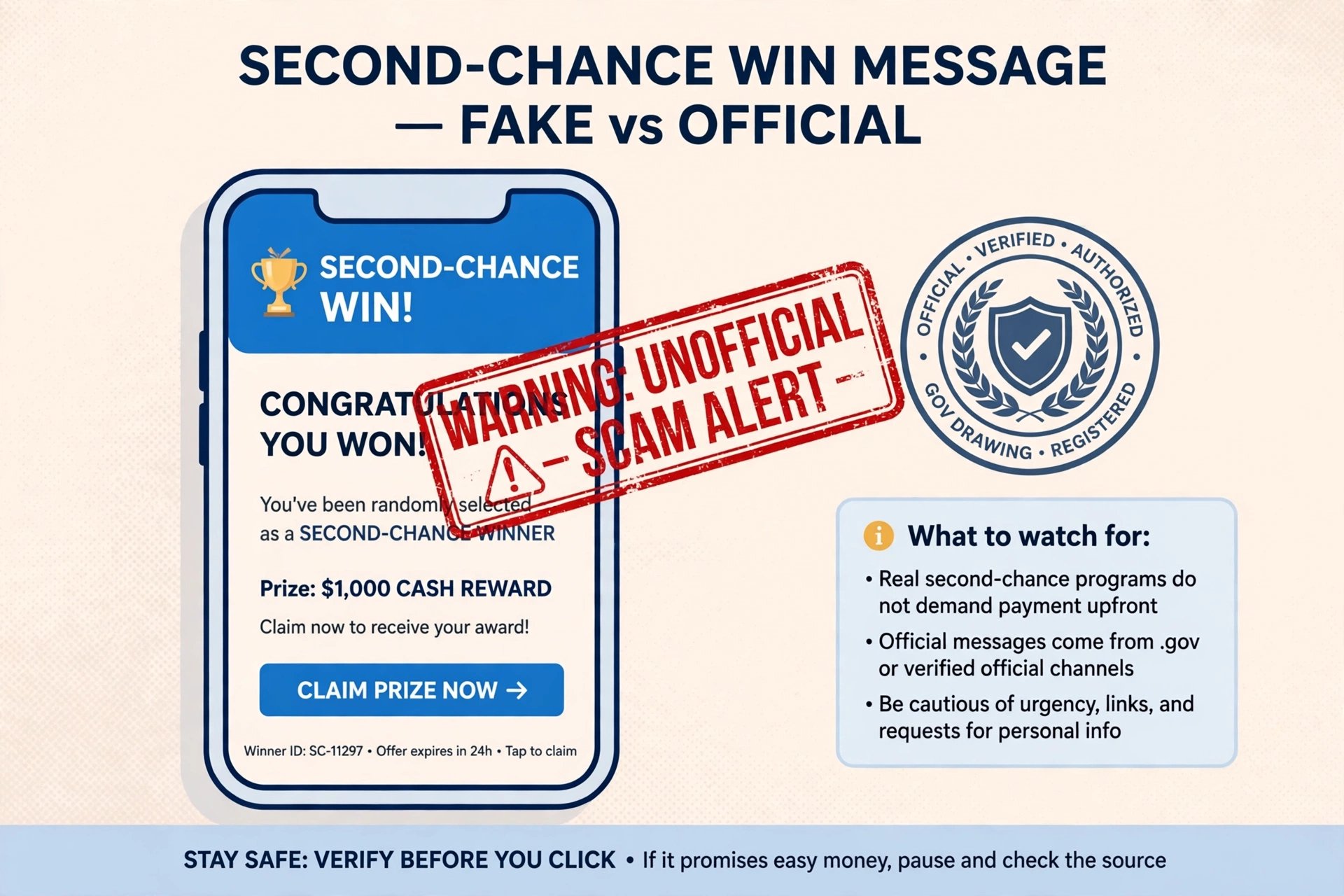
Because real second-chance programs exist, scammers imitate them — and the fake version is one of the more convincing lottery scams around, precisely because the victim has genuinely bought tickets.
The fake version usually arrives as a message saying you won a second-chance drawing you never entered. Remember the rule: a real second-chance win comes from tickets you submitted yourself through the official lottery, and the lottery contacts you through your account. It never asks you to pay a fee, buy gift cards, or share bank details to release the prize. Any message that does is a scam, even if it names a real second-chance program.
Another variant is the third-party entry service: a website or app that offers to enter your tickets for you, for a fee or for your personal details. Do not use these. Official lotteries do not authorise third parties to submit entries, and handing your ticket codes to a stranger is a good way to lose both the entry and your data.
If you get a suspicious second-chance message, our guide to lottery scams and fake win notifications walks through the red flags and the reporting steps in full. And if you are unsure whether a program is real, check your state lottery’s official site directly — never through a link in a message.
A general overview of second-chance drawings and how they differ from state to state is here: https://www.lottery.net/second-chance-drawings
Common Mistakes That Void an Entry
The most common mistake is throwing the ticket away before checking it. Build the habit: check for a second-chance code first, bin second.
The second is missing the deadline. Entry windows close, and late entries do not roll over. If you enter regularly, set a weekly reminder a day before your state’s deadline.
The third is entering through the wrong channel. Only the official lottery website or app counts. A ticket code typed into a random website is not an entry, and it may be a data-harvesting trap.
The fourth is assuming every ticket qualifies. Not all games have second-chance programs, and eligibility varies by game and by state. Check the specific game on your ticket, not just the lottery in general.
The fifth is forgetting to check results. Some programs notify winners by email, and those emails land in spam folders. Others require you to check your account. Either way, an unclaimed second-chance prize eventually expires, and expired prizes go back into the pool or to the state’s beneficiary fund — not to you.
And one more, for group players: if you play in a pool, decide in advance who enters the losing tickets and how any second-chance prize is shared. Our family lottery pool rules guide covers why that agreement needs to exist before the draw, and second-chance prizes are exactly the kind of unexpected win that causes arguments when nothing was written down.
Frequently Asked Questions
What is a second-chance lottery drawing?
A separate promotion run by a state lottery that lets players submit non-winning tickets for entry into an additional drawing with its own prizes. It costs nothing beyond the ticket you already bought.
Do Powerball and Mega Millions have second-chance drawings?
Not nationally. Some state lotteries run second-chance promotions for Powerball tickets, but the programs are run by the states, with their own rules and prizes.
How do I enter a second-chance drawing?
Keep the ticket, create an account on your state lottery’s official website or app, and submit the ticket’s barcode or entry code in the second-chance section before the deadline.
Is entering a second-chance drawing free?
Yes. Entry costs nothing beyond the ticket you already purchased. Any service that charges a fee to enter tickets for you is not legitimate.
What can you win in a second-chance drawing?
Cash prizes are most common, from small weekly amounts up to full top prizes in the reserved-prize format. Promotional drawings can also offer cars, holidays, and event access.
Do I have to live in the state to enter its second-chance drawing?
Usually yes. Most programs require you to be a resident of the state running the drawing, and to be of legal gambling age there.
How will I know if I won a second-chance drawing?
Winners are normally notified by email or through their lottery account. Check your account after the draw and watch your spam folder, because unclaimed prizes expire.
Can a second-chance win be taxed?
Yes. In the US, second-chance prizes count as gambling income just like regular lottery wins, and the same tax rules apply.
The Bottom Line on Second-Chance Lottery Drawings
Second-chance lottery drawings are the closest thing to a free lunch in the lottery world — not because they make winning likely, but because they cost nothing extra and turn tickets you were about to bin into genuine entries. Keep your losing tickets, check whether they qualify, enter them through the official lottery before the deadline, and check your account afterwards.
It will not make you rich. It might, very occasionally, turn a losing ticket into a real prize. And even when it does not, you have lost nothing but a minute. That is a better deal than the ticket gave you the first time round.
If you want to understand the timing side — draw days, cutoffs, and claim windows — our guide to lottery draw schedules and time zones covers it. And if you ever get a message claiming you won a second-chance prize you never entered, read our lottery scams guide before you reply to it.
Play only if you are of legal age where you live. Set a budget, keep it fun, and never chase losses. 18+ only. Play responsibly.