
If you have ever bought more than one ticket for the same draw, you have already taken the first step toward wheeling. Lottery wheeling systems are a structured way of playing: instead of buying one ticket with six numbers, you choose a larger pool of numbers and spread them across many tickets in a planned pattern. This guide explains how wheeling works, the four main types of wheels, what a “guarantee” really means, what it costs, and — just as importantly — what wheeling cannot do. Please note: you must be 18 or older to play any lottery, and wheeling should always be done within a budget you can afford. Play responsibly.
Table of Contents
- What Is a Lottery Wheel?
- The Four Types of Lottery Wheels
- How the Guarantee Works
- A Worked Example: Wheeling 12 Numbers in a Pick-6 Game
- What Wheeling Costs
- What Wheeling Can and Cannot Do
- Who Wheeling Suits Best
- Watch: How to Wheel Lottery Numbers
- Frequently Asked Questions
- Conclusion
What Is a Lottery Wheel?
Every draw game has a required ticket size. A pick-5 game needs five numbers on each line; a pick-6 game needs six. With a wheel, you first choose a larger pool of numbers — say, 10 or 12 numbers for a 6-number game — and then use a predefined system to create ticket-size combinations from that pool. The wheel does not decide whether your original numbers are good choices. Its job begins after that pool has been selected: it organises your numbers into valid ticket lines.
The idea is simple. A single ticket covers one combination. A wheel covers many combinations from the same pool, so that if enough of your chosen numbers are drawn, at least one of your tickets is guaranteed to hold a certain number of matches. That is the whole point of wheeling: structured coverage instead of a single guess.
Wheeling is a real mathematical idea. In mathematics, a lottery wheel is an example of a covering design, a branch of combinatorial design that studies how to cover a set of combinations with the fewest possible tickets. The term “wheeling” comes from the cyclic way some systems are constructed, rotating groups of numbers through the ticket lines. You can read the formal definition on Wikipedia’s lottery wheeling page.
It is worth saying clearly up front: wheeling does not improve your jackpot odds per ticket, and it cannot predict which numbers will be drawn. Every combination has exactly the same chance in a fair, random draw. What wheeling changes is how your chances are distributed across prize tiers — you trade the chance of winning nothing for a higher chance of winning something smaller. Our guide to lottery number myths and patterns explains why no number-picking method can beat a random draw.
The Four Types of Lottery Wheels
Full Wheels
A full wheel generates every possible combination from your chosen pool. If you wheel 10 numbers in a pick-5 game, a full wheel produces C(10,5) = 252 combinations — 252 tickets. If all the winning numbers are inside your pool, a full wheel guarantees the jackpot, because one of your lines must be the exact winning combination.
The problem is cost. The number of tickets grows very fast as your pool grows. A full wheel is mathematically complete but usually too expensive for ordinary play. A 12-number pool in a pick-6 game would need 924 tickets.
Abbreviated (Reduced) Wheels
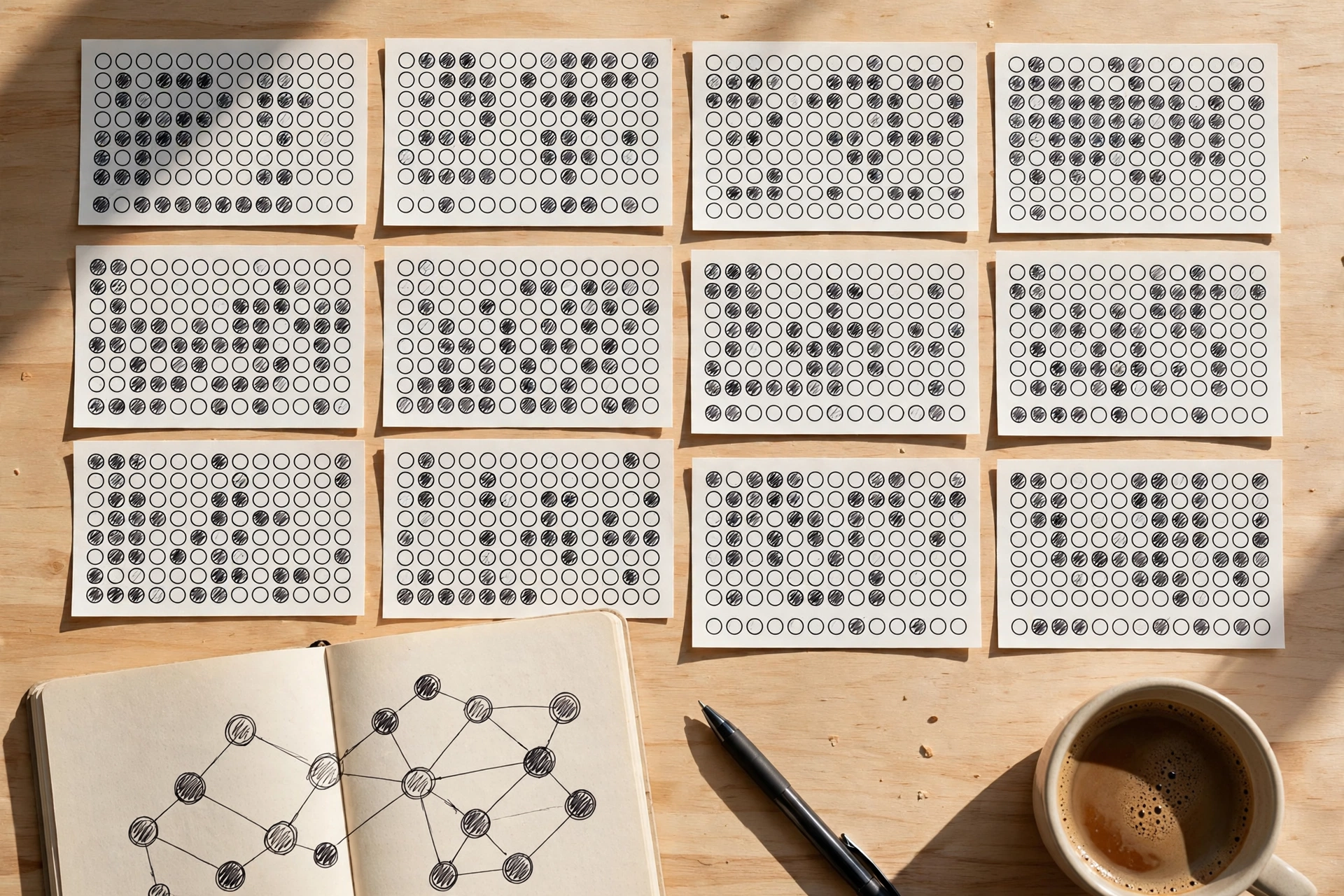
An abbreviated wheel uses only some of the possible combinations from your pool, chosen so that a stated coverage condition is still met. It does not guarantee the jackpot, but it guarantees a minimum prize — for example, “if 4 of your numbers are drawn, at least one ticket will have 3 matches.”
Abbreviated wheels are the most popular type, because they bring the cost down to something a group of players can afford. A 12-number abbreviated wheel for a pick-6 game might need only 20 to 30 tickets instead of 924.

Key Number Wheels
In a key number wheel, one or more “key” numbers appear on every ticket. This is useful when you are confident about a specific number and want to maximise its coverage. Every ticket includes the key number, and the other positions are filled with combinations from the rest of your pool. The risk is obvious: if your key number is not drawn, every ticket in the wheel loses that advantage.
Filtered Wheels
A filtered wheel removes combinations that do not meet rules you choose — for example, removing lines with all odd numbers, or lines with six consecutive numbers. Filters reduce the ticket count, but they also remove combinations that could have won. A filtered wheel is only as good as the filter, and no filter can make a combination more likely to be drawn.
How the Guarantee Works
Abbreviated wheels come with a guarantee statement, usually written as “X if Y of Z” — for example, “4 if 5 of 12”. That means: if five of the winning numbers are inside your chosen pool of 12, you are guaranteed at least one ticket with four matches. This guarantee is mathematical — it is a certainty given the coverage structure of the wheel, not a probability.
But read the guarantee carefully, because it has a condition built in. What is not guaranteed is that any of your chosen numbers will actually be drawn. The wheel only fires if your pool contains enough winning numbers. A wheel that guarantees “4 if 5” is useless if only two of your numbers are drawn. The guarantee describes what happens if your pool performs — it says nothing about whether it will.
Before using any wheel, check four things: how many numbers you must supply, how many numbers appear on each ticket line, the exact guarantee statement, and how many lines the wheel generates. A wheel built for a pick-5 game cannot be used for a pick-6 game, and bonus balls need their own rules. The LottoExpert guide to lottery wheels explains how to read a wheeling-system listing before you commit to one.
A Worked Example: Wheeling 12 Numbers in a Pick-6 Game
Imagine you are playing a pick-6 lottery and you choose 12 favourite numbers. A full wheel of 12 numbers would need C(12,6) = 924 tickets — far too many. Instead, you use an abbreviated wheel designed to guarantee a 4-match if 5 of your 12 numbers are drawn. That wheel might generate around 20 tickets.
Here is what happens in each scenario:
- 6 of your 12 numbers are drawn: you are guaranteed at least one ticket with 4 matches, and you may well hold several 4-match and 5-match tickets, plus possibly the jackpot line itself if the wheel happens to contain it.
- 5 of your 12 numbers are drawn: the guarantee fires — at least one ticket holds 4 matches.
- 4 or fewer of your numbers are drawn: the guarantee does not apply. You may still win small prizes, but nothing is promised.
- None of your numbers are drawn: you win nothing, exactly as you would with 20 random tickets.
The wheel did not make your numbers luckier. It made sure that if your pool did well, the wins were spread across your tickets instead of depending on one line.
What Wheeling Costs
Cost is the main practical barrier to wheeling. Every extra number in your pool multiplies the number of combinations, and every combination is another ticket to pay for. A small abbreviated wheel of 20 lines costs 20 times the price of one ticket — so at $2 a line, that is $40 for one draw. A full wheel of 10 numbers in a pick-5 game needs 252 lines, which would cost $252 at $1 a line.
This is why wheeling is most often done by groups. A lottery syndicate can split the cost of a wheel between its members, and any prize is shared under the group’s agreement. If you wheel alone, set a firm budget first and never chase losses by buying a bigger wheel next time.
What Wheeling Can and Cannot Do
| A wheel can | A wheel cannot |
|---|---|
| Organise a number pool into valid ticket combinations | Predict which numbers will be drawn |
| Provide a defined, conditional coverage structure | Make one combination more likely than another |
| Increase your chance of winning a smaller prize if your pool performs | Improve the expected value of your money |
| Spread wins across several tickets in one draw | Beat the house edge of the game |
The expected-value point deserves emphasis. Buying 20 wheeled tickets has the same expected return as buying 20 random tickets — roughly $0.50 to $0.70 back per $2 ticket in most big games. Wheeling redistributes probability across prize tiers; it does not create value. Whether you pick your numbers or use a Quick Pick, the maths of the draw stays the same.
Who Wheeling Suits Best
Wheeling suits players who enjoy the structure of the game and want to play as a group. It suits syndicates, because the cost is shared and the coverage is genuinely useful when the pool performs. It also suits players who like the feeling of having “covered” their favourite numbers properly, rather than leaving the combinations to chance.
Wheeling does not suit players on a tight budget, players who believe a system can beat the odds, or anyone who would be tempted to spend more than they planned. If the wheel costs more than you are comfortable losing, play a single ticket instead — or skip the draw entirely.
Watch: How to Wheel Lottery Numbers
This video walks through a 12-number wheel in a pick-6 game, step by step:
Frequently Asked Questions
Do lottery wheeling systems guarantee a win?
No — not in the way most people hope. A wheel guarantees a minimum prize tier only if a set number of your chosen numbers are actually drawn. It cannot guarantee that your numbers will be drawn, and it cannot guarantee a jackpot.
What is the difference between a full wheel and an abbreviated wheel?
A full wheel covers every possible combination from your number pool, which guarantees the jackpot if all winning numbers are in your pool — but it needs a huge number of tickets. An abbreviated wheel covers a smaller set of combinations at a lower cost, and guarantees only a minimum prize tier under a stated condition.
Does wheeling improve my odds of winning the jackpot?
No. Each ticket has the same jackpot odds whether it comes from a wheel or a Quick Pick. Wheeling improves your chance of winning a smaller prize when your pool performs, because you hold more combinations — but you pay for every extra ticket.
How much does it cost to wheel lottery numbers?
It depends on the wheel. A small abbreviated wheel might need 20 tickets, while a full wheel of 10 numbers in a pick-5 game needs 252 tickets. Multiply the number of lines by the price per line to get the cost.
Is wheeling better than a Quick Pick?
Neither is better in terms of expected value. A wheel gives you structured coverage of a pool you chose; a Quick Pick gives you random combinations. The draw does not care which method produced your tickets.
Can I use a wheeling system for Powerball or Mega Millions?
Yes, wheels can be built for almost any draw game, but the wheel must match the game’s format — the number of main balls and the separate bonus ball need their own rules. A pick-6 wheel cannot be used for a pick-5 game.
Conclusion
Lottery wheeling systems are a smart way to organise your play, not a way to beat the lottery. A full wheel covers everything at a high cost; an abbreviated wheel covers less for a fair price; a key number wheel bets everything on your favourite number; and a filtered wheel trims combinations by your own rules. The guarantee is real but conditional — it only fires if enough of your numbers are drawn. If you enjoy the structure and you play within a budget, wheeling can make the game more interesting, especially as part of a syndicate. But remember the golden rule: no system can predict a random draw. You must be 18 or older to play, and you should always play responsibly, with money you can afford to spend.
Sources: Lottery wheeling (Wikipedia); Lottery Wheeling Systems: How Wheels Work (LottoExpert)