
If you have ever heard a group of workmates say “we’re in the syndicate this week,” you have heard about one of the oldest ideas in lottery play. Lottery syndicates are simply groups of people who pool their money, buy more tickets together than any one of them would buy alone, and agree in advance to split any prize. Nothing about the draw itself changes. The balls do not know or care who bought the ticket. What changes is how many chances the group holds, how much each person spends, and — crucially — how much each person receives if a ticket wins.
This guide explains lottery syndicates in plain language: how they work step by step, what the maths really means, what a good written agreement should cover, and the mistakes that cause arguments. It is general information only, not financial or legal advice. Lottery rules differ by game and by place, so always check the official rules for the game you are playing.
You must be 18 or over to play the lottery in most places, and you should always play responsibly and only with money you can afford to spend on entertainment. If playing ever stops feeling fun, take a break and seek support from a responsible-gambling organisation.
Table of Contents
- What Is a Lottery Syndicate?
- How Lottery Syndicates Work, Step by Step
- The Maths, Explained Honestly
- Types of Lottery Syndicates
- What a Good Syndicate Agreement Should Cover
- Pros and Cons of Joining a Syndicate
- Common Syndicate Mistakes to Avoid
- How to Join or Start a Syndicate Safely
- Frequently Asked Questions
- Conclusion
What Is a Lottery Syndicate?
A lottery syndicate is a group of players who agree to play together. Each member contributes a set amount of money, the group uses that pooled money to buy tickets, and any prize won by one of those tickets is shared among the members according to the agreement they made beforehand.
Syndicates are usually formed by people who already know each other: friends, family members, work colleagues, neighbours, or members of a club. Some lotteries and licensed operators also run organised syndicates, where strangers buy shares in a group entry. In both cases the core idea is the same: shared cost, more entries, shared prizes.
It is worth being clear about what a syndicate does not do. It does not change the odds of any single ticket. It does not give the group a secret system for picking winning numbers. It does not make the draw more likely to favour the group. It simply lets a group hold more combinations in a single draw than one person could hold for the same personal spend.

How Lottery Syndicates Work, Step by Step
Most syndicates, whether formal or informal, follow the same basic rhythm:
1. Agree the group and the game
The group decides which game to play, which draws to enter, and how much each person will contribute per draw or per week. Some groups play one game every week. Others play only when a jackpot grows large. Either approach works, as long as everyone agrees before money changes hands.
2. Collect contributions on time
Each member pays their share by an agreed date. The manager — the person who organises the group — should keep a simple record of who has paid and who has not. A member who has not paid for a draw should not be included in that draw. This sounds strict, but it prevents the worst kind of argument: a win claimed by someone who did not contribute.
3. Buy the tickets
The manager buys the tickets, ideally using the pooled money only, and keeps copies or photographs of every ticket. Sharing a photo of the tickets with the whole group before the draw is a simple habit that builds trust. Everyone can see exactly which lines the group holds, and there is no doubt later about which tickets belonged to the syndicate.
4. Check the results
After the draw, the manager checks every ticket against the official results and tells the group honestly what was won, including small prizes. Small wins are common in syndicates because the group holds more lines, and they are often rolled back into future draws or paid out as small shares.
5. Share any prize by shares
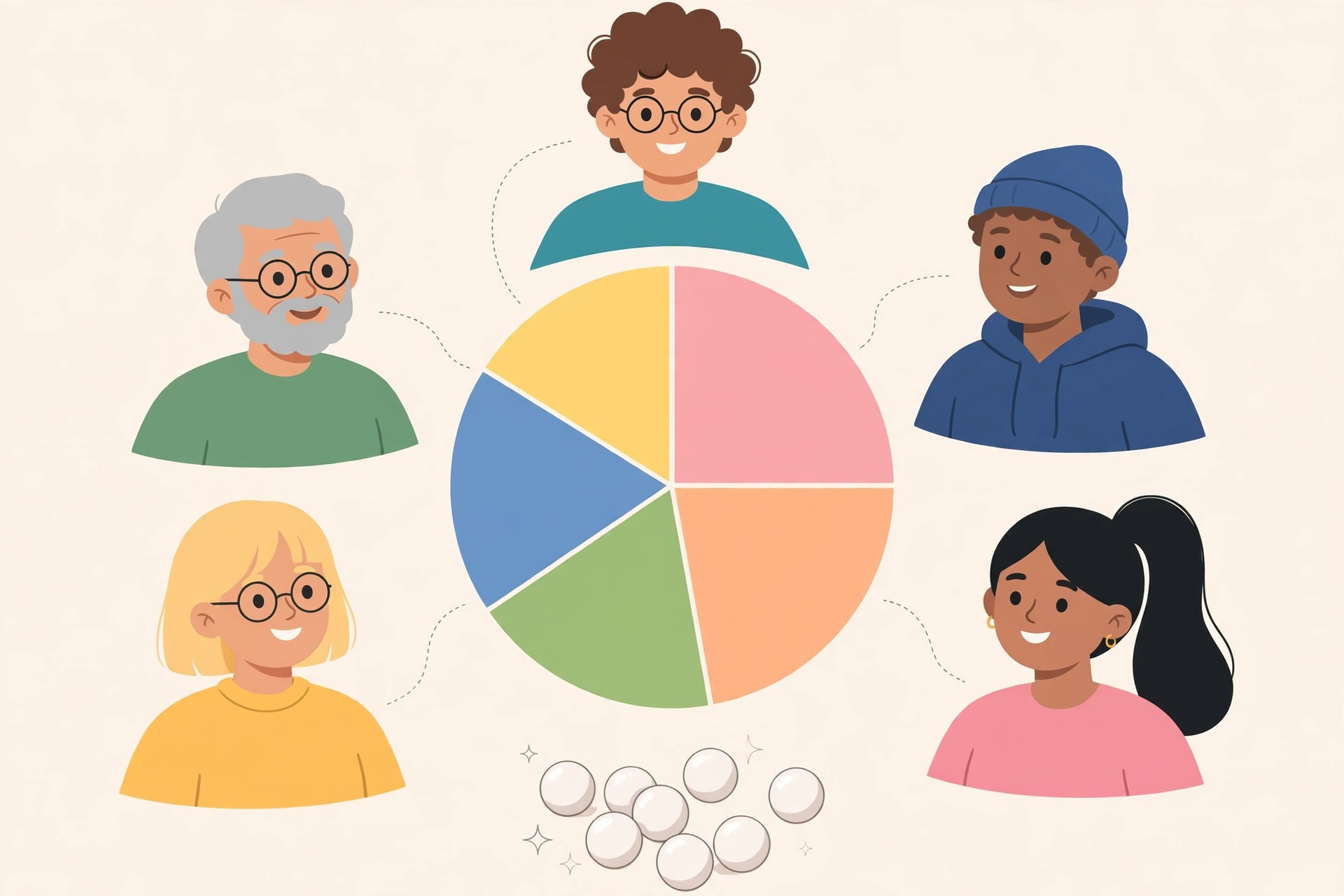
If a ticket wins, the prize is divided according to each member’s share. In an equal-share group, ten members each receive one tenth. In a group where some members bought two shares, those members receive twice as much as a one-share member. The split should follow the written agreement, not a conversation held after the win.
For larger prizes, the claim process usually goes through the lottery operator’s normal rules. Often only one person — typically the manager — can claim a prize on a ticket, and that person is then responsible for distributing it. That is exactly why the written agreement matters so much, as we explain below.
The Maths, Explained Honestly
Here is the part many syndicate explanations gloss over, and it matters.
Imagine a game where one ticket has a 1 in 292 million chance of winning the jackpot — roughly the published jackpot odds for Powerball, which draws five white balls from 69 plus one Powerball from 26. If a syndicate buys 100 different lines, the group’s overall chance of holding the jackpot line is 100 times higher than a single line: about 100 in 292 million. That is still a very small chance. It is simply less tiny than before.
At the same time, if the group wins, each member’s share is much smaller. In a 20-person equal-share syndicate, each person receives one twentieth of the prize. So the trade is straightforward: a bigger chance of winning something, in exchange for a smaller slice if you do win.
Your expected return per unit of money spent does not change. Buying two lines on your own gives you twice the chance of a single line and the whole prize if you win. Owning a one-fiftieth share of a 100-line syndicate gives you a share of a group with 100 times the chance, but only one fiftieth of the prize. On average, over a very long time, those two approaches come out the same — and lotteries, by design, pay back less in prizes than they take in from ticket sales. That is why a lottery should be treated as entertainment, not as an investment or a way to make money.
What syndicates genuinely offer is a different experience: more lines in play, more frequent small wins, and a shared reason to follow the draw. For many players, that social side is the real point. Just do not let anyone sell you a syndicate as a way to “beat” the lottery. No pooling arrangement changes the underlying probability of any single combination.
| Playing alone | 20-person syndicate | |
|---|---|---|
| Your weekly spend | The cost of 2 lines | The cost of 2 lines (your share) |
| Lines in the draw | 2 | 40 |
| Group chance of the jackpot | 2 lines’ worth | 20 times a single line |
| Your share of any prize | 100% | 5% |
Types of Lottery Syndicates
Private syndicates
These are groups of friends, family, or colleagues. They are the most common kind, and they work best when the group is small enough that everyone knows each other and communication is easy. The downside is that record-keeping depends entirely on the manager’s diligence.
Workplace syndicates
Office syndicates are popular because they are easy to organise and fun to follow together. They also carry the highest risk of disputes, because colleagues may join and leave, miss payments, or assume they are included when they are not. A written list of current members for each draw is essential.
Online or operator-run syndicates
Some licensed operators sell shares in syndicates to the public. The operator handles ticket buying, result checking, and prize distribution. This can be convenient, but you should only use a properly licensed operator, read its terms carefully, and understand its fees. Avoid any syndicate that promises guaranteed wins, asks you to pay upfront fees to release a prize, or cannot show you the tickets it claims to hold. Those are classic warning signs of a scam.
Family syndicates
Family groups can work well because trust is high, but they can also be the hardest place to have an awkward conversation about money. Writing the rules down protects relationships, not just money. It is much easier to agree the split calmly before a win than to negotiate it afterwards.
What a Good Syndicate Agreement Should Cover
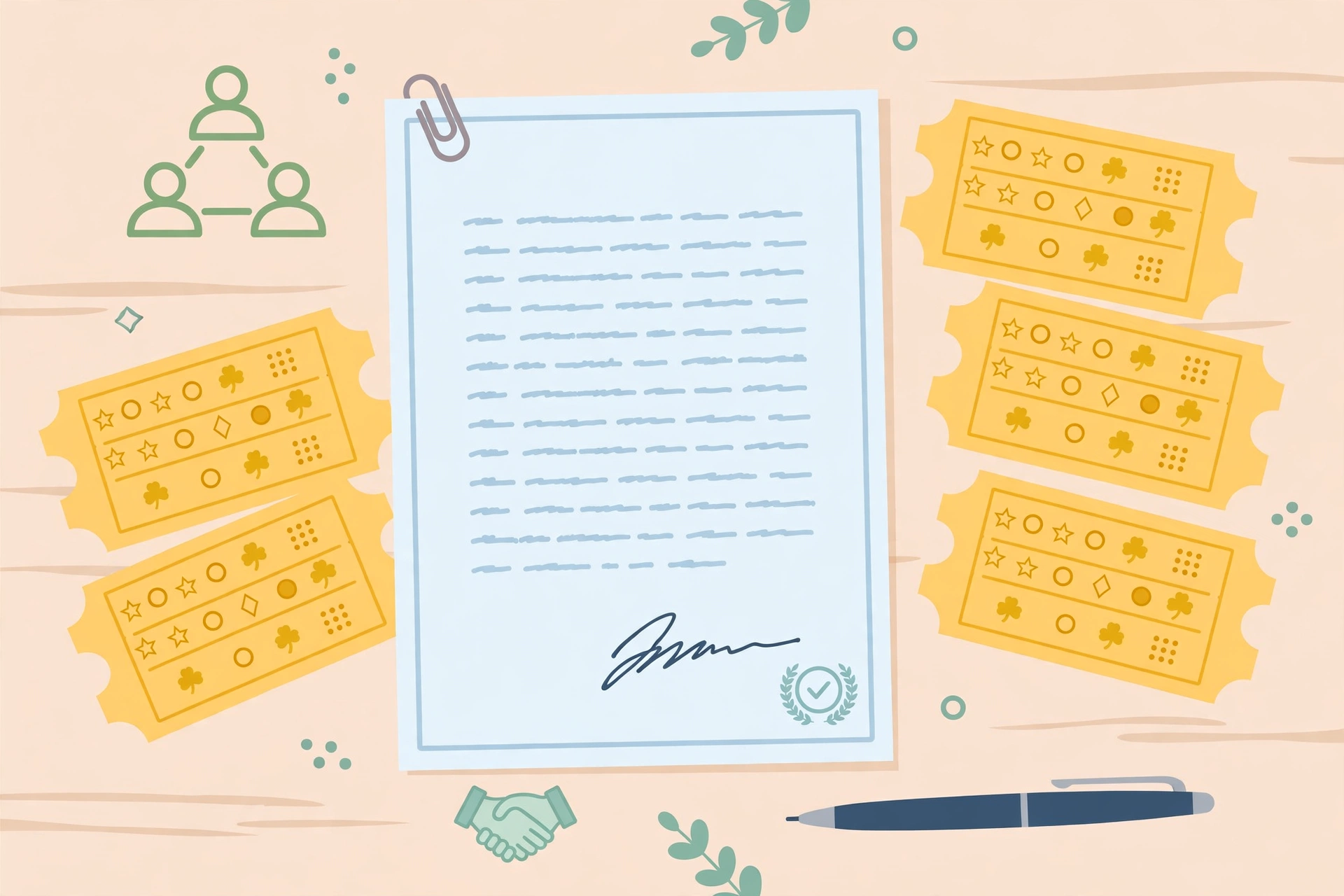
Every syndicate should have a written agreement, however small the group and however well the members know each other. The UK National Lottery publishes guidance for syndicates, and the principles apply anywhere. A good agreement should cover at least:
- Who the members are, and how many shares each member holds.
- Who the manager is, and what the manager is responsible for: buying tickets, keeping copies, checking results, and claiming prizes.
- How much each member pays, when payment is due, and what happens if someone misses a payment.
- Which games and draws the syndicate enters, and whether small wins are reinvested or paid out.
- How prizes are shared, including whether the split is equal or by shares, and how taxes or claim procedures are handled.
- What happens when someone joins or leaves, and whether a departing member keeps any claim on tickets already bought.
- How a large win is handled, including who claims it, how it is distributed, and whether members want publicity or privacy — subject to the lottery’s own rules on winner disclosure.
- How disputes are resolved, even if that is simply “we agree to follow this document.”
Keep a copy with the manager and share a copy with every member. A photo of the tickets before each draw, sent to the whole group, is a cheap and powerful extra safeguard. If your group ever wins a meaningful prize, that paper trail is what turns a handshake into a provable arrangement.
Pros and Cons of Joining a Syndicate
Pros
- More chances per draw for the same personal spend. Your money buys a share of many more lines.
- More frequent small wins. With more lines in play, the group is more likely to win something, even if it is small.
- A shared, social experience. Following a draw together is more fun than following it alone.
- A fixed, predictable cost. A set weekly contribution is easier to budget than impulse ticket buying.
Cons
- Every prize is shared. A jackpot split twenty ways is still life-changing money in many cases, but it is not the headline figure.
- Disputes are possible. Without a written agreement, arguments about who paid, who was included, and who gets what can destroy friendships.
- Less control over numbers. In most syndicates, the manager picks the lines or the group agrees a system, so you cannot always play your own favourite numbers.
- Trust is required. You are relying on the manager to buy the tickets, check them honestly, and distribute prizes fairly.
- It does not improve your expected return. Pooling changes the shape of the experience, not the long-term maths.
Common Syndicate Mistakes to Avoid
Playing without a written agreement. This is the single biggest mistake. Verbal agreements are forgotten, misremembered, or disputed — especially after a win.
Letting non-payers stay in the draw. If someone has not paid, they should not share in that draw’s tickets. Make this rule clear from day one.
Not sharing ticket copies. If only the manager knows which lines were bought, the group has to take everything on trust. A group photo before the draw removes that problem entirely.
Mixing personal tickets with syndicate tickets. The manager should keep syndicate tickets clearly separate from their own tickets, ideally with separate receipts or records, so there is never confusion about which ticket belongs to whom.
Joining an unlicensed online syndicate. If a website cannot show you its licence, its terms, and evidence of the tickets it holds, walk away. Legitimate operators are transparent about all three.
Spending more than you planned. Syndicates can quietly grow: an extra draw here, a bigger share there. Set a contribution you are comfortable with and stick to it. Lottery play should never come before rent, bills, food, or savings.
You can read more about keeping tickets safe in our guide to lottery ticket security features, and about how draws themselves are run in our explainer on lottery draw machines: RNG vs ball draws. Age rules also vary by place, so check our guide to lottery age limits around the world before you play.
How to Join or Start a Syndicate Safely
If you are starting a group, begin small — perhaps five to ten people you trust — and write the agreement before the first ticket is bought. Choose a manager who is organised and comfortable handling money transparently. Set up a simple group chat for ticket photos and results, and keep a running record of payments and prizes.
If you are joining an existing group, ask to see the agreement before you pay anything. Ask who the manager is, how tickets are shared with the group, and how prizes are distributed. If the answers are vague, or if nobody can show you a written agreement, think twice. A well-run syndicate will welcome those questions, because transparency protects the manager too.
Finally, remember the golden rule of syndicate play: agree everything when the stakes are low, so you never have to argue when the stakes are high. The best syndicate agreement is the one you never need to use — but it is worth its weight in gold on the day you do.
Frequently Asked Questions
What is a lottery syndicate?
A lottery syndicate is a group of people who pool their money to buy lottery tickets together and agree to split any winnings according to their shares. Each member pays a set contribution, the manager buys the tickets, and prizes are divided by share.
Do lottery syndicates improve your odds?
They increase the group’s overall chance of holding a winning combination, because the group holds more lines. They do not change the odds of any single ticket, and they do not improve your expected return per unit spent, because any prize is shared.
How are syndicate winnings split?
Usually by shares. In an equal-share group, every member receives the same fraction of the prize. If a member bought two shares, they receive twice as much as a one-share member. The exact split should be written in the syndicate agreement before play begins.
Do I need a written syndicate agreement?
Yes. Every syndicate should have one, even a small group of friends. It should list the members, their shares, the manager’s duties, payment deadlines, how prizes are shared, and what happens when someone joins or leaves. It protects both the members and the manager.
What happens if a syndicate member does not pay?
Under most agreements, a member who has not paid for a draw is not included in that draw’s tickets. This rule should be agreed in advance and applied consistently, so there is no argument if the group wins.
Can a syndicate claim a jackpot anonymously?
That depends on the lottery’s rules and the law where the ticket was sold. Some places allow winners to remain anonymous; others require disclosure. The group should check the relevant rules before claiming, and consider taking professional advice for a large prize.
Are online lottery syndicates safe?
Only use licensed, transparent operators. A legitimate operator will show its licence, explain its fees, and provide evidence of the tickets it holds. Avoid any syndicate that guarantees wins or asks for upfront fees to release a prize.
Is joining a lottery syndicate worth it?
It depends on what you want. If you enjoy playing with others, want more lines for a fixed weekly spend, and are happy to share any prize, a well-run syndicate can be good fun. If you want the full prize to yourself, or you dislike sharing decisions, playing alone may suit you better.
Conclusion
Lottery syndicates are a simple idea done well or badly depending on one thing: the paperwork. Pool your money, buy more lines, share the prizes — that part is easy. Writing down who is in, who paid, who manages the tickets, and how prizes are split is what turns a friendly arrangement into a fair one. Do that before the first draw, share ticket copies with the whole group every time, and keep your contribution at a level you are comfortable with.
Played that way, a syndicate is a sociable, affordable way to enjoy the lottery with more chances in each draw and more small wins along the way — without ever pretending it changes the maths. And remember: you must be 18 or over in most places, so please play responsibly, set a budget, and treat the lottery as entertainment, never as a way to make money.
Sources and further reading: the UK National Lottery’s syndicate guide, the official Powerball and Mega Millions sites for game rules and published odds.
Pingback: Lottery Jackpot Rollovers Explained: Why the Prize Keeps Growing — and What Happens Next - winerlotto.com