
Can you win the lottery twice? Yes — absolutely. There is no law and no lottery rule that stops a past winner from playing again, and there is no cap on how many times one person can win. It has happened many times, from players who won two jackpots in a single day to one Romanian economist who won lotteries fourteen times. But the odds are exactly what you would expect: winning once is extraordinarily unlikely, and winning twice is vastly unlikelier still. This guide explains the rules, the maths, and the real stories of repeat winners — and what actually changes (and what doesn’t) after your first win. Lottery play is for adults only — you must be 18 or over to play in most places, and always play responsibly, within a budget you can afford to lose.
Table of Contents
- The Short Answer: Yes, You Can Win the Lottery Twice
- The Maths of Winning Twice
- Real Repeat Winners: Four Documented Stories
- Why Repeat Wins Happen at All
- Can You Win Twice With the Same Numbers?
- Can You Win Two Jackpots on the Same Day?
- What Changes After Your First Win?
- Frequently Asked Questions
- Conclusion
The Short Answer: Yes, You Can Win the Lottery Twice
There is no rule against it. No lottery operator bars past winners from buying tickets, and no law limits how many times a person can win. As Harvard statistics professor Dr. Mark Glickman has explained, each lottery draw is an independent event: winning once does not improve or worsen your chances of winning again. Your odds on the next ticket are exactly the same as they were before your first win — and exactly the same as everyone else’s.
That is the key point, and it surprises many people. The lottery has no memory. It does not know you won last month, and it does not “owe” you a loss — or a win — to balance the books. Every draw starts from zero.
The Maths of Winning Twice
To understand how unlikely a double win is, it helps to separate two different questions: what are the odds of winning twice from scratch, and what are the odds of winning again once you have already won once?
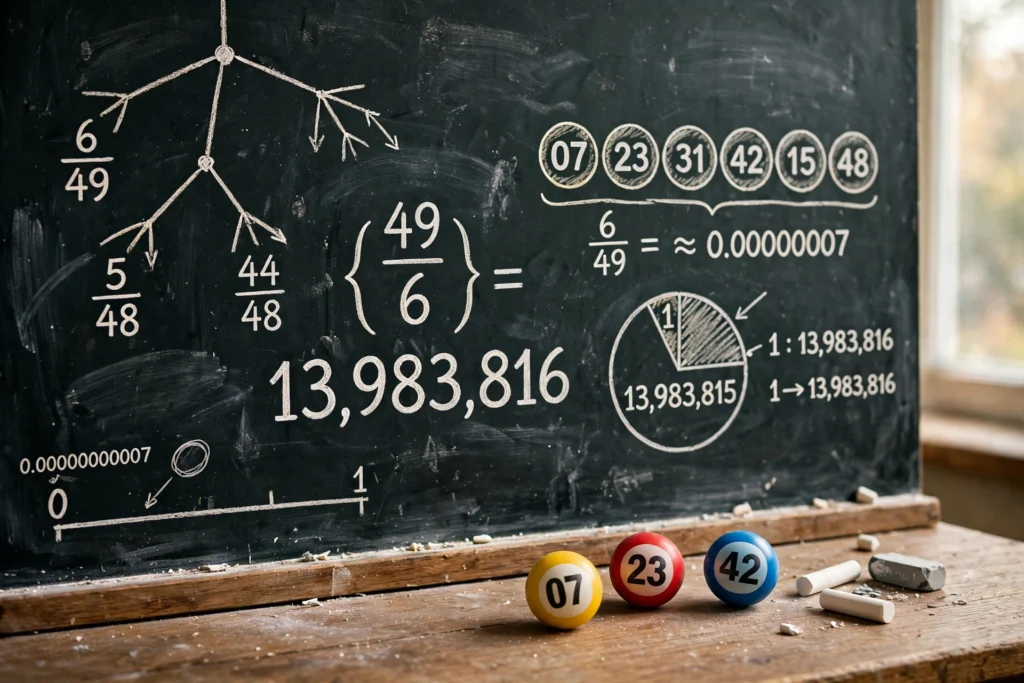
Before your first win, the odds of winning twice multiply together. Take a 6/49 game like Canada’s Lotto 6/49, where the odds of winning once are about 1 in 14 million. The odds of the same person winning twice, calculated before either win, are roughly 14 million times 14 million — about 1 in 196 trillion. For Powerball, where the jackpot odds are 1 in 292,201,338, the pre-win odds of two jackpots are so large they are barely meaningful as a number.
But after you have won once, the maths resets. Your chance of winning a second time is simply the ordinary odds of the game — 1 in 14 million for that 6/49 game, or 1 in 292 million for Powerball. The first win is already in the past; it no longer factors into the probability. As Dr. Glickman put it, “if someone already wins the lottery, then the chance that the person wins the lottery a second time will be exactly the same as the probability they win the lottery if they had not previously won the lottery before.”
Buying more tickets genuinely increases your odds in proportion — 100 tickets give you 100 times the chance of one ticket — but the base odds are so long that even a hundredfold improvement leaves the chance of a jackpot vanishingly small. For a plain-language explanation of how these numbers are calculated, see our guide to how lottery odds and probability work.
Real Repeat Winners: Four Documented Stories
Repeat winners sound impossible, but with millions of people playing every week for decades, the statistically near-impossible happens occasionally. Here are four well-documented cases.
Stefan Mandel: 14 Wins
The most famous repeat winner is Stefan Mandel, a Romanian economist who won lotteries fourteen times. His method was not luck: he worked out that in some smaller lotteries, the jackpot could grow larger than the cost of buying every possible combination, so he organised syndicates to do exactly that. His biggest win came in 1992, when his syndicate won a $27 million Virginia jackpot. Lotteries have since changed their rules to make this approach impractical, and Mandel’s story is a matter of mathematics and organisation rather than fortune. A documentary-style video about his story is embedded at the end of this article.
Evelyn Adams: Two Wins in Four Months
Evelyn Adams, a convenience store worker from New Jersey, won the lottery twice in the mid-1980s — a total of $5.4 million across two wins in the space of just four months. Her story is often cited because both wins were large jackpots in the same state lottery, and because she later became a well-known example of how quickly a windfall can disappear without careful management.
Joan Ginther: Four Wins, Over $20 Million
Joan Ginther, a former maths professor from Texas, won the lottery four times between 1993 and 2010, collecting more than $20.4 million in total. Her wins were all from scratch-off tickets, and statisticians have calculated the odds of her four wins at roughly 1 in 18 septillion — a number with 24 zeros. Ginther has never explained her approach publicly, and her story remains one of the most debated in lottery history.
Bill Morgan: Two Wins, One on Camera
Bill Morgan, an Australian truck driver, won the lottery twice in one of the strangest sequences ever recorded. After surviving a near-fatal heart attack, he bought a scratch card and won a car. A local television station asked him to re-enact the purchase on camera — and while filming, he scratched the duplicate card and discovered he had won again, this time AU$250,000. The footage of his second win, captured live, has been watched by millions.

Why Repeat Wins Happen at All
If the odds are 1 in trillions, how does anyone win twice? The answer is scale. When millions of people buy tickets every week for decades, the total number of “chances” across the whole population is enormous. Statisticians point out that extremely rare events become inevitable somewhere in a large enough population — as one university professor put it, repeat wins are “rare, but not impossibly rare.”
There is also a selection effect: people who win once tend to keep playing, often with larger budgets, which gives them more entries over time. And some repeat wins involve smaller games — daily draws, scratch-offs, and Pick 4 games — where the odds of any single win are far shorter than a Powerball jackpot. Deborah Brown, for example, won 30 times in a single day in 2019 by playing the same Pick 4 combination, 1-0-3-1, on 20 tickets — an extraordinary outcome, but in a game with far shorter odds than a jackpot draw.
Can You Win Twice With the Same Numbers?
Yes, and it has happened. A Fayetteville man in North Carolina once accidentally entered the same set of numbers twice in one drawing and won two lifetime $25,000-a-year prizes. A Colorado man who had played the same set of numbers for 30 years won two $1 million Powerball prizes in a single drawing after accidentally buying the same ticket twice. And a Massachusetts player won the same jackpot twice after accidentally buying two identical tickets.
The maths here is simple: each ticket is an independent entry. If your numbers are drawn, every ticket carrying those numbers wins. Playing the same numbers on two tickets does not change the odds of the numbers being drawn — it just means you collect twice if they are. But be warned: this is also how shared jackpots work in reverse. Popular number combinations — birthdays, sequences like 1-2-3-4-5-6 — are played by many people, so if they win, the prize is split many ways. See our guide to what happens when multiple people win the jackpot for how splits work.
Can You Win Two Jackpots on the Same Day?
It is possible, and it has happened. In November 2022, a New York man bought two winning tickets from the same convenience store and claimed two $1 million prizes. In June 2019, Joel Dominguez of California became the first person recorded to win two lottery jackpots on the same day, buying two separate $30 scratch-off tickets. These cases are rare because they require two independent unlikely events to land on the same day — but with millions of tickets sold daily, “rare” still happens occasionally.
What Changes After Your First Win?
Practically speaking, almost nothing changes — except the attention. After a first win, most lotteries treat you exactly like any other player: same tickets, same odds, same claim process. A few things are worth knowing:
- You can keep playing immediately. There is no waiting period and no restriction.
- Your odds do not change. Each draw is independent, as explained above.
- Tax applies again. A second win is taxed just like the first, in the year you receive it.
- Anonymity rules are the same. Whether you can stay anonymous depends on your state’s rules, not on whether you have won before.
- Claim deadlines still apply. Every winning ticket has a deadline — usually 90 days to a year — and a second win is forfeited just as easily as a first if you miss it.
- Expect scrutiny. Large repeat wins attract attention from the lottery operator and the media, and operators may review the win — as they did with Mandel — but a legitimate win is paid.
The one thing that genuinely should change is your financial planning. Repeat winners who treat a second win as proof of a “system” often increase their spending sharply — and the odds have not moved at all. The smartest move after any win is the same as before it: a fixed budget, no borrowed money, and professional financial advice for any large prize.
Frequently Asked Questions
Can you win the lottery twice?
Yes. There is no law or lottery rule preventing a past winner from playing again, and there is no cap on how many times one person can win. Repeat winners are documented, including one player who won lotteries fourteen times.
What are the odds of winning the lottery twice?
Before your first win, the odds of winning twice multiply — for a 6/49 game, about 1 in 196 trillion. But once you have already won, the odds of winning again are simply the ordinary odds of the game, because each draw is independent.
Has anyone won the lottery twice in one day?
Yes. In June 2019, Joel Dominguez of California won two lottery jackpots on the same day with two separate scratch-off tickets. A New York man also claimed two $1 million prizes from tickets bought at the same store in November 2022.
Does winning once improve your chances of winning again?
No. Each draw is an independent random event. As Harvard statistics professor Dr. Mark Glickman has explained, a past win does not change the probability of a future win in either direction.
Can you win the lottery twice with the same numbers?
Yes. If you hold two tickets with the same numbers and those numbers are drawn, both tickets win. Several players have done this accidentally by buying the same ticket twice.
Who has won the lottery the most times?
Stefan Mandel, a Romanian economist, won lotteries fourteen times by organising syndicates to buy every possible combination when jackpots exceeded the cost. Lottery rule changes have since made that approach impractical.
Conclusion
Can you win the lottery twice? The answer is yes — the rules allow it, the maths allows it, and real people have done it, from the truck driver who won twice on camera to the economist who won fourteen times. But the maths also tells the rest of the story: after your first win, your odds of a second one are exactly the same daunting odds everyone else faces. Repeat wins happen because millions of people play for decades, not because winners have a secret. So if you ever do win, enjoy it, get professional advice, and keep playing the same way you always did — small, budgeted, and for fun. Lottery play is for adults only — you must be 18 or over to play, so please play responsibly and never spend more than you can afford to lose.