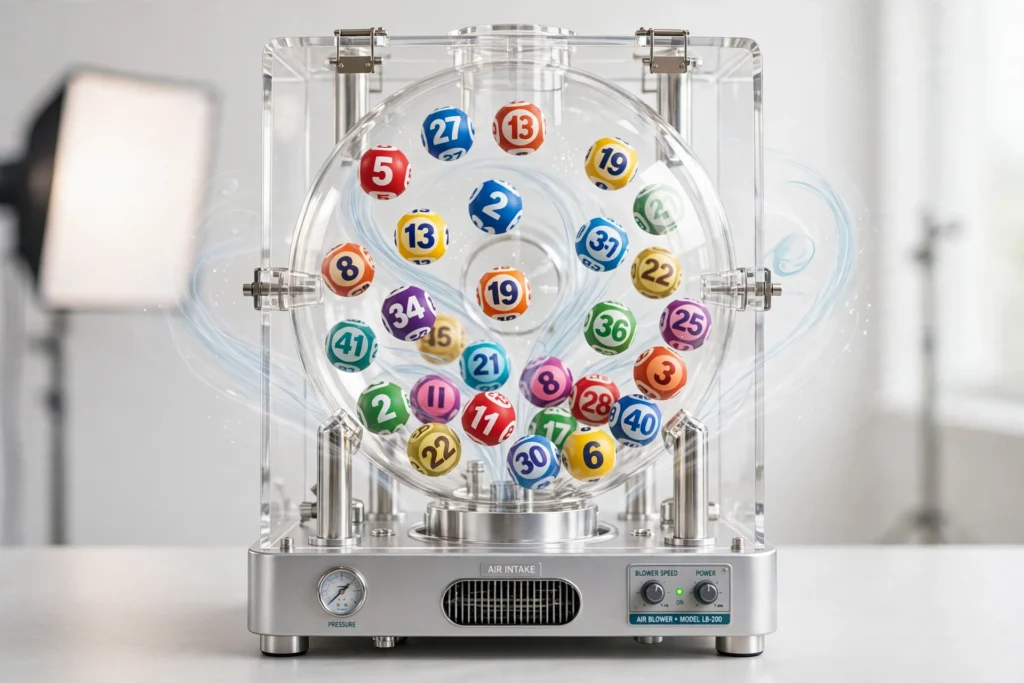
When the winning numbers are revealed, they come from one of two very different machines: a transparent chamber full of bouncing balls, or a computer running a random number generator. The debate over lottery draw machines, RNG vs ball draws, has run for years, with some players trusting only what they can see and others trusting only what can be mathematically tested. The reassuring truth is that both methods, when properly regulated and audited, produce genuinely random results — but they get there in very different ways. This guide explains how each system works, where each is used, and what safeguards keep both honest. Lottery play is for adults only: you must be 18 or over to play, and always play responsibly within a budget you can afford.
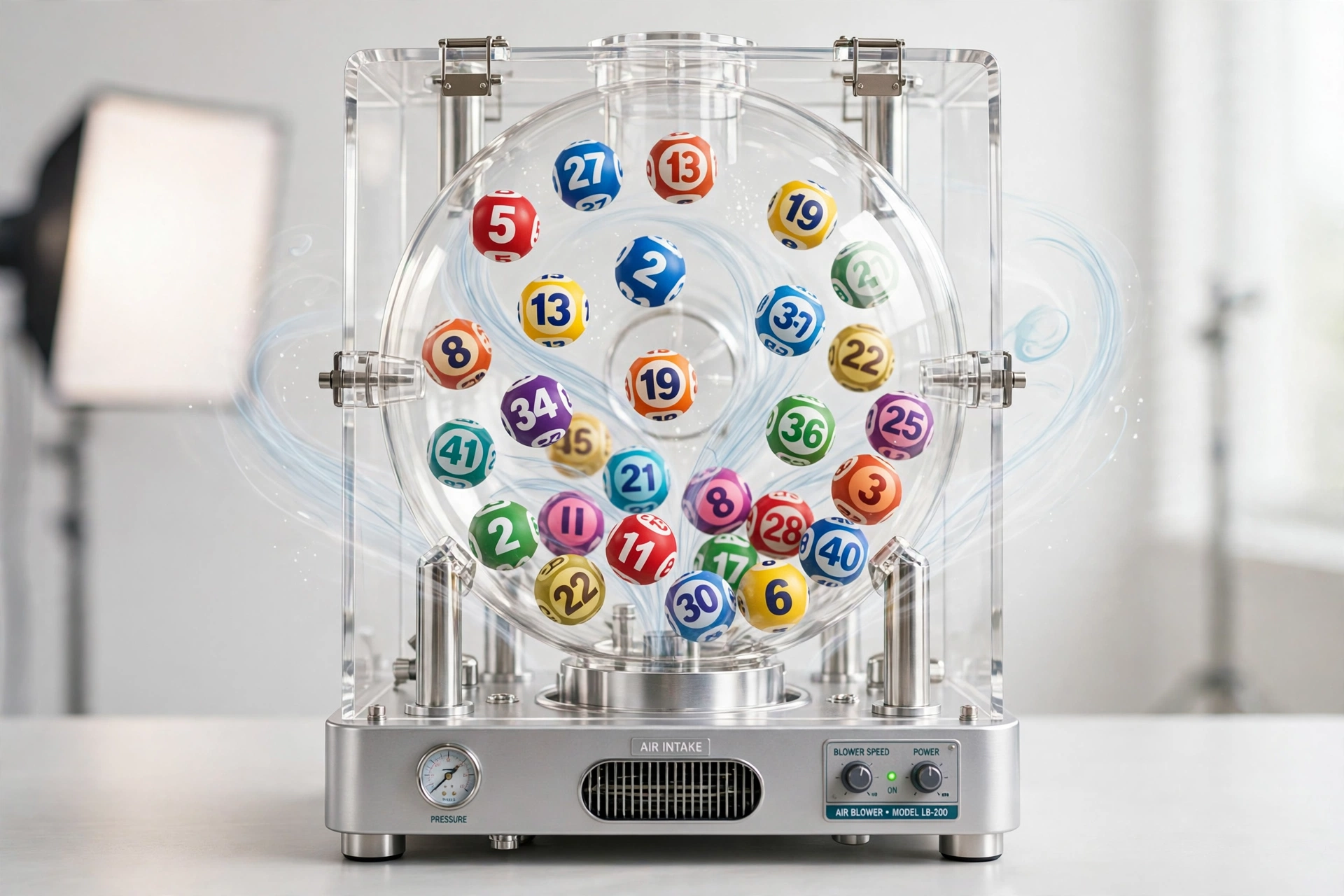
Table of Contents
- Why Draws Must Be Truly Random
- Ball Draws: Air-Mix and Gravity-Pick Machines
- The Safeguards Around Ball Draws
- RNG Draws: How Random Number Generators Work
- Pseudo-Random vs True Random Generators
- The Safeguards Around RNG Draws
- RNG vs Ball Draws: A Head-to-Head Comparison
- Which Method Do Major Lotteries Use?
- What Players Get Wrong About Draws
- Frequently Asked Questions
Why Draws Must Be Truly Random
A lottery draw has one job: to give every possible combination exactly the same chance of being selected, independently of every previous draw. If any number were even slightly more likely than another — because a ball was heavier, or because a computer algorithm favoured certain outputs — the game would be unfair, and a clever player could exploit the bias. That is why regulators treat the draw mechanism as the most sensitive part of the whole lottery, and why both ball machines and RNG systems are tested, certified and audited far more rigorously than most players realise.
Randomness also matters for trust. A lottery sells millions of tickets on the promise that the draw is beyond manipulation by anyone — the operator, a player, or an insider. The visible theatre of a ball draw and the mathematical audit trail of an RNG are two different ways of delivering that same promise, and understanding both helps you judge a lottery’s fairness for yourself. For the wider picture, see our guide to how lottery draws are conducted and kept fair.
Ball Draws: Air-Mix and Gravity-Pick Machines
Ball draws are the classic method, used by Powerball, Mega Millions, UK Lotto and most other flagship draw games. Numbered balls — made to identical size and weight, usually from solid rubber or a similar material — are placed in a transparent chamber. There are two main machine types. In an air-mix machine, jets of air blow the balls around the chamber continuously, and balls are drawn one at a time through a tube, either by air pressure or by a mechanical gate. In a gravity-pick machine, the balls tumble in a rotating drum and drop through an opening by gravity, one after another.
Both designs share the same principle: the balls are mixed chaotically, and no ball has any advantage in reaching the exit. The transparency is deliberate — cameras, studio audiences and auditors can watch the whole process, and the physical, visible nature of the draw is itself a safeguard. When a ball draw is televised, millions of people effectively audit it in real time.
The Safeguards Around Ball Draws
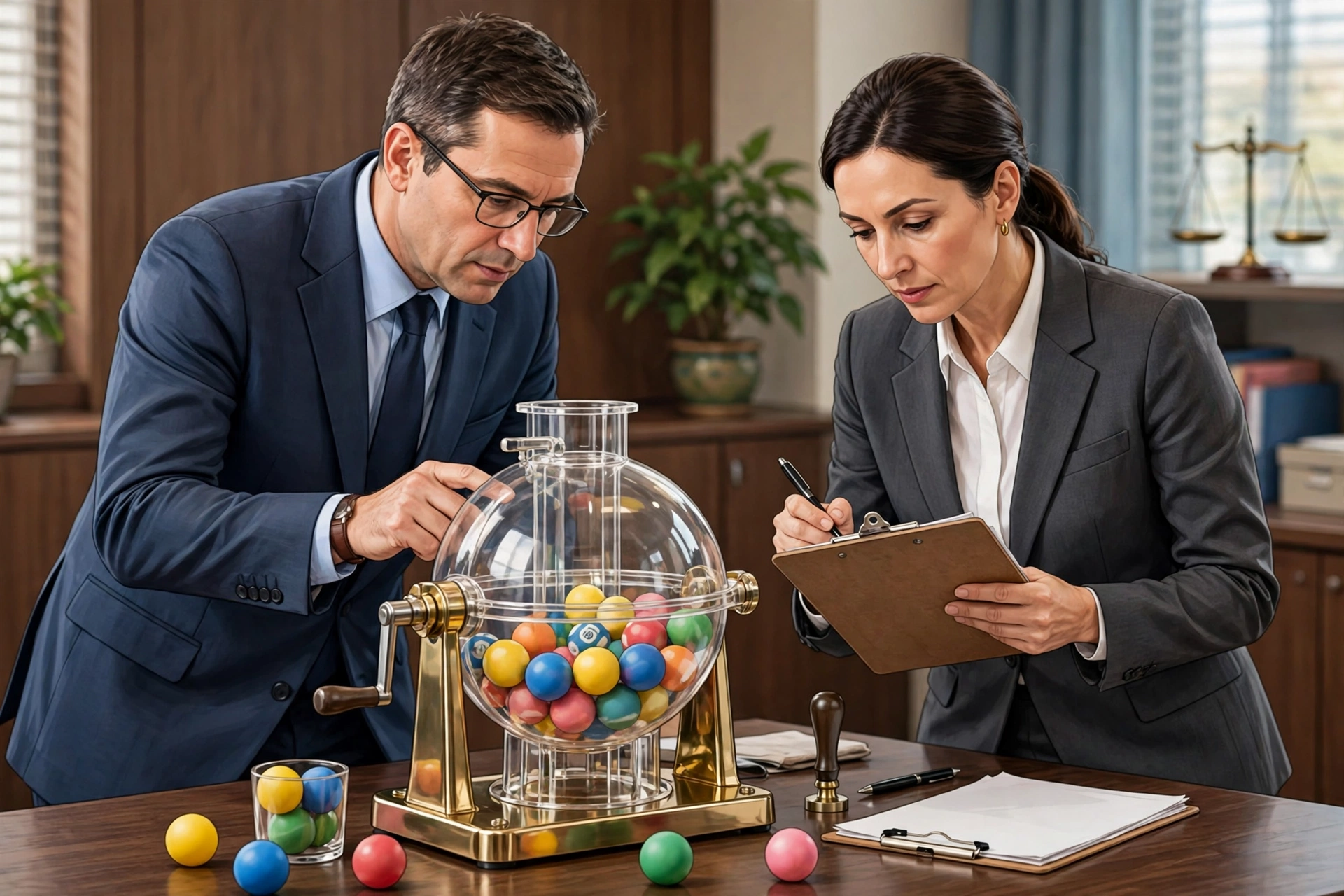
A ball draw is far more controlled than it looks on television. Operators typically hold several sets of balls and several machines, and the set and machine for each draw are chosen at random shortly beforehand, so nobody can prepare a rigged set in advance. Before the draw, balls are weighed and measured, the machine is tested with practice runs, and independent auditors are present. After the draw, the equipment is sealed and stored securely until the next draw.
Balls also wear out. A ball that becomes slightly lighter or rougher through use could, in theory, behave differently from the others, so sets are regularly inspected, cleaned and replaced. Some operators even rotate ball sets and track each set’s history. These procedures explain why ball draws have survived into the computer age: they are simple, transparent and extremely hard to manipulate without detection.
RNG Draws: How Random Number Generators Work
A random number generator (RNG) is a computer system that produces numbers with no predictable pattern. In a lottery context, the RNG selects numbers from the game’s pool — for example, five numbers from 1 to 69 plus a bonus number — in the same way a ball machine would, but entirely in software and hardware. RNG draws are common for online-only games, instant games, keno-style draws and lotteries in countries where televised ball draws are impractical, and they are also used behind the scenes for many digital lottery products.
An RNG can generate thousands or tens of thousands of numbers per second, and the draw takes the numbers produced at a precise, unpredictable moment. Because the process is so fast, no human could time or predict the outcome — which is one reason RNGs are considered secure when properly implemented. The key question is not whether a computer can be random, but whether this particular computer system has been designed, sealed and certified to be random.
Pseudo-Random vs True Random Generators
There are two broad families of RNG, and the distinction matters. A pseudo-random number generator (PRNG) is a mathematical algorithm: it starts from a “seed” value and applies a formula to produce a sequence that looks random. Given the same seed, a PRNG produces the same sequence every time — which is why a bare PRNG, on its own, is not considered sufficient for a regulated lottery draw. A true random number generator (TRNG), by contrast, draws its unpredictability from a physical process: electronic noise in a circuit, atmospheric noise, or radioactive decay. Because the input is genuinely unpredictable, the output cannot be reproduced even by someone who knows the system design.
Regulated lottery RNGs therefore use hardware-based true randomness, or seed their algorithms from a physical source that is itself unpredictable, and they are built as sealed, tamper-evident units. The software and hardware are tested by independent laboratories, which run statistical tests over millions of outputs to confirm that every number appears with equal frequency and that no patterns emerge. If a system fails any test, it is not certified for use.

The Safeguards Around RNG Draws
RNG draws are protected differently from ball draws, but no less seriously. The RNG hardware is kept in a secure environment, access is restricted and logged, and the draw software is sealed so that changes require authorisation and leave an audit trail. Independent testing labs certify the system before it goes live and re-test it regularly. Many operators also publish draw results and audit summaries, and some stream a visual representation of the RNG draw so players can watch numbers appear.
The most famous RNG security incident actually proves why these controls matter. In the Eddie Tipton case, an insider at a lottery association installed code on the RNG computer that let him predict certain draw numbers — and he was caught, prosecuted and imprisoned, precisely because audit logs and investigations exposed the manipulation. Modern systems are designed so that no single insider can alter the RNG without detection, with separation of duties, dual control and independent oversight. For more on common misconceptions, see our guide to lottery myths debunked.
RNG vs Ball Draws: A Head-to-Head Comparison
| Feature | Ball Draws | RNG Draws |
|---|---|---|
| How numbers are chosen | Physical balls mixed by air or gravity | Numbers generated by certified hardware/software |
| Transparency | Visible to cameras and audiences | Visible through audit reports and streamed results |
| Main risks | Ball wear, physical tampering | Software tampering, insider access |
| Main safeguards | Random equipment selection, weighing, auditors present | Sealed hardware, independent lab certification, access logs |
| Best for | Flagship televised draws | Online, instant and high-frequency games |
| Speed and cost | Slower, needs studio and staff | Fast, low marginal cost per draw |
Neither method is inherently “more random” in practice. A well-maintained ball machine and a well-certified RNG both give every combination an equal chance. The real difference is in the kind of trust they offer: ball draws are trusted because you can see them, RNGs because they can be tested mathematically and audited in detail.
Which Method Do Major Lotteries Use?
Most flagship draw games still use ball machines, largely because players love watching them and because the visual draw is a powerful trust signal. Powerball, Mega Millions and UK Lotto all use ball machines for their main draws. RNGs dominate where ball machines are impractical: online-only draws, instant-win games, and games that run many times a day. Some lotteries use both — balls for the televised jackpot game, RNGs for secondary or online-only games — and a few jurisdictions have moved certain draws to RNGs for cost or logistics reasons while keeping balls for their biggest games.
If you are curious about a specific lottery, its operator’s website or regulator usually states the draw method openly. That transparency is itself a good sign: a lottery that hides how its numbers are drawn is one to avoid.
What Players Get Wrong About Draws
Two myths deserve a quick correction. First, neither method has a memory: a ball that was drawn last week is exactly as likely to be drawn this week, and an RNG does not “owe” any number an appearance. Tracking lottery odds and probability shows why every draw is independent. Second, watching a ball draw does not make it fairer than a certified RNG, and a computer draw is not automatically rigged — fairness comes from testing and oversight, not from the technology itself. Players who understand this can ignore most of the conspiracy theories that circulate after every big jackpot.
Watch: Behind the Scenes of a Powerball Draw
Frequently Asked Questions
Are RNG lottery draws rigged?
No — regulated RNG draws are certified by independent testing laboratories, sealed against tampering, and audited regularly. A rigged RNG would be detected by statistical testing and access logs, and operators that used one would lose their licence.
Which is fairer: ball draws or RNG draws?
When properly run, both are equally fair: every combination has the same chance. Ball draws offer visible transparency, while RNGs offer mathematical testability. The fairness of either depends on the safeguards around it, not on the technology alone.
What is the difference between a PRNG and a TRNG?
A pseudo-random number generator (PRNG) uses a mathematical formula from a seed value and would repeat its sequence given the same seed. A true random number generator (TRNG) draws unpredictability from a physical process such as electronic noise, so its output cannot be reproduced. Regulated lotteries use TRNGs or physically seeded systems.
Why do most big lotteries still use balls?
Because players trust what they can see, and televised ball draws are excellent public theatre as well as a strong audit mechanism. Balls also avoid any public suspicion that a computer draw could be manipulated, even though certified RNGs are equally secure.
Can lottery balls be biased?
In theory, a damaged or worn ball could behave differently, which is why operators weigh, measure, inspect and replace ball sets regularly, and choose the set and machine at random before each draw. These controls keep any bias far below a detectable level.
Do RNG draws happen for instant games too?
Yes. Online instant-win games and many digital lottery products use RNGs to determine each result at the moment of play, under the same certification and auditing requirements as draw-based RNG games.
Conclusion
Lottery draw machines, RNG vs ball draws, turn out to be less of a rivalry than a division of labour: balls for the big televised spectacles, RNGs for online, instant and high-frequency games — each fair when it is built, tested and audited properly. What should reassure you is not the machine itself, but the system around it: random equipment selection, weighing and inspection for balls; sealed hardware, independent certification and access logs for RNGs; and auditors watching both. Choose your games by their odds and your budget, not by superstition about the machine. And remember: lottery games are for adults aged 18 and over only — play responsibly, treat tickets as entertainment, and never spend more than you can afford to lose.
Pingback: Lottery Syndicates Explained: How They Work, and Whether Joining One Is Worth It - winerlotto.com
Pingback: Lottery Jackpot Rollovers Explained: Why the Prize Keeps Growing — and What Happens Next - winerlotto.com