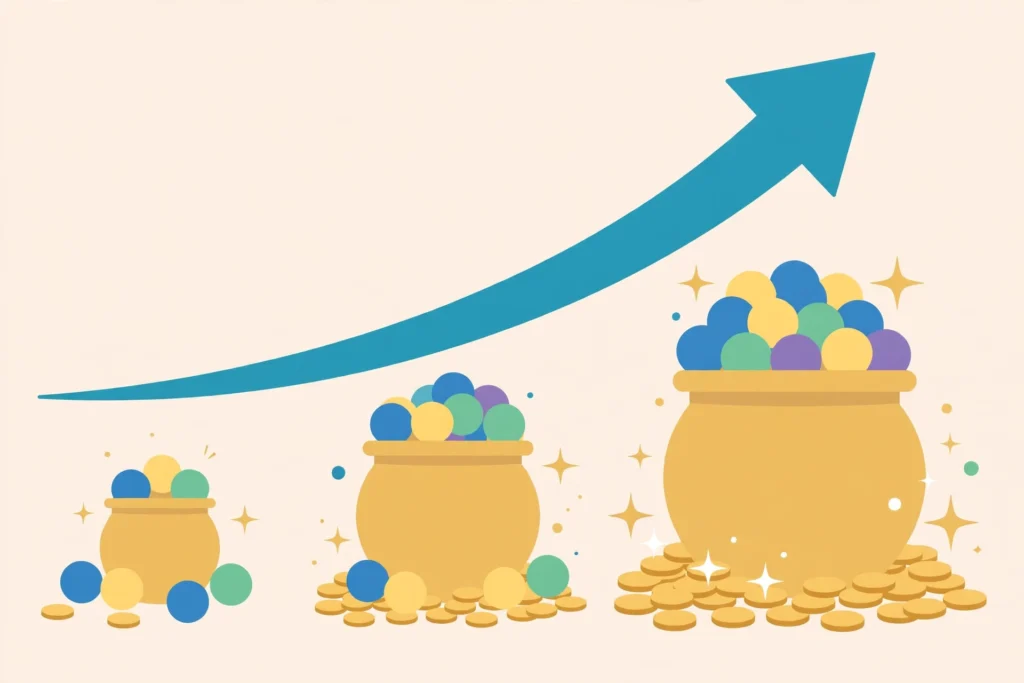
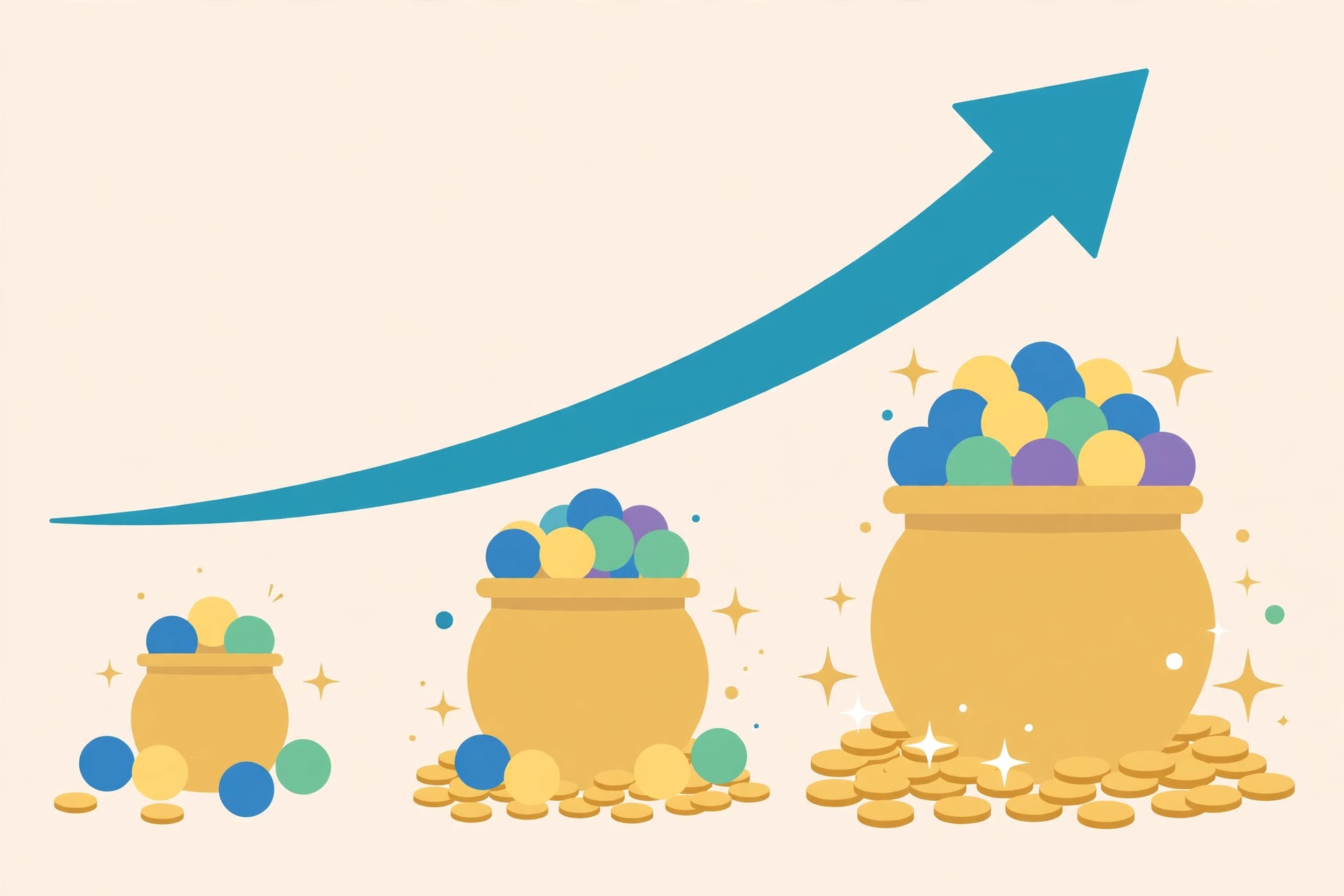
If you have ever watched a lottery jackpot climb from tens of millions to hundreds of millions over several weeks, you have watched a rollover in action. Lottery jackpot rollovers are what happen when no ticket matches all the numbers needed for the top prize, so the jackpot is not won — it is carried over, or “rolled over,” into the next draw, where it grows again.
This guide explains lottery jackpot rollovers in plain language: how they work, why jackpots grow so fast, what happens when a jackpot is capped or forced to be won, and whether a huge rollover should change how you play. It is general information only, not financial advice, and it describes common patterns across major games. Exact rules differ by lottery, so always check the official rules for the game you are playing.
You must be 18 or over to play the lottery in most places, and you should always play responsibly and only with money you can afford to spend on entertainment. If playing ever stops feeling fun, take a break and seek support from a responsible-gambling organisation.
Table of Contents
- What Is a Lottery Jackpot Rollover?
- How a Rollover Works, Draw by Draw
- Why Jackpots Grow So Quickly
- Jackpot Caps and Limits
- Must-Be-Won Draws and Rolldowns
- Do Rollovers Change Your Odds?
- Should You Only Play When the Jackpot Is Huge?
- Common Rollover Myths
- Frequently Asked Questions
- Conclusion
What Is a Lottery Jackpot Rollover?
A rollover happens when the jackpot is not won in a draw. In most big games, the jackpot is only won by matching every main number plus the bonus or special ball, depending on the game. If nobody holds that exact combination, the prize money set aside for the jackpot does not disappear. It is added to the jackpot for the next draw.
That is the whole mechanism. There is no extra draw, no second chance round, and no decision by a player to “roll” anything. The rollover is automatic: no jackpot winner in Draw 1 means a bigger jackpot in Draw 2. If Draw 2 also produces no jackpot winner, the prize rolls again into Draw 3, and so on, until someone finally wins it — or until a special rule, such as a jackpot cap or a must-be-won draw, changes what happens.
Lower-tier prizes work differently. Prizes for matching some, but not all, numbers are usually paid out in the draw in which they are won. It is the top prize — the jackpot — that rolls over. That distinction matters, because it explains why rollovers can create enormous jackpots while smaller prizes stay roughly the same from draw to draw.
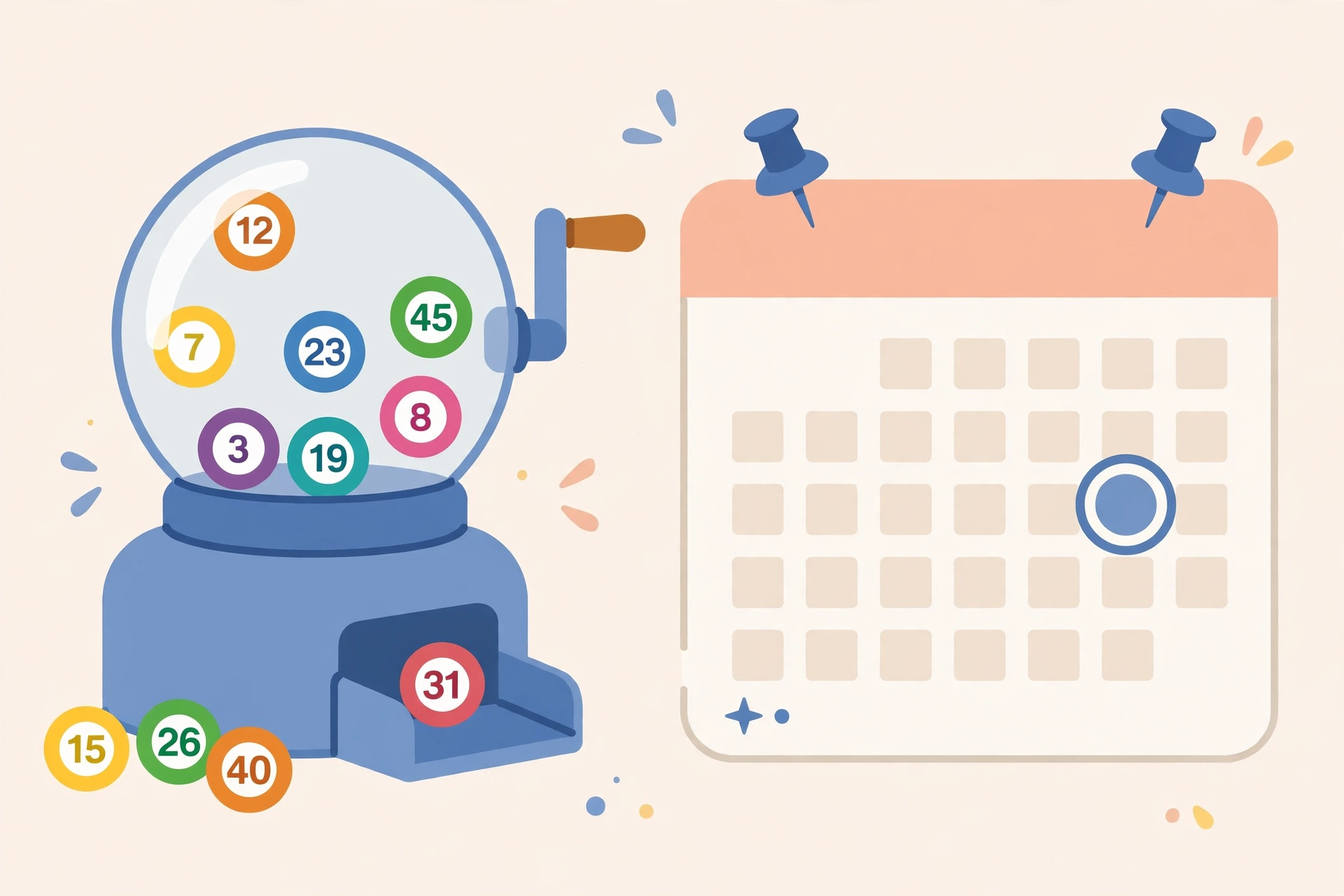
How a Rollover Works, Draw by Draw
It helps to walk through a simple example:
Draw 1: A starting jackpot
Imagine a game starts a new jackpot cycle at $20 million. Tickets are sold, the draw takes place, and nobody matches all the numbers. The jackpot is not won.
Draw 2: The jackpot rolls over
The $20 million jackpot is carried forward. New ticket sales add more money to the prize pool, and the advertised jackpot for Draw 2 might be, say, $30 million. Again, nobody matches all the numbers. The prize rolls again.
Draw 3: Growth accelerates
By now, news of the growing jackpot attracts more players. More ticket sales mean a faster-growing prize pool. The jackpot might jump to $50 million, then $80 million, then beyond $100 million in successive draws. Each rollover adds both the previous jackpot and fresh sales revenue to the prize.
Draw 4 and beyond: The headline phase
Once a jackpot passes a round-number threshold — $100 million, $500 million, $1 billion — media coverage increases sharply, which brings in even more occasional players. This is why the biggest jackpots in history, such as the record Powerball jackpots that have exceeded $2 billion in the United States, are the result of long rollover sequences, not single draws.
Finally: Someone wins — or a special rule applies
Eventually, one of two things happens. Either a ticket matches all the numbers and takes the whole jackpot, resetting the next draw to the starting jackpot, or the game reaches a cap or a must-be-won draw, where the rules force the prize to be distributed. We explain both below.
Why Jackpots Grow So Quickly
Three forces combine to make rollover jackpots grow faster than most people expect.
First, the prize pool itself grows with sales. Every ticket sold contributes a portion to the prize pool. In a big game, a normal draw might sell tens of millions of tickets. When a jackpot rolls over, the next draw usually sells even more, because more people are talking about it.
Second, rollovers compound. The unpaid jackpot from Draw 1 is not replaced by a fresh jackpot in Draw 2. It is added to Draw 2’s prize pool. If Draw 2 also rolls, that larger amount is added again, plus new sales. The growth is not linear — it accelerates.
Third, occasional players join in. Most lottery players buy tickets regularly, but a growing jackpot also attracts people who rarely play: colleagues forming a syndicate, friends buying a ticket “just this once,” news stories about the size of the prize. Those extra sales feed the next rollover, which feeds the next round of coverage, in a loop that can last for weeks.
It is also worth noting that the advertised jackpot is usually the annuity value — the total paid out over many years — rather than the lump-sum cash value, which is smaller. That distinction does not change how rollovers work, but it does mean the headline figure and the cash a winner actually receives in one payment are different numbers.
Jackpot Caps and Limits
Not every game lets its jackpot roll forever. Some games impose a cap: a maximum jackpot value. Once the jackpot reaches the cap, it stops growing, even if it keeps rolling over.
EuroMillions is a well-known example. Its jackpot is capped — the cap has been raised over the years and has reached €250 million in recent rules — and if the capped jackpot is not won after a set number of draws, a must-be-won draw takes place. Other games use different cap levels, or no cap at all, which is why some US jackpots have grown past $2 billion.
Caps exist for a few practical reasons. They keep the game manageable, they prevent a single jackpot from dominating the prize pool at the expense of lower tiers, and they give players a clear end point: if the jackpot reaches the cap and is still not won, a special draw will settle it.
Must-Be-Won Draws and Rolldowns
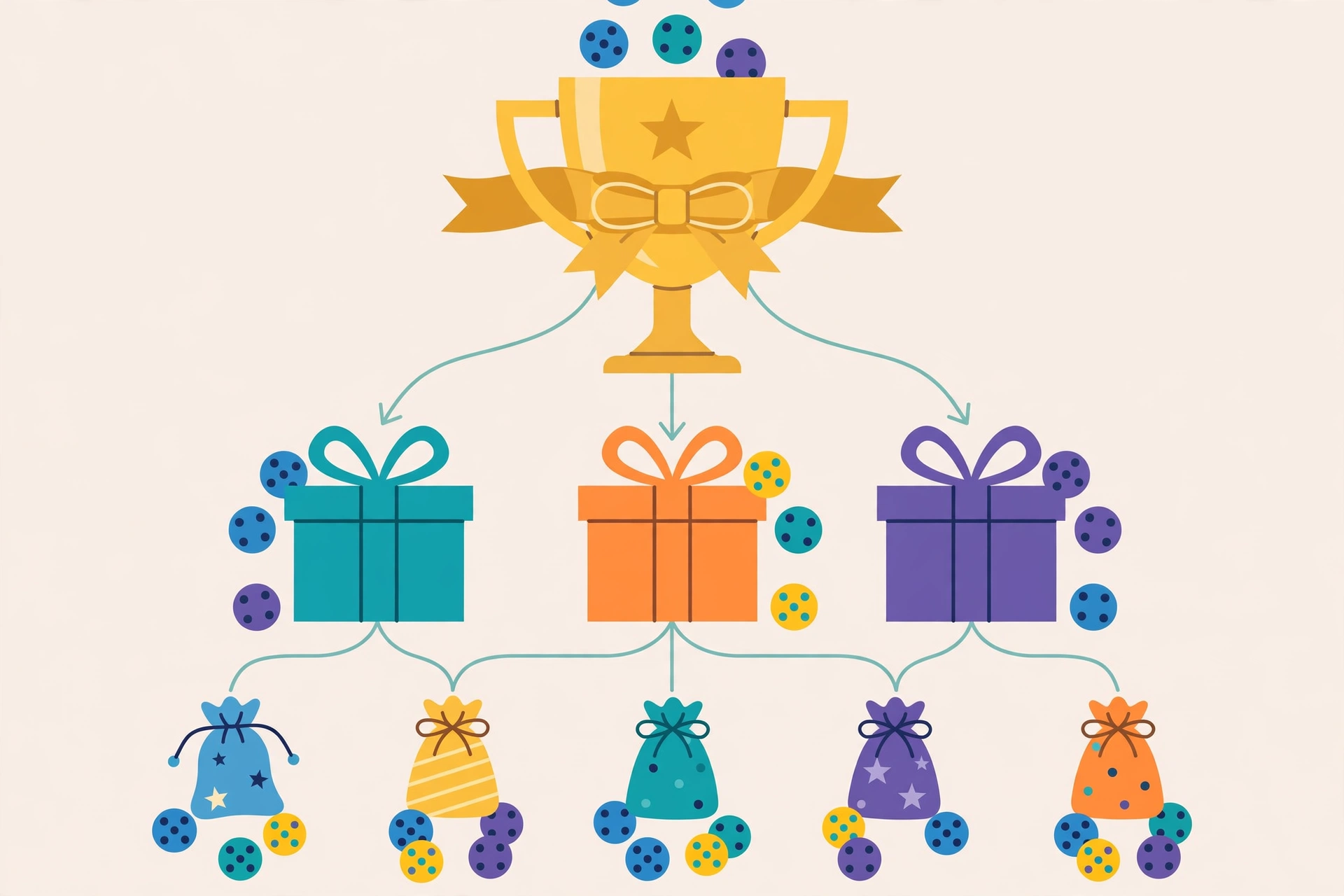
When a game reaches its cap or a predetermined number of rollovers, it may hold a must-be-won draw. In a must-be-won draw, the jackpot must be paid out in that draw, even if nobody matches all the numbers. If no ticket matches the jackpot combination, the jackpot money is shared among the winners in the next-highest prize tier — a process called a rolldown.
For example, in a EuroMillions must-be-won draw, if nobody matches all five main numbers plus both Lucky Stars, the jackpot is shared among players who matched five main numbers plus one Lucky Star, or the next tier down if necessary. This is why must-be-won draws are exciting for players at every level: even a near-miss can become a much larger prize than usual.
Rolldowns are also used in some games as a regular feature, not just in must-be-won draws. The principle is the same: prize money that would otherwise roll over is instead distributed to lower tiers, boosting those prizes for that draw.
Do Rollovers Change Your Odds?
This is the most important section in this guide, because it corrects a very common misunderstanding.
No, a rollover does not improve the odds of any single ticket. If the odds of matching all the numbers in a game are 1 in 292 million, they are 1 in 292 million whether the jackpot is $20 million or $2 billion. The draw is random every time. The balls have no memory of previous draws, and a jackpot that has rolled ten times is no more “due” to be won than a jackpot that has just reset.
What changes is the size of the prize, not the probability of winning it. That distinction is the difference between a bigger reward and a better chance. A rollover gives you a chance at a bigger reward for the same ticket price, but it does not give you a better chance of winning.
It is true that a rollover sequence can slightly change the expected value of a ticket in a narrow mathematical sense: the same odds, applied to a larger prize, mean a higher average return per ticket — but only if the jackpot is not shared. In practice, huge jackpots attract so many players that the chance of sharing the prize increases, and the ticket price, taxes, and annuity-versus-cash difference all reduce the real value. Even at its peak, a lottery ticket remains a negative-expectation purchase on average. That is not a criticism of playing for fun; it is simply the maths behind why lotteries can fund prizes and good causes.
Should You Only Play When the Jackpot Is Huge?
Many players adopt a simple strategy: skip the small jackpots, play only when the prize becomes headline news. Is that sensible?
There are arguments in its favour. If you enjoy playing and you have a fixed entertainment budget, waiting for a large jackpot means your occasional ticket gives you a shot at a much larger prize for the same spend. You also buy fewer tickets overall, which can make it easier to stick to a budget.
There are arguments against it too. First, the odds are the same, so you are not gaining an edge — you are simply concentrating your play into fewer draws. Second, huge jackpots bring more players, which increases the chance that a jackpot, if won, will be split between multiple tickets. Third, if playing is meant to be fun, restricting yourself to only the biggest draws may make it feel less like a hobby and more like chasing a headline.
A balanced approach is to decide a weekly or monthly entertainment budget for lottery play, if you play at all, and stick to it regardless of jackpot size. If a rollover jackpot excites you, a ticket within that budget is fine. If it tempts you to spend more than you planned, that is a sign to step back.
Common Rollover Myths
Myth: “The jackpot is due, so it must be won soon.” Every draw is independent. A jackpot that has rolled twenty times has exactly the same probability of being won in the next draw as it did in the first. There is no “due” draw.
Myth: “Buying more tickets when the jackpot is big guarantees a win.” Buying more tickets increases your chance proportionally — two tickets give you twice the chance of one — but the chance remains tiny, and the cost rises with every ticket.
Myth: “The lottery operator controls when a jackpot is won.” In licensed lotteries, draws are conducted under strict regulation and independent oversight, using either ball machines or certified random number generators. Rollovers happen because of probability, not because an operator decides to withhold a prize.
Myth: “A rollover means nobody won anything.” In fact, lower-tier prizes are paid out in every draw. Only the jackpot rolls over. Thousands of players may have won smaller prizes in the very same draw that produced a rollover.
For more on how draws are conducted and why results are independent, see our guide to lottery draw machines: RNG vs ball draws, and for the history of the biggest prizes, our article on the biggest lottery jackpots in history. If you play with others, our guide to lottery syndicates explains how pooling tickets affects shared prizes when a jackpot finally falls.
Frequently Asked Questions
What is a lottery jackpot rollover?
A rollover happens when no ticket matches all the numbers required for the jackpot in a draw. The jackpot prize money is then carried over and added to the jackpot for the next draw, making it larger.
Does a rollover improve my odds of winning?
No. The odds of matching all the numbers stay the same in every draw, regardless of jackpot size. A rollover increases the prize on offer, not your probability of winning it.
How long can a jackpot keep rolling over?
That depends on the game’s rules. Some games allow unlimited rollovers, which is how jackpots can exceed $2 billion. Others cap the jackpot or limit the number of rollovers before a must-be-won draw is held.
What is a must-be-won draw?
A must-be-won draw is a draw in which the jackpot must be paid out, even if nobody matches all the numbers. If there is no jackpot winner, the prize is shared among winners in the next-highest prize tier, in a process called a rolldown.
What is a rolldown?
A rolldown is when jackpot money is distributed to lower prize tiers because no ticket won the jackpot in a must-be-won draw. It boosts the prizes for players who matched most, but not all, of the numbers.
Is the advertised jackpot the same as the cash prize?
Usually not. The advertised jackpot is often the annuity value, paid out over many years. The lump-sum cash option is typically smaller. Always check the game’s official information for both figures.
Can a jackpot be shared between multiple winners?
Yes. If more than one ticket matches all the numbers in the same draw, the jackpot is split equally between those tickets. This becomes more likely when a huge jackpot attracts very large numbers of players.
Should I play only when the jackpot is huge?
That is a personal choice, not a strategy that improves your odds. Playing only for large jackpots can help you stick to a budget, but it does not give you an edge, and it increases the chance of sharing a prize if you do win.
Conclusion
Lottery jackpot rollovers are the reason jackpots can grow from a modest starting prize into a headline-grabbing fortune. When nobody wins the top prize, the money rolls forward, new ticket sales add to the pool, and each successive draw can be larger than the last — until someone wins, a cap is reached, or a must-be-won draw distributes the prize.
The key thing to remember is what rollovers do not do: they do not make any ticket more likely to win, they do not make a jackpot “due,” and they do not turn a lottery ticket into a good investment. They simply make the prize bigger. Enjoy a rollover jackpot for what it is — an exciting, shared moment of possibility — and keep your play within a budget you are comfortable with.
And remember: you must be 18 or over in most places, so please play responsibly, set a limit before you play, and treat the lottery as entertainment, never as a way to make money.
Sources and further reading: the official Powerball and EuroMillions sites for jackpot rules, caps, and must-be-won draw procedures.
Pingback: Lottery Odds Explained for Beginners: What "1 in 292 Million" Really Means - winerlotto.com
Pingback: Lottery Games Around the World Explained
Pingback: What Happens to Unclaimed Lottery Prizes Explained